
Quick answer: track fixing crew mobilization
Review focus: track fixing crew mobilization.
When panel delivery slips, the question is rarely whether the track can be fixed. It is whether the track fixing crew mobilization panel delivery slip creates a sequence that protects the opening, the stacking zone and the surrounding trades. This article sets out a coordination framework for overseas project teams. The suitability of each route and parking arrangement depends on the approved layout, circulation, ceiling interfaces and operating sequence.
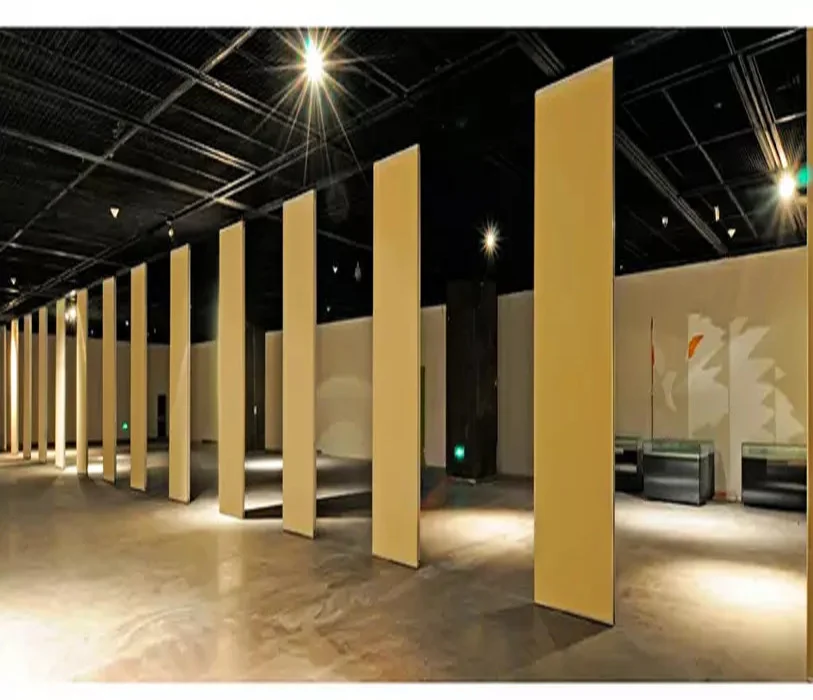
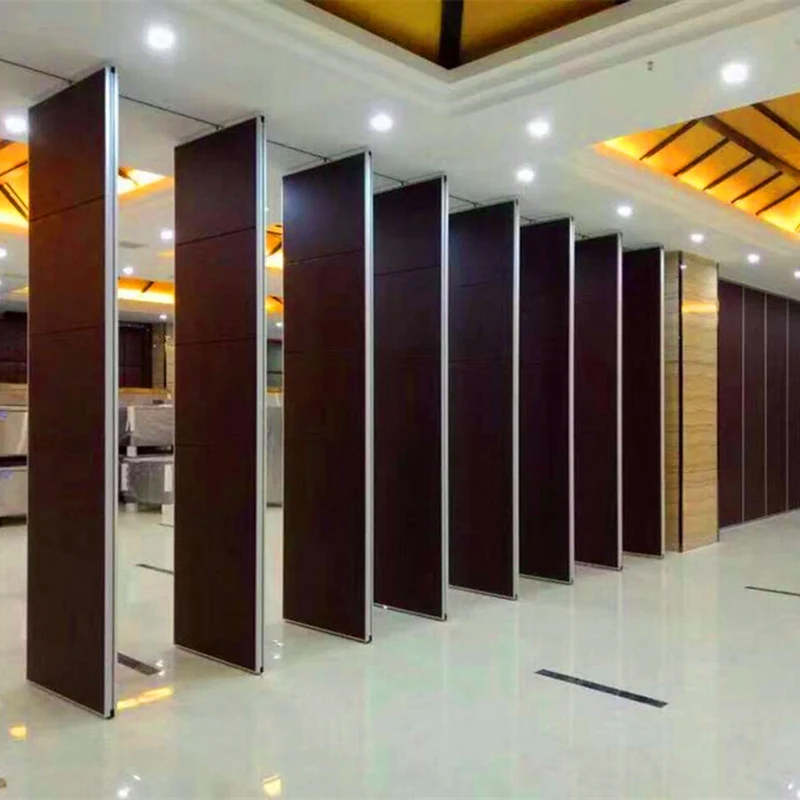
Movable wall panels are individually movable and suspended from a top track. They cross the opening without a floor track and park at a planned stacking position. Straight, turning and stacking routes are reviewed from the layout. That maintained product context is the starting point for any mobilization decision.
Why Panel Delivery Slips Change the Track Sequence
Project review term: track fixing crew mobilization.
Track installation and panel arrival are linked but not identical activities. The overhead route must be continuous and supported before panels travel. If panels are delayed, the track scope may still be ready to progress, but only where the support condition and route geometry have been reviewed.
A delivery slip can also shift the order of adjacent works. Ceiling closures, finishes and floor protection may be affected by when the track zone is opened and closed. The coordination task is to separate what can proceed from what must wait for confirmed information.
What the Track Fixing Crew Can and Cannot Decide Alone
Coordination scope: track fixing crew mobilization.
The crew works to approved drawings and site conditions. They should not be asked to infer support capacity, acoustic intent or route feasibility from a finish sample or a photograph. Those are project-specific matters for the responsible design and engineering team.
Where the layout shows a turning or stacking route, the crew needs the coordinated drawing that defines it. Where the route is not yet confirmed, mobilization should be treated as provisional. This is an evidence boundary, not a scheduling preference.
A Decision Checklist Before Mobilization
Checklist focus: track fixing crew mobilization.
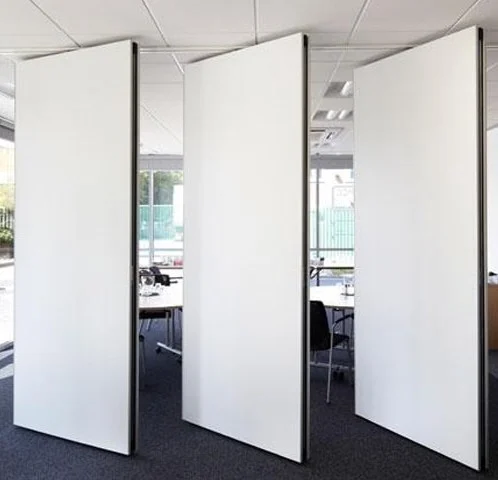
- Is the overhead route continuous and connected across the full movement path?
- Has the support condition been reviewed for the specific project?
- Are straight, turning and stacking routes shown on the coordinated layout?
- Is the parking position defined and clear of other trades?
- Are pass-door requirements and project documentation available for discussion?
- Are finish selections confirmed from approved options such as laminate, melamine, fabric, leather or glass?
- Has the acoustic intent been stated as a project requirement rather than assumed from a panel appearance?
If any item is unresolved, record it as an open point. Do not convert an open point into a field instruction.
Numbered Process for a Delivery Slip Scenario
Review focus: track fixing crew mobilization.
- Confirm the revised panel delivery window in writing with the supplier or distributor.
- Compare the revised window against the approved track and support drawing status.
- The exact overhead route and support arrangement must be confirmed by the responsible project team from coordinated drawings.
- Agree protection and access arrangements for the opening and stacking area.
- Record any acoustic, dimensional or support questions for project-specific confirmation.
- Re-sequence adjacent trades only after the track zone status is agreed.
- Hold a short pre-mobilization review before the crew arrives on site.
This process keeps the crew focused on confirmed scope. It also gives the project team a clear record of what was known at the time of mobilization.
Coordination With Other Trades During the Slip
Project review term: track fixing crew mobilization.
Ceiling and services trades often work near the track zone. A delivery slip may create pressure to close ceilings early. Before that happens, confirm that the overhead route remains accessible for the reviewed installation sequence.
Floor finishes are also affected because the system crosses the opening without a floor track. That maintained fact reduces some floor interface concerns, but it does not remove the need to protect the opening and parking area during works.
Questions to put to the design team
Ask whether the support review covers the final layout, whether the stacking position is coordinated with adjacent rooms, and whether the acoustic requirement has been defined for the project. These are not questions the track fixing crew can answer from site observation alone.
Evidence Notes for Project Documentation
Maintained product facts confirm top-hung movement, clear-floor crossing and customized parking. They do not confirm support capacity, acoustic performance, dimensions or installation outcomes for a specific project. Those require matching project evidence and drawing review.
Use this boundary when reviewing submittals. A finish option such as laminate or fabric is a surface choice.
Comparing Mobilization Options
| Option | When it may fit | What must be confirmed |
|---|---|---|
| Proceed with confirmed track zones | Support and route drawings are approved for those zones | Scope boundary and protection arrangements |
| Partial mobilization | Some zones are ready while others await information | Which zones are excluded and why |
| Hold mobilization | Route, support or stacking information is unresolved | Revised review date and open-point owner |
The table is a coordination aid. It does not replace the project-specific review required for support, acoustics and dimensions.
Frequently Asked Questions
Can track fixing start before panels arrive?
It can be considered where the approved drawings and site conditions support that sequence. The decision depends on the specific project and should be confirmed with the responsible design team.
Does a panel delivery slip change the track layout?
Not automatically. The layout is reviewed from the project requirements. A delivery slip changes timing, not the need for a continuous connected overhead route.
What should be confirmed before the crew mobilizes?
Confirm the support review, the straight, turning and stacking routes, the parking position and any pass-door or documentation requirements. Record unresolved items as open points.
Can acoustic performance be assumed from the finish?
No. Finish options such as laminate, melamine, fabric, leather or glass are surface choices. Acoustic requirements need project-specific confirmation.
How should the stacking area be coordinated?
Parking style is customized to the layout and project requirements. The stacking position should be shown on the coordinated drawing and protected during adjacent works.
What if the support condition is not yet reviewed?
Treat mobilization as provisional. Do not ask the crew to infer support capacity from visible conditions. Escalate the question for project-specific review.
Conclusion and Next Step
When panel delivery slips, the safest coordination move is to separate confirmed track scope from unresolved project questions. Use the checklist, the numbered process and the evidence boundary above to keep the crew focused on reviewed work.
For project-specific support, acoustic and dimensional requirements, review the maintained product context at movable walls and the planning resources at resources. To discuss pass-door requirements and project documentation, contact EBUNGE.