
Quick answer: tender addendum acknowledgment verification
Review focus: tender addendum acknowledgment verification.
Movable partition tender addendum acknowledgment verification is the discipline of proving that every bidder received, understood and priced the latest addendum before submissions close. On flexible-space packages, an addendum can change panel routing, stacking location, finish schedules or pass-door requirements. If acknowledgment is informal, the bid comparison may rest on different scopes. This article offers an evidence-bounded framework for contractors, architects, owners and procurement teams. It does not replace project-specific legal, engineering or acoustic advice.
Why Addendum Acknowledgment Deserves Its Own Verification Step
Project review term: tender addendum acknowledgment verification.
An addendum is not just a revised page. It changes the baseline against which every bid is judged. When acknowledgment is assumed rather than verified, a compliant-looking bid may actually respond to an earlier drawing set. That creates commercial and technical risk long before fabrication.
Verification is therefore a coordination task, not a paperwork formality. It connects the issuing party, the bidders and the evaluation team. The goal is a shared, documented understanding of which documents govern the movable partition scope.
What Counts as Reliable Acknowledgment Evidence
Coordination scope: tender addendum acknowledgment verification.
Reliable evidence shows that the bidder received the addendum, identified its impact and confirmed the bid reflects it. A signed receipt alone may not prove the scope was priced. A revised bid schedule without a receipt may not prove the addendum was received before the deadline.
Project teams should agree in advance what evidence is acceptable. The table below is a conceptual comparison, not a contractual standard. Confirm the required form with the project’s own procurement and legal advisers.
| Evidence type | What it can show | What it may not show |
|---|---|---|
| Signed acknowledgment receipt | Document was received by a named party | That the bid price or scope was updated |
| Revised bid form or schedule | Bidder submitted updated commercial response | That all addendum items were understood |
| Written clarification response | Bidder addressed a specific addendum point | That unrelated addendum items were covered |
| Drawing revision reference | Bid references a specific drawing revision | That the referenced revision is the governing one |
A Step-by-Step Verification Process for Bid Evaluation
Checklist focus: tender addendum acknowledgment verification.
The following sequence keeps acknowledgment traceable without implying any particular procurement method. Adapt it to the project’s tender rules and deadlines.
- Log every addendum with its issue date, revision identifier and affected scope areas.
- Confirm the distribution list matches all active bidders and internal reviewers.
- Request acknowledgment in the form required by the tender documents.
- Cross-check each bid against the latest addendum before technical review.
- Record any bidder question or clarification that touches the addendum.
- Escalate missing or ambiguous acknowledgment before evaluation scoring begins.
- Archive the acknowledgment trail with the bid file for later reference.
Drawing and Layout Items That Addenda Commonly Affect
Review focus: tender addendum acknowledgment verification.
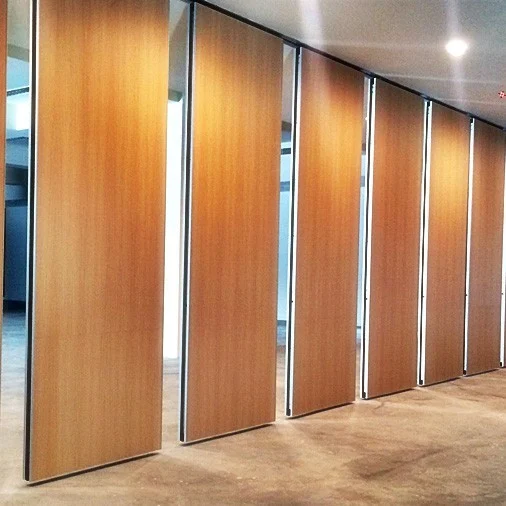
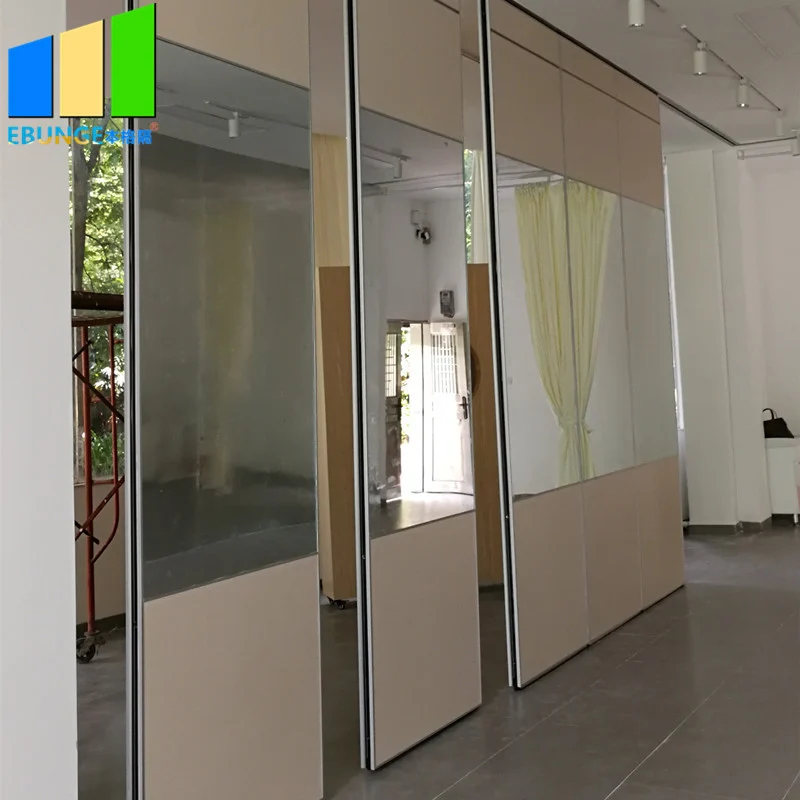
Movable partition panels are individually movable, suspended from a top track, cross the opening without a floor track and park at a planned stacking position. Straight, turning and stacking routes are reviewed from the layout. An addendum that changes room geometry, ceiling conditions or stacking space can therefore change what bidders must price.
Verification should confirm that bidders are responding to the same route and parking assumptions. It should not assume that a route is feasible simply because it appears on a drawing. Every proposed movement path requires a continuous connected overhead route and project-specific support review.

Finish and Pass-Door Items in the Addendum
Confirmed finish options include laminate, melamine, fabric, leather, glass and other approved surfaces. If an addendum changes finish schedules, bidders need a clear reference to the revised schedule. Pass-door requirements and project documentation can be discussed with the supplier, but the tender must state what is required.
Evidence Boundaries When Reviewing Acknowledgment
Visible references can support layout discussion but do not verify hidden construction or performance. The suitability of each route and parking arrangement depends on the approved layout, circulation, ceiling interfaces and operating sequence. Those matters require matching project-specific evidence and review.
Confirm acoustic requirements with qualified project advisers.
Evidence note: a checked acknowledgment box is a coordination record. It is not evidence of engineering, acoustic or commercial performance.
Coordination Roles and Common Failure Points
Clear roles reduce disputes. The issuing party controls addendum content. Bidders confirm receipt and reflect changes in their submissions. The evaluation team checks that each bid responds to the governing documents.
Common failures include addenda issued after bidder questions were answered, revised drawings circulated without a revision log, and acknowledgment collected only from a commercial contact rather than the technical team. Each failure can leave part of the movable partition scope unverified.
Questions to Ask Before Closing Evaluation
- Does every active bidder have a recorded acknowledgment for every addendum?
- Does each bid reference the correct drawing revision and finish schedule?
- Are route, stacking and pass-door requirements consistently described across bids?
- Are open clarifications documented and assigned to a responsible party?
- Is the acknowledgment trail stored with the final bid file?
Frequently Asked Questions
What is movable partition tender addendum acknowledgment verification?
It is the process of confirming that each bidder received the addendum and that its bid reflects the revised requirements. It creates a documented link between the issued documents and the evaluated bid.
Does a signed acknowledgment prove the bid is compliant?
No. A signature shows receipt, not understanding or compliance. The bid still needs technical and commercial review against the governing documents.
Which addendum items most often affect movable partition bids?
Changes to room layout, stacking position, finish schedule, pass-door requirements and drawing revisions are common. Each should be traced to the bid response.
Can acknowledgment be handled by email?
Possibly, if the tender documents allow it. The project team should confirm the acceptable form with its procurement and legal advisers before relying on any method.
How should acoustic changes in an addendum be handled?
Acoustic requirements should be stated as project-specific criteria and reviewed with qualified advisers. Do not infer performance from a finish or a generic description.
What should be archived after verification?
Keep the addendum log, distribution records, acknowledgments, revised bid references and clarification correspondence together with the bid file.
Conclusion and Next Steps
Addendum acknowledgment verification protects the integrity of a movable partition tender by keeping every bid aligned to the same governing documents. It is a coordination and evidence task, not a performance claim. Project teams should confirm support, acoustic and dimensional requirements for their specific layout before finalizing any scope.
To discuss project documentation, finish options or pass-door requirements, contact EBUNGE. You can also review movable wall systems and browse the resources library for further planning context.