
Quick answer: tender query response ownership handover
Review focus: tender query response ownership handover.
Movable partition wall tender query response ownership handover is a coordination process, not a document exchange. It decides who answers a tender query, who approves the answer, which drawing revision the answer binds, and who confirms that the installed partition package matches the coordinated design. When that ownership is unclear, queries can be answered twice, answered by the wrong party, or closed without updating the drawings that the site team will use.
This guide is written for overseas contractors, architects, interior designers, owners, renovation companies, distributors and construction teams. It sets out an evidence-bounded framework. It does not replace project-specific support, acoustic and dimensional confirmation, and it does not assume any performance result that has not been verified for the project.
Why ownership handover matters in movable partition tenders
Project review term: tender query response ownership handover.
The suitability of each route and parking arrangement depends on the approved layout, circulation, ceiling interfaces and operating sequence. Each discipline may raise queries during tender. If the response owner is not named, the tender can close with unresolved assumptions about the top track route, the parking position or the finish schedule.
The handover point is the moment when query responses become binding project information. From that point, the drawings, the specification and the site instructions should agree. A clear owner for each query type reduces the risk of a response being treated as a design change without review.
Define the query categories before tender closes
Coordination scope: tender query response ownership handover.
Not every query needs the same owner. Grouping queries by category helps the project team route them to the party with the relevant knowledge and the authority to confirm.
Layout and movement route queries
These cover the straight, turning and stacking routes that the panels will follow. The layout review should confirm that the proposed movement path is continuous and connected overhead. The exact route, junction arrangement, continuous overhead path and parking position must be confirmed from the coordinated project drawings.
Finish and interface queries

Confirmed finish options include laminate, melamine, fabric, leather, glass and other approved surfaces. Queries about finish transitions, adjacent materials and visible edges should be answered against the approved finish schedule, not against a generic sample.
Pass-door and access queries
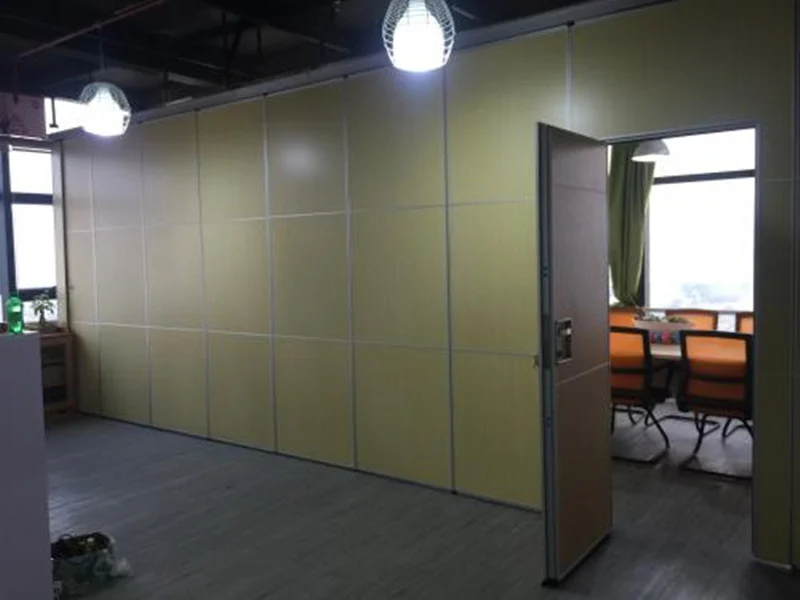
Pass-door requirements can be discussed as part of the package. The response owner should confirm how the pass-door interacts with the panel layout and the stacking position, and should record that confirmation in the tender return.
A numbered process for assigning response ownership
Checklist focus: tender query response ownership handover.
- List every query raised during tender. Record the query text, the date raised and the drawing revision it refers to.
- Assign a response owner by category.
- Assign an approver. The approver confirms that the response is consistent with the coordinated design and does not introduce an unverified assumption.
- Link each response to a drawing revision. A response that is not linked to a revision can be superseded without anyone noticing.
- Record the handover date. This is the date from which the response is treated as project information.
- Reissue the coordinated set. The site team should work from the reissued set, not from marked-up tender drawings.
Evidence boundaries for tender responses
Review focus: tender query response ownership handover.
Tender responses should stay inside the evidence that the project actually holds. Visible references can support layout discussion but do not verify hidden construction or performance. Where a query asks for a performance figure, the response should state the project-specific confirmation boundary rather than infer a result.
Evidence note: STC and Rw are single-number rating concepts used to compare acoustic performance. They are not a direct count of decibels, and a rating value should only be used when it is supported by the relevant project documentation. Do not convert a rating into a promise of soundproofing.
Where a query concerns dimensions, the response should refer to the coordinated layout. Where a query concerns finishes, the response should refer to the approved finish schedule.
Handover checklist for the project team
- Every tender query has a named response owner and a named approver.
- Every response is linked to a specific drawing revision.
- Movement routes have been reviewed as straight, turning and stacking routes.
- The parking position is shown on the coordinated layout.
- Finish selections are recorded against the approved finish schedule.
- Pass-door requirements are recorded and coordinated with the panel layout.
- Project-specific support, acoustic and dimensional requirements are confirmed.
- The reissued coordinated set has replaced earlier tender drawings.
Common coordination failures and how to avoid them
One common failure is answering a query in an email thread without updating the drawing register. The answer exists, but the site team cannot see which revision it applies to. Another failure is treating a supplier response as a design approval when the design authority has not reviewed it.
A third failure is closing a query because the tender deadline has passed, leaving an assumption in the package. A short ownership log, reviewed at each tender meeting, is usually enough to prevent these failures without adding unnecessary process.
Frequently asked questions
Who should own tender query responses for a movable partition package?
Ownership should be assigned by category. Layout and movement route queries are usually owned by the party responsible for the coordinated layout, while finish queries are owned by the party controlling the finish schedule. The important point is that each category has one named owner and one named approver.
When should the ownership handover take place?
The handover should take place before the tender is closed and before the coordinated set is reissued.
Can a tender response confirm acoustic performance?
A tender response should only state acoustic information that is supported by the relevant project documentation. Confirm project-specific acoustic requirements with the responsible party.
How should movement routes be described in the tender?
Describe the straight, turning and stacking routes that the panels will follow. The review should confirm that the route is continuous and connected overhead.
What finish information should be recorded at handover?
Record the approved finish for each panel area, including laminate, melamine, fabric, leather, glass or another approved surface. The record should reference the finish schedule and the drawing revision so that later changes can be traced.
What should happen if a query cannot be answered before tender closes?
Record it as an open item with a named owner and a target date. Do not close it with an assumption. The coordinated set should show the open item so that the project team can resolve it before fabrication or installation planning advances.
Conclusion and next step
Movable partition wall tender query response ownership handover works when each query has an owner, an approver, a linked drawing revision and a recorded handover date. This framework keeps responses inside the available evidence and sends unresolved items to the right party instead of leaving them as assumptions.
Project-specific support, acoustic and dimensional requirements still need confirmation for each opening and each layout. Review the movable wall product context and the project resources before finalising the tender return, then contact the team to discuss pass-door requirements, project documentation and the coordinated layout.