
Quick answer: accessible route circulation review
Review focus: accessible route circulation review.
When a movable partition parks in a stacking pocket that sits on the only accessible route, the design team faces a coordination problem rather than a product problem. A stacking pocket accessible route circulation review brings the layout, the panel movement path and the building’s accessible circulation into one drawing conversation. EBUNGE movable wall panels are individually movable, suspended from a top track, cross the opening without a floor track, and park at a planned stacking position. That maintained fact shapes the review: the route must remain usable while panels travel and while they rest.
Why the Pocket Location Drives the Review
Project review term: accessible route circulation review.
A stacking pocket is not simply a storage recess. It is the end point of a movement route that begins at the closed partition line. If that pocket opens onto the only accessible route, every panel movement and every parked panel position interacts with the path people use to enter, exit and move through the space.
Review the pocket as part of the circulation system, not as a separate detail. The question is whether the route stays clear, connected and predictable during normal use and during reconfiguration. Answering it requires project-specific drawings, not a generic rule.
What the Maintained Product Facts Allow Us to Say
Coordination scope: accessible route circulation review.
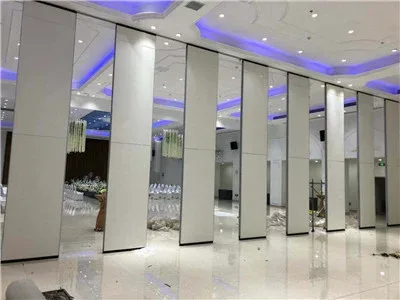
EBUNGE panels are top-hung and move without a continuous floor running track or floor hardware along the partition line. Straight, turning and stacking routes are reviewed from the layout. Parking style is customized to the customer layout and project requirements and may support compact stacking when the coordinated design permits it.
These facts describe movement and parking logic. The suitability of each route and parking arrangement depends on the approved layout, circulation, ceiling interfaces and operating sequence. Those items require project-specific confirmation with the responsible design professionals.
Drawing Review Sequence for the Pocket and Route
Checklist focus: accessible route circulation review.
Use a fixed sequence so the review does not drift into assumptions. Each step produces a question for the project team, not a conclusion.
- Mark the only accessible route on the floor plan and note its width, turns and destinations.
- Overlay the closed partition line, the opening and the full panel travel path.
- Draw the stacking pocket at its parked position and check what it occupies.
- Identify every point where the route and the movement path intersect.
- Confirm the overhead route is continuous and supported for the proposed layout.
- Record open questions for the architect, contractor and owner before specification.
This sequence keeps the conversation on visible geometry and coordinated design. It also prevents a finish sample or a photograph from being treated as evidence of route performance.
Accessibility and Circulation Review Coordination
A pocket that looks acceptable on a room plan may conflict with a turning space, a corridor junction or a waiting area once those layers are combined.
Questions for the Architect
Ask how the accessible route is defined at the pocket, whether the route changes during reconfiguration, and which drawing governs the final position. Confirm that the overhead route is continuous and that support conditions are reviewed for the project.
Questions for the Contractor
Ask how the pocket will be built, what tolerances affect the parked position, and how the route will be protected during installation. These are coordination questions, not product claims.
Evidence Boundaries Buyers Should Apply
Visible references can support layout discussion but do not verify hidden construction or performance. Comparative and absolute statements need matching evidence. Where evidence is absent, state the confirmation boundary instead of filling the gap.
Evidence note: a finish option such as laminate, melamine, fabric, leather or glass describes an approved surface choice. It does not prove cleaning compatibility, structural capacity, acoustic performance or a application reference.
If a proposal claims that a pocket “will not affect” the accessible route, ask for the drawing and the review that supports it. If a proposal claims a specific acoustic outcome, ask for the project-specific documentation.
Decision Checklist Before Specification
Use this checklist to decide whether the pocket location is ready for specification or needs another design iteration.
- The only accessible route is clearly marked and measured on the current drawing.
- The full panel travel path, including turns, is shown from closed position to pocket.
- The parked panel position is drawn at the pocket, not assumed.
- Every intersection between the route and the movement path is identified.
- The overhead route is confirmed as continuous and supported for the layout.
- Pass-door requirements and project documentation have been discussed.
- Open accessibility, acoustic and dimensional questions are assigned to a responsible party.
If any item is unresolved, treat the pocket as a design question rather than a fixed condition. Confirm project-specific support, acoustic and dimensional requirements before ordering.
Specification Language That Stays Within Evidence
A stacking pocket accessible route circulation review specification should describe the layout, the movement route and the coordination responsibilities without inventing performance. Write requirements that can be verified on drawings and confirmed by the project team.
Useful specification language names the closed partition line, the opening, the travel path, the stacking position and the accessible route. It asks for confirmation of support, dimensions and acoustic requirements.
Frequently Asked Questions
What is a stacking pocket accessible route circulation review?
It is a drawing-based review that checks how a movable partition’s parking pocket and movement path interact with the only accessible route in a space. It coordinates layout, circulation and project-specific requirements before specification.
Do EBUNGE panels need a floor track along the partition line?
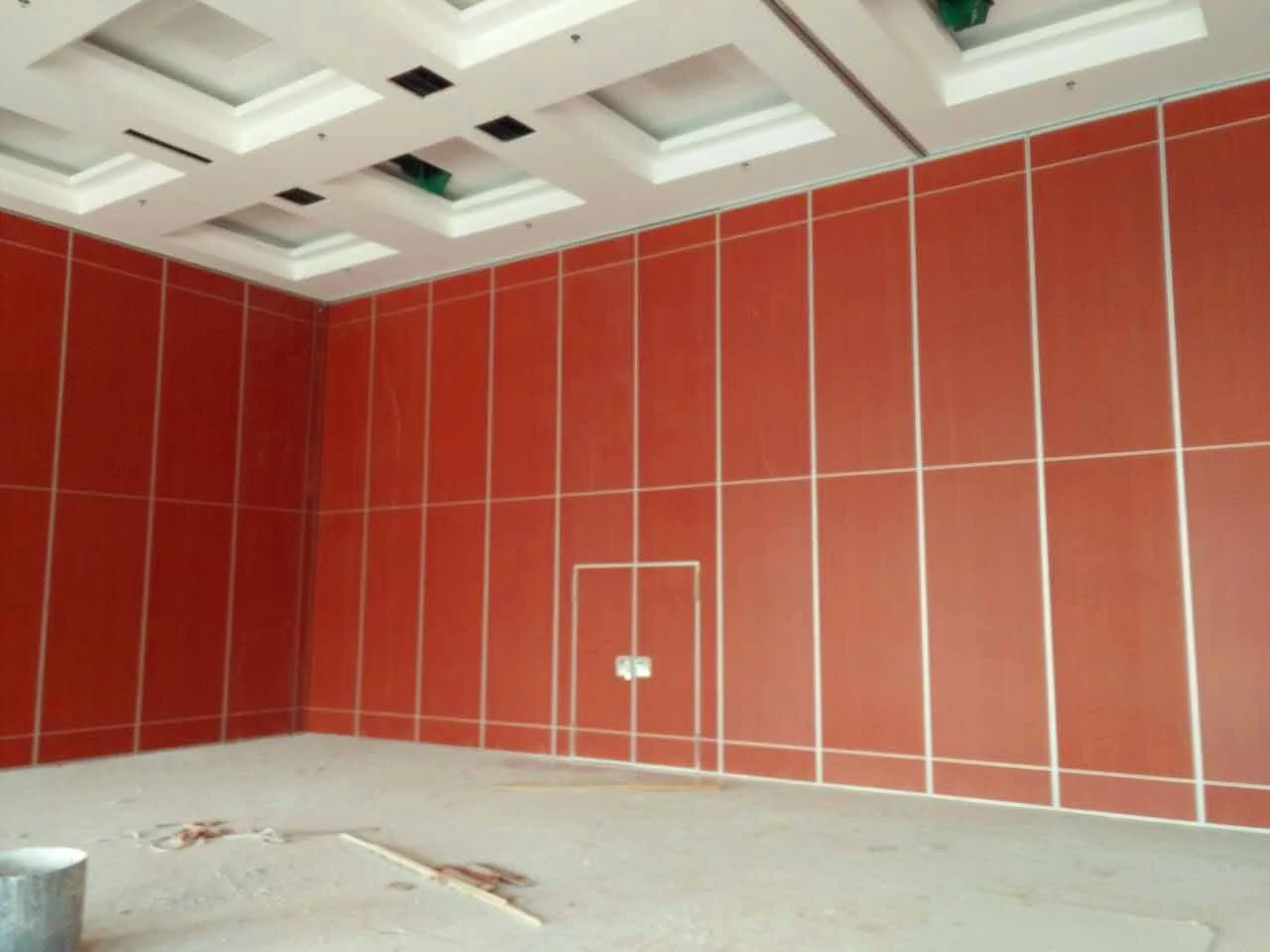
No. EBUNGE movable wall panels are top-hung and move without a continuous floor running track or floor hardware along the partition line. The exact route, junction arrangement, continuous overhead path and parking position must be confirmed from the coordinated project drawings.
Can the pocket be placed on the only accessible route?
That depends on the project layout, the route geometry and the coordinated design. The review should show the parked position, the travel path and every intersection with the accessible route, then confirm requirements with the responsible design professionals.
Which finish options are confirmed for EBUNGE movable walls?
Confirmed finish options include laminate, melamine, fabric, leather, glass and other approved surfaces.
How should acoustic requirements be handled in this review?
Treat acoustic requirements as project-specific. Confirm the required documentation and performance boundary with the project team rather than inferring results from a drawing or finish.
What documentation should be requested before ordering?
Request the current layout drawings, the movement and stacking route, the accessible route definition, pass-door requirements and any project-specific support, acoustic and dimensional confirmations. Use the resources page for general planning context and contact EBUNGE to discuss project documentation.
Conclusion and Next Step
A stacking pocket on the only accessible route is manageable when the review stays on drawings, maintained product facts and clearly stated confirmation boundaries. Start with the route, overlay the movement path, draw the parked position and assign every open question. Review the movable wall product context, then bring your layout to the project conversation.
Contact EBUNGE to discuss pass-door requirements, project documentation and the coordination questions your team needs answered before specification.