
Quick answer: movable partition tender query response
Review focus: movable partition tender query response.
A movable partition tender query response consistency audit is a structured review of every written answer issued during the bid period. Its purpose is to confirm that clarifications, addenda and technical responses still match the original specification, the issued drawings and the maintained product facts. When responses drift, contractors and owners can carry unresolved assumptions into award. This guide sets out an evidence-bounded method for comparing what was asked, what was answered and what still requires project-specific confirmation.
Why Consistency Matters More Than Volume in Tender Review
Project review term: movable partition tender query response.
A long response is not automatically a consistent one. A bidder may answer each query in isolation, producing replies that contradict an earlier addendum or a revised layout. The audit treats the full query log as one document set, not a series of separate emails.
The suitability of each route and parking arrangement depends on the approved layout, circulation, ceiling interfaces and operating sequence. A response may describe a movement route that no longer matches the current drawing, or it may repeat a finish option that was later replaced. Neither issue requires a performance claim to detect. Both require a reviewer to compare documents side by side.
Build the Audit File Before Reading Any Response
Coordination scope: movable partition tender query response.
Start by assembling the reference set. Without a fixed baseline, reviewers cannot tell whether a response is consistent or simply different.
- The issued specification and any approved addenda, in date order.
- The current architectural layout showing the opening, turning and stacking routes.
- The full tender query log, including questions withdrawn or superseded.
- All bidder responses, marked with the date and revision they address.
- Any project-specific support, acoustic or dimensional requirements already confirmed by the design team.
Keep this file under version control. If a drawing is reissued during the query period, earlier responses may need re-checking against the new revision.
Check Responses Against Maintained Product Facts
Checklist focus: movable partition tender query response.
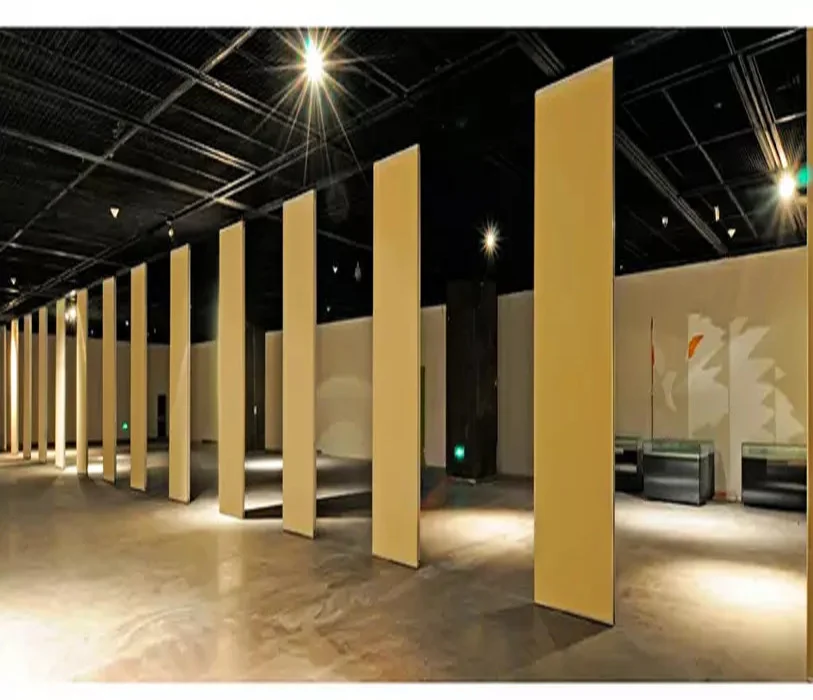
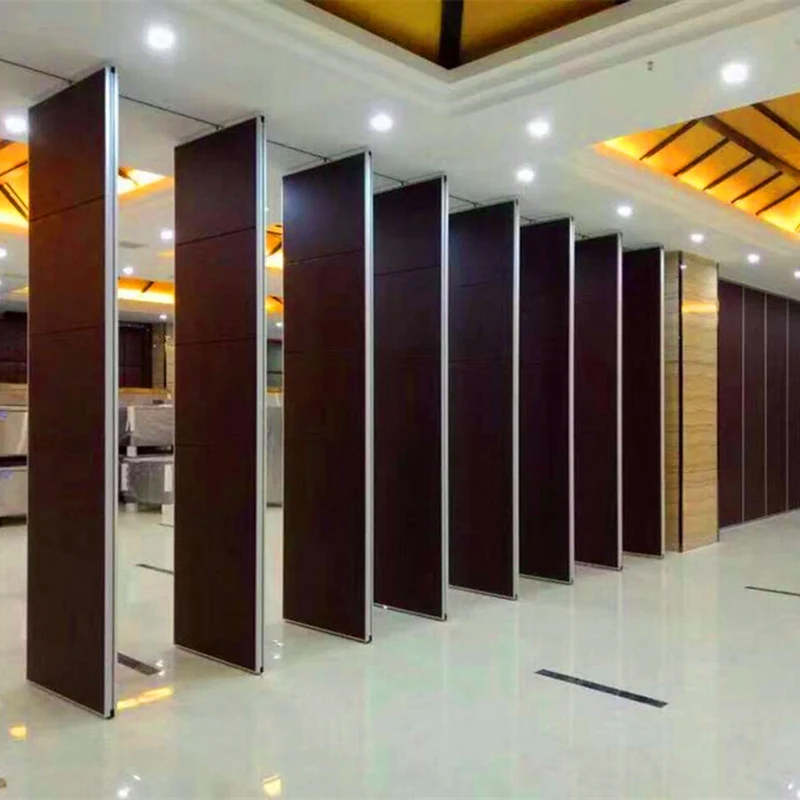
Movable wall panels are individually movable, suspended from a top track, cross the opening without a floor track and park at a planned stacking position. These are maintained product facts, and responses should not contradict them.
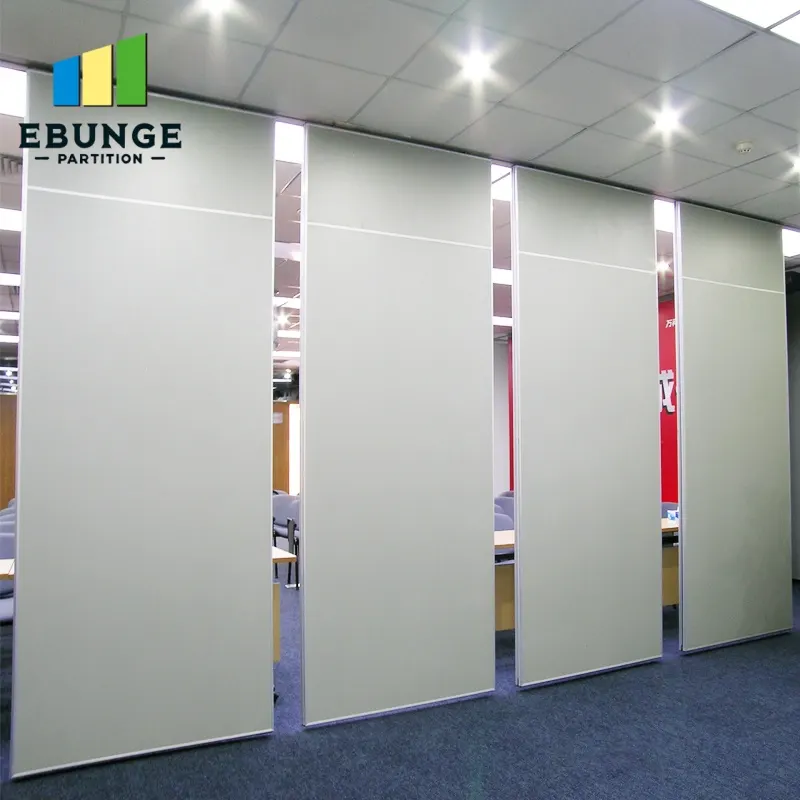
If a response implies a continuous floor running track along the partition line, treat it as a query rather than an accepted clarification. The exact route, junction arrangement, continuous overhead path and parking position must be confirmed from the coordinated project drawings. Every proposed movement path requires a continuous connected overhead route and project-specific support review.
Route review points
Straight, turning and stacking routes should be reviewed from the layout, not from a generic description. A response that describes a route without referencing the current drawing is incomplete for audit purposes.
Separate Confirmed Options from Unconfirmed Assumptions
Review focus: movable partition tender query response.
Confirmed finish options include laminate, melamine, fabric, leather, glass and other approved surfaces.
Visible references can support layout discussion but do not verify hidden construction or performance. If a response makes a comparative or absolute statement, it needs corresponding evidence or an explicit project-specific confirmation boundary.
Evidence note
An answer that cannot be traced to the specification, a current drawing or a maintained product fact should be logged as an open item, not accepted as a clarification.
Use a Repeatable Query Response Audit Process
A numbered process keeps reviewers aligned and makes the audit defensible if questions arise after award.
- Freeze the reference set and record the date of each document.
- Map every query to the specification clause or drawing it affects.
- Compare each response against the mapped reference, not against other responses alone.
- Flag contradictions, missing references and statements that exceed available evidence.
- Group flags by category: route, finish, dimensional, acoustic, support or documentation.
- Issue a consolidated clarification request rather than separate follow-ups.
- Record the final agreed position and confirm it against the next drawing revision.
Compare Response Types Without Ranking Bidders on Unsupported Claims
The table below helps reviewers classify responses by what they actually establish. It is a review aid, not a scoring model.
| Response type | What it can establish | What still needs confirmation |
|---|---|---|
| Drawing reference | Which layout revision was used | Whether the route and support conditions are coordinated |
| Finish statement | Which approved surface is proposed | Project-specific suitability and maintenance expectations |
| Acoustic statement | That acoustic intent is acknowledged | Project-specific acoustic requirements and evidence |
| Pass-door note | That access requirements were raised | Pass-door requirements and project documentation |
Coordinate Procurement and Tender Review Across Disciplines
The two records must be reconciled before responses are accepted.
Architects and interior designers can confirm layout intent and finish direction. Contractors and renovation teams can confirm site conditions and access constraints. Owners can confirm operational priorities. None of these roles should be asked to infer engineering or acoustic outcomes from a response that does not address them.
Where a query touches support, acoustic or dimensional requirements, route it to the responsible discipline and record the confirmation.
Document the Audit Outcome and Close Open Items
Finish with a short audit summary: queries reviewed, flags raised, clarifications issued and items still open. Attach the final agreed position to the tender file so it can be compared with the next revision.
This summary is also useful during post-tender review.
Frequently Asked Questions
What is a movable partition tender query response consistency audit?
It is a structured review that compares every tender query response against the specification, current drawings and maintained product facts to identify contradictions and unsupported statements.
Which documents should be included in the audit file?
Include the issued specification, approved addenda, current layout drawings, the full query log, all bidder responses and any confirmed project-specific requirements.
How should acoustic statements be treated during the audit?
Treat them as claims requiring project-specific evidence.
Can a response be accepted if it does not reference a drawing?
It can be logged, but it should not be accepted as a clarification until the relevant drawing revision and route are confirmed.
What should happen when two responses contradict each other?
Flag both, map them to the affected specification clause or drawing, and issue a consolidated clarification request rather than separate follow-ups.
When should project-specific requirements be confirmed?
Before award wherever possible. Support, acoustic and dimensional requirements should be confirmed for the application reference rather than inferred from generic responses.
Conclusion and Next Step
A consistent tender query response set reduces the risk of carrying unresolved assumptions into construction. By fixing the reference documents, checking responses against maintained product facts and logging every unsupported statement, project teams can compare bids on what is actually evidenced.
The exact overhead route and support arrangement must be confirmed by the responsible project team from coordinated drawings. Review the movable wall systems, explore further project planning resources, or contact EBUNGE to discuss pass-door requirements and project documentation.