
Quick answer: tender clarification response consistency audit
Review focus: tender clarification response consistency audit.
A movable partition tender clarification response consistency audit is the structured review of every bidder reply against the same tender questions, drawings and evidence boundaries. It helps contractors, architects, owners and procurement teams see whether each response addresses the same scope, or whether some answers quietly assume different site conditions, interfaces or documentation. The audit does not rank bidders by price or promise performance. It checks whether the information needed for a fair comparison is present, traceable and project-specific.
Why Clarification Responses Drift Apart
Project review term: tender clarification response consistency audit.
Clarification rounds often begin with good intentions. A tender query is issued, bidders reply, and the answers are filed. Drift appears when each reply is read in isolation. One bidder may describe a route based on the architectural layout, while another assumes a revised ceiling zone. One may list finish options broadly, while another names a specific surface without confirming its suitability for the room.
None of this automatically means a bid is wrong. It means the responses are not yet comparable. The audit exists to surface those differences before evaluation, so the project team can ask focused follow-up questions rather than infer missing detail.
What the Audit Should Compare
Coordination scope: tender clarification response consistency audit.
Start by building a single comparison matrix from the tender clarification questions. Every bidder response should be mapped to the same line items. The goal is not to create a score, but to reveal where evidence is present, absent or dependent on a project-specific confirmation.
Core comparison lines
- Scope statement: Does the reply describe the same opening, room or venue example, and does it treat that example as illustrative rather than limiting?
- Movement route: Does the response address the straight, turning and stacking routes shown on the coordinated layout?
- Top-hung condition: Does the reply confirm that panels are individually movable, suspended from a top track, cross the opening without a floor track, and park at a planned stacking position?
- Finish schedule: Does the response reference only confirmed finish options such as laminate, melamine, fabric, leather, glass and other approved surfaces, without implying unverified performance?
- Pass-door and documentation: Does the bidder acknowledge that pass-door requirements and project documentation can be discussed and confirmed?
- Evidence boundary: Does the reply avoid claiming acoustic, structural, fire, durability or commercial outcomes without matching project evidence?
Separating Product Facts from Project Assumptions
Checklist focus: tender clarification response consistency audit.
A consistent audit depends on knowing which statements are maintained product facts and which are project assumptions. Maintained facts can be repeated across bidders. Project assumptions must be confirmed against drawings, support conditions and the intended use of the space.
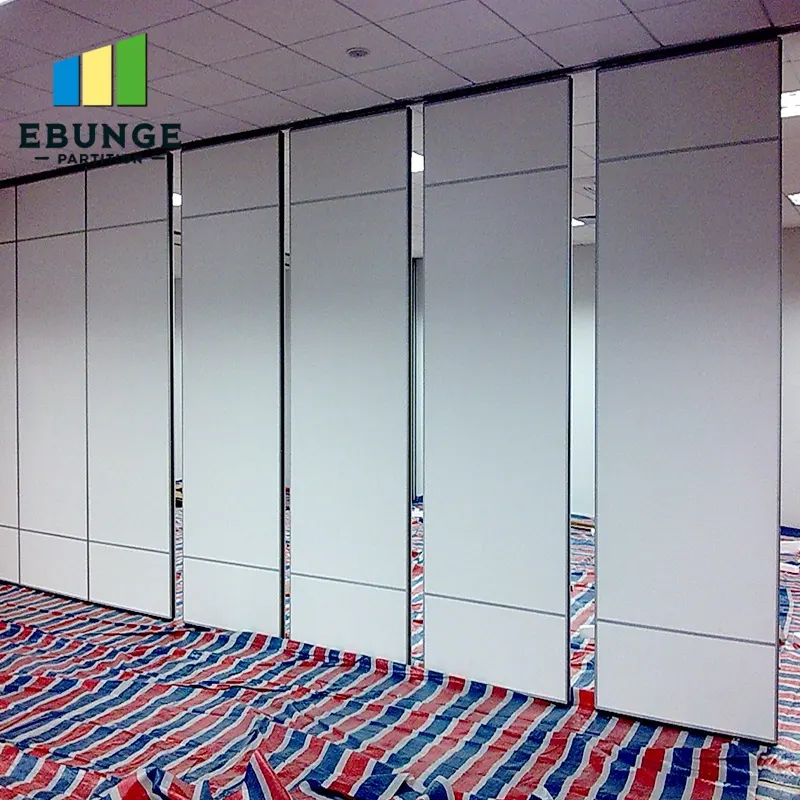
For example, the fact that panels are top-hung and move without a continuous floor running track is a product-level statement. Whether a specific overhead route can support the proposed layout is a project-specific question. The audit should keep those two categories separate in every response.
Evidence note
Do not treat a visible finish, a room photograph or a generic application example as proof of acoustic performance, structural capacity, cleaning compatibility or a application reference. Those points require project-specific confirmation.
A Step-by-Step Consistency Review Process
Review focus: tender clarification response consistency audit.
- Freeze the question set. Use the same clarification questions for every bidder and record the issue date.
- Log each response verbatim. Keep the original wording so later summaries do not change meaning.
- Map answers to the comparison matrix. Mark each line as answered, partially answered, not answered or requiring project confirmation.
- Flag unsupported claims. The exact overhead route and support arrangement must be confirmed by the responsible project team from coordinated drawings.
- Check route logic. The exact route, junction arrangement, continuous overhead path and parking position must be confirmed from the coordinated project drawings.
- Check parking logic. Confirm that the parking style is described as customized to the customer layout and project requirements, with compact stacking only where the coordinated design permits it.
- Issue a focused follow-up. Ask only for the missing evidence or confirmation, not for a rewritten bid.
- Re-audit the replies. Compare the new answers against the same matrix before evaluation proceeds.
Common Inconsistencies to Watch For
Some inconsistencies are obvious, such as one bidder answering a question about finishes while another answers a question about routes. Others are subtler. A response may use the same term as the tender but apply it to a different room boundary. Another may describe a stacking position that conflicts with the layout.
The audit should also watch for responses that convert a conceptual acoustic term into a promise. The suitability of each route and parking arrangement depends on the approved layout, circulation, ceiling interfaces and operating sequence. Any acoustic expectation must be confirmed for the specific project, assembly and space.
Compact comparison table
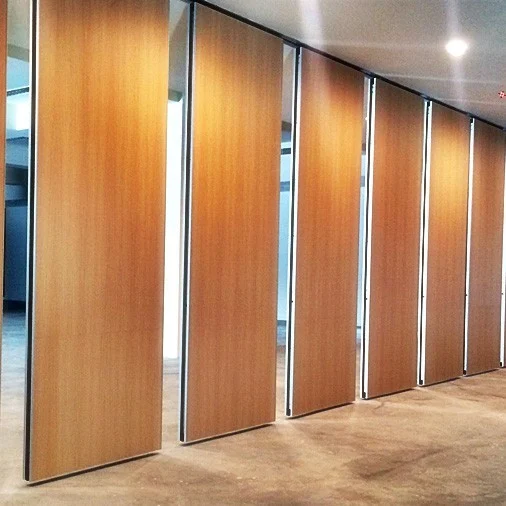
| Audit line | Consistent response looks like | Follow-up trigger |
|---|---|---|
| Movement route | References the coordinated straight, turning and stacking routes | Route described without layout reference |
| Floor condition | Confirms top-hung panels and no continuous floor running track | Mentions floor hardware along the partition line |
| Parking | States parking is customized to layout and project requirements | Assumes a fixed stacking position not shown on drawings |
| Finishes | Lists only confirmed options such as laminate, melamine, fabric, leather or glass | Implies performance from a finish name |
| Documentation | Confirms pass-door requirements and project documentation can be discussed | Leaves interface responsibilities undefined |
Coordinating the Audit Across Project Teams
The architect can confirm layout intent. The contractor can confirm site interfaces. The owner or operator can confirm how the room is expected to be used. Each contribution should be recorded against the same line item.
The audit makes those gaps visible.
Documenting the Audit Outcome
The final audit record should show what was asked, what was answered, what remains open and what must be confirmed before award. It should not declare a winner or imply that an unanswered point is a defect. Its purpose is to support a fair, evidence-based comparison.
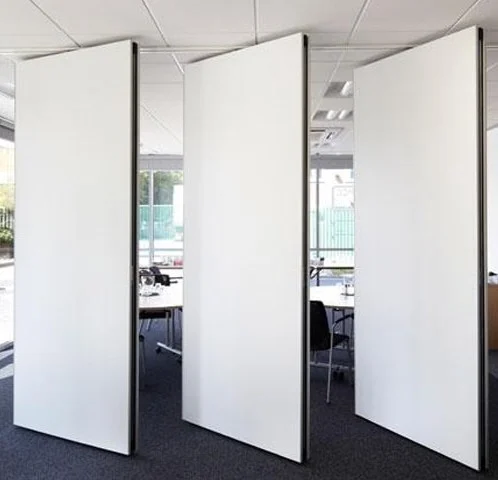
Keep the record with the tender file. If the project later changes, the audit trail shows which assumptions were tested and which still require confirmation. For broader buyer guidance, the resources page provides additional planning context, and the movable walls product page describes the maintained product facts that responses should align with.
Frequently Asked Questions
What is a movable partition tender clarification response consistency audit?
It is a structured review that compares every bidder’s clarification answers against the same tender questions, drawings and evidence boundaries. It checks completeness and traceability, not price or promised performance.
Which project information is required to run the audit?
You need the issued clarification questions, the coordinated layout showing straight, turning and stacking routes, the finish schedule, and any pass-door or documentation requirements. Project-specific support, acoustic and dimensional requirements should be confirmed separately.
Should the audit rank bidders?
No. The audit should map responses to a common matrix and flag missing or unsupported information. Ranking belongs to a later evaluation stage with its own criteria.
How should acoustic terms be handled in clarification replies?
Provide the current layout, opening dimensions, ceiling information, intended room use, and relevant project drawings for review. The exact overhead route and support arrangement must be confirmed by the responsible project team from coordinated drawings.
What if a bidder describes a different movement route?
Ask the bidder to align the response with the coordinated layout. Every proposed movement path requires a continuous connected overhead route and project-specific support review.
Can the audit confirm finishes such as laminate or glass?
The audit can check whether the response references confirmed finish options.
When should the audit be repeated?
Repeat it after each clarification round and whenever the layout, room use or documentation set changes. The same matrix should be used so comparisons remain consistent.
Conclusion
A movable partition tender clarification response consistency audit gives project teams a disciplined way to compare bidder replies without inventing performance, engineering or commercial conclusions. By mapping every answer to the same questions, separating maintained product facts from project assumptions, and documenting open items, you create a fairer basis for evaluation.
Confirm project-specific support, acoustic and dimensional requirements with the relevant specialists before relying on any clarification response. To discuss pass-door requirements, project documentation or a specific layout, contact EBUNGE and share the drawings and tender questions your team is working from.