
Quick answer: tender addendum acknowledgment audit
Review focus: tender addendum acknowledgment audit.
An operable wall tender addendum acknowledgment audit is a controlled check that every bidder has received, understood and priced the same revised tender information. Operable walls are configured to the opening, the parking position and the overhead route, so an addendum that changes a drawing or a finish schedule can change what each bidder is actually offering. The audit exists to close that gap before award.
Why Addenda Create Risk in Operable Wall Bids
Project review term: tender addendum acknowledgment audit.
Operable wall packages are layout-driven. Panels are individually movable, suspended from a top track, cross the opening without a floor track and park at a planned stacking position. Straight, turning and stacking routes are reviewed from the layout. When an addendum changes a route, a stacking zone or a finish, the bid must change with it.
Risk appears when bidders acknowledge an addendum in name only. One bidder may price the original opening; another may price the revised one. The comparison then looks like a price difference when it is really a scope difference.
Define the Audit Scope Before You Start
Coordination scope: tender addendum acknowledgment audit.
Decide which documents the audit covers. Typical candidates include addendum notices, revised tender drawings, finish schedules, pass-door requirements and any project documentation the team has issued. Confirm project-specific support, acoustic and dimensional requirements with the responsible design team rather than assuming them from a previous job.
Documents to register
- Addendum number, issue date and revision status
- Revised layout drawings showing straight, turning and stacking routes
- Finish schedule entries for laminate, melamine, fabric, leather, glass or other approved surfaces
- Pass-door requirements and any related documentation
- Bidder acknowledgment correspondence and returned forms
A Six-Step Acknowledgment Audit Process
Checklist focus: tender addendum acknowledgment audit.

- Freeze the addendum register. Give each addendum a unique reference and record its issue date.
- Map changes to bid items. Note which addendum items touch layout, finishes, pass doors or documentation.
- Issue a written acknowledgment request. Ask each bidder to confirm receipt and to state how the addendum affects their bid.
- Compare returned acknowledgments. Check that each bidder references the same addendum number and revision.
- Query silent or partial responses. Treat a missing response as an open item, not as acceptance.
- Record the outcome. Keep the audit trail with the tender file for the award decision.
Build a Bidder Acknowledgment Checklist
A short checklist keeps the audit consistent across bidders. It also gives the evaluation team a visible record of what was confirmed and what remains open.
| Check | Evidence to look for | Status |
|---|---|---|
| Addendum received | Signed or written acknowledgment referencing the addendum number | Open / Closed |
| Layout understood | Bidder confirms the revised straight, turning and stacking routes | Open / Closed |
| Finish schedule applied | Bid references the approved finish options for the project | Open / Closed |
| Pass-door scope addressed | Bidder states whether pass doors are included or excluded | Open / Closed |
| Documentation listed | Bidder lists the documents used to prepare the bid | Open / Closed |
Review Drawings, Routes and Parking Together
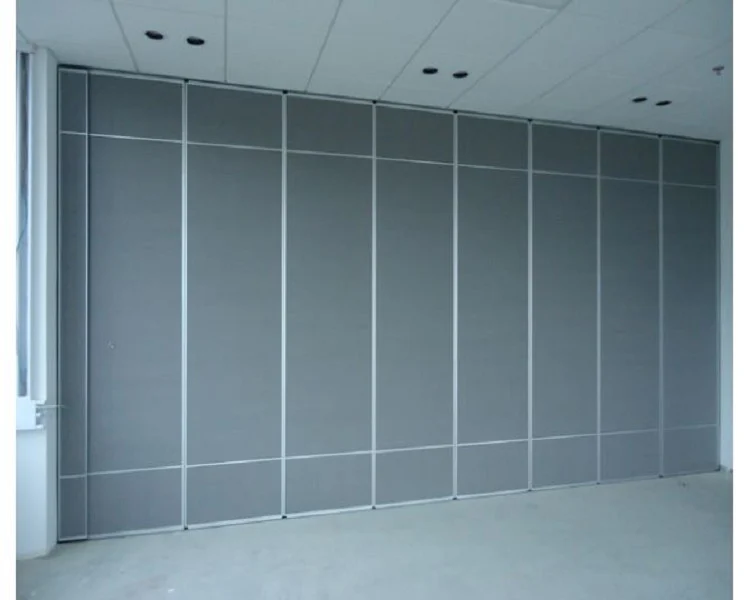
An addendum acknowledgment is only meaningful if the bidder has reviewed the same geometry. Ask each bidder to confirm the opening width, the planned stacking position and the overhead route. The exact route, junction arrangement, continuous overhead path and parking position must be confirmed from the coordinated project drawings.
Parking style is customized to the customer layout and project requirements and may support compact stacking when the coordinated design permits it. The audit should record whether the bidder has allowed for the parking arrangement shown in the revised drawings, or has flagged it as a query.
Handle Acoustic and Performance Language Carefully
The suitability of each route and parking arrangement depends on the approved layout, circulation, ceiling interfaces and operating sequence. If an addendum changes an acoustic requirement, the audit should record that the requirement changed and that the bidder has acknowledged it.
Evidence note: do not infer acoustic, fire, durability, load or maintenance performance from a finish, a drawing or a photograph. Confirm project-specific support, acoustic and dimensional requirements with the responsible parties before relying on any performance statement.
Close the Audit and Prepare for Award
Before award, confirm that every shortlisted bidder has a closed acknowledgment for each addendum. Open items should be resolved in writing, not verbally. Where a bidder has qualified their acknowledgment, record the qualification and decide whether it is acceptable.

Keep the audit file with the tender documentation so the award decision can be explained later. For product context, see the operable partition product page. For broader planning material, see the resources section.
Frequently Asked Questions
What is an operable wall tender addendum acknowledgment audit?
It is a structured check that each bidder has received, understood and priced the same addendum information for an operable wall package. It records what was acknowledged and what remains open.
Why is a written acknowledgment better than a verbal one?
A written acknowledgment creates a dated record that can be compared across bidders. Verbal confirmations are difficult to audit and easy to misremember.
Does every addendum require a full re-review of the layout?
Only addenda that touch layout, routes, parking, finishes, pass doors or documentation require that level of review. The audit scope should be defined at the start.
How should acoustic requirements be handled in the audit?
Record that the requirement changed and that the bidder acknowledged it.
What if a bidder does not return an acknowledgment?
Treat it as an open item. Follow up in writing and record the response, or the lack of one, before making an award decision.
Can the audit cover finish changes?
Yes. Confirmed finish options include laminate, melamine, fabric, leather, glass and other approved surfaces. The audit should confirm the bidder has applied the revised finish schedule.
Conclusion and Next Step
A disciplined addendum acknowledgment audit keeps operable wall bids comparable. Visible references can support layout discussion but do not verify hidden construction or performance. It simply confirms that every bidder is responding to the same revised information.
If your project needs help reviewing tender documentation, pass-door requirements or layout coordination, contact the EBUNGE team to discuss your project-specific requirements.