
Quick project answer
Review focus: parked panel stack.
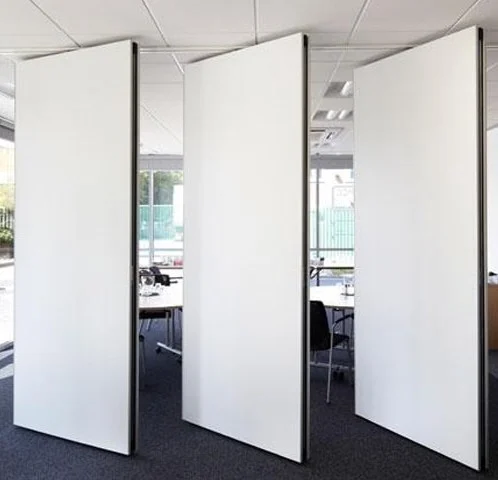
A parked panel stack ambulant route blockage review belongs in the earliest drawing coordination, not in a late site correction. EBUNGE movable wall panels are individually movable, suspended from a top track, cross the opening without a floor track, and park at a planned stacking position. That operating concept is simple, but the parked condition can still conflict with an ambulant route if the stacking location is treated as leftover space. This article gives overseas contractors, architects, interior designers, owners, renovation teams and distributors an evidence-bounded framework for reviewing that conflict before procurement.
Why the Parked Condition Deserves Its Own Review
Project review term: parked panel stack.
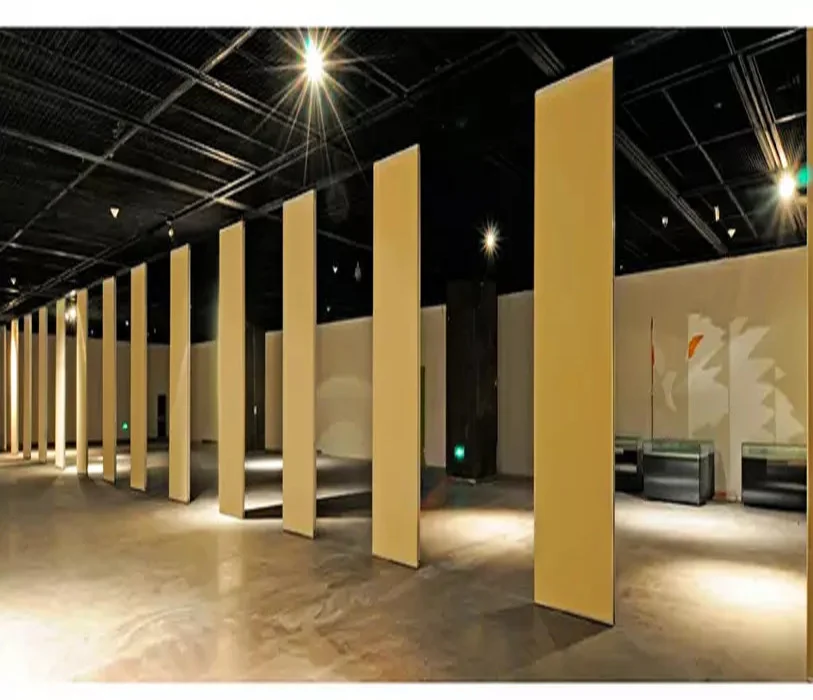
Most project conversations focus on the open and closed positions of a movable wall. The parked position is equally important because panels gather in one place and remain there while the room is used in another configuration. If that gathering point sits on the only ambulant route, the room may work in theory but fail in daily circulation.
A parked panel stack ambulant route blockage review asks a narrow question: when the panels are parked, is the remaining route still usable for the people expected to move through the space? This is a layout and coordination question. The suitability of each route and parking arrangement depends on the approved layout, circulation, ceiling interfaces and operating sequence.
What the review is not
It is a drawing-based check that helps the team identify conflicts early and route them to the right specialist.
Start With the Movement Routes, Not the Panel Count
EBUNGE reviews straight, turning and stacking routes from the layout. That means the review should begin with the paths panels take and the paths people take, then compare them. A stack that looks compact on a product page may still sit in the wrong place on a real plan.
Three route questions for the first meeting
- Where does each panel travel from the closed position to the parking position?
- Where do people travel when the panels are parked, and is that route the only ambulant option?
- Does the parking position remain clear of doors, circulation nodes and fixed equipment?
These questions are deliberately about geometry and use. They do not assume a performance result. They simply expose whether the parked condition has been drawn and discussed.
Evidence Boundaries for a Parked Panel Stack Ambulant Route Blockage Review
Project teams often want a quick answer about whether a stack will be acceptable. The honest answer is that acceptability depends on project-specific requirements that must be confirmed from drawings, local regulations and specialist input. EBUNGE can discuss pass-door requirements and project documentation, but the review still needs the project’s own evidence.
Evidence note: a visible finish, a photograph or a generic layout example does not prove acoustic performance, structural capacity, accessibility compliance or a application reference. Confirm project-specific support, acoustic and dimensional requirements with the responsible specialists.
What to confirm before freezing the layout
- Confirm the parking position on the architectural plan, not only in a product brochure.
- Confirm the continuous connected overhead route for every proposed panel movement.
- Confirm the dimensional requirements for the opening, the stack and the remaining route.
Each item is a confirmation boundary. None of them should be inferred from a finish sample or a similar-looking installation.
Coordination Between Trades and Drawing Sets
A simple coordination sequence
| Stage | Coordination focus | Output to confirm |
|---|---|---|
| Concept | Room use and route intent | Parking zone shown on plan |
| Design development | Route geometry and finishes | Straight, turning and stacking routes reviewed |
| Pre-construction | Support and dimensional interfaces | Project-specific requirements confirmed |
| Installation planning | Access and protection | Parked condition remains usable |
This table is a coordination aid, not a performance claim. The project team should adapt it to the actual procurement and approval process.
Finish Choices and the Parked Stack
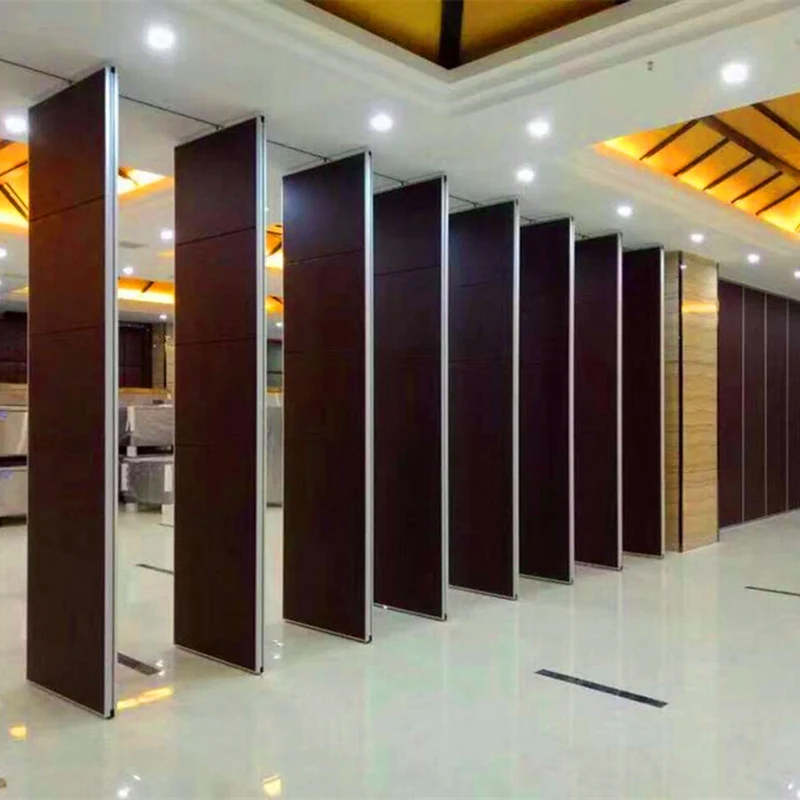
Confirmed finish options include laminate, melamine, fabric, leather, glass and other approved surfaces. Visible references can support layout discussion but do not verify hidden construction or performance. Those topics require their own project-specific evidence.
When reviewing finishes, ask whether the parked stack will be visible from primary seating or teaching positions, and whether the selected surface is appropriate for the project’s cleaning and maintenance plan. Confirm compatibility with the project team rather than assuming it from a generic sample.
Common Planning Mistakes to Avoid
One recurring mistake is treating the parking position as a minor annotation. The exact route, junction arrangement, continuous overhead path and parking position must be confirmed from the coordinated project drawings. Every proposed movement path requires a continuous connected overhead route and project-specific support review.
Checklist for the design team
- Is the parked stack drawn at the same scale as the ambulant route?
- Is the only ambulant route clear when the panels are parked?
- Are pass-door requirements discussed where needed?
- Are project documentation and approval responsibilities assigned?
- Are acoustic and dimensional requirements confirmed by the responsible specialists?
Use this checklist as a conversation starter. It does not replace local code review or specialist engineering.
FAQ: Parked Panel Stack and Ambulant Route Questions
What is a parked panel stack ambulant route blockage review?
It is a drawing-based review of whether the parked position of movable panels leaves the intended ambulant route usable. It focuses on layout and coordination, not on unverified performance claims.
Do EBUNGE panels need a floor track along the partition line?
No. EBUNGE movable wall panels are top-hung and move without a continuous floor running track or floor hardware along the partition line.
Can the parking position be customized?
Parking style is customized to the customer layout and project requirements and may support compact stacking when the coordinated design permits it. The final position must be confirmed on the project drawings.
Does a finish choice prove acoustic performance?
No.
What should be confirmed before installation?
Confirm project-specific support, acoustic and dimensional requirements, the continuous connected overhead route, and the remaining ambulant route with the responsible project specialists.
Where can project teams get more guidance?
Review the movable walls product page and the resources section, then contact EBUNGE to discuss pass-door requirements and project documentation.
Conclusion: Review the Parked Condition Early
A parked panel stack ambulant route blockage review is a small coordination step with a large planning benefit. It keeps the parked condition visible in the drawing set, protects the ambulant route, and separates confirmed product facts from project-specific requirements that still need evidence.
EBUNGE can discuss pass-door requirements and project documentation, but every project must confirm its own support, acoustic and dimensional requirements. Bring the layout, the route and the parking position to the conversation early.
Contact EBUNGE to discuss your project documentation and coordination questions.