
Quick answer: partition tender addendum impact review
Review focus: partition tender addendum impact review.
A partition tender addendum impact review bid submission process is the discipline of checking what changed after the original tender documents were issued, and whether the bid still reflects the current scope. Addenda often arrive late, sometimes only days before submission. For movable partition packages, the risk is not only price. It is whether the revised drawings, routes, finishes and documentation still describe the same system the team priced.
This guide sets out a review framework for overseas contractors, architects, interior designers, owners and renovation teams. It stays within maintained EBUNGE product facts and treats every performance, support and dimensional question as a project-specific confirmation item.
Why Addenda Create Risk in Partition Packages
Project review term: partition tender addendum impact review.
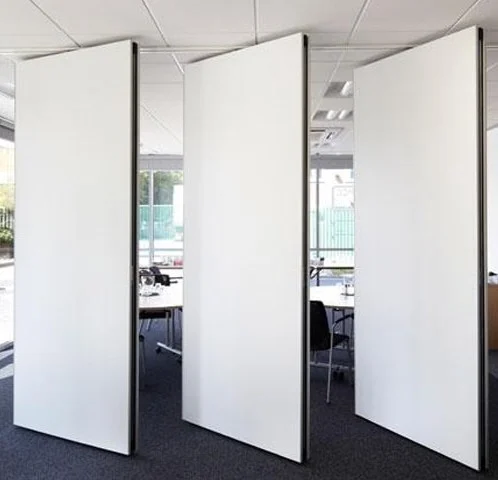
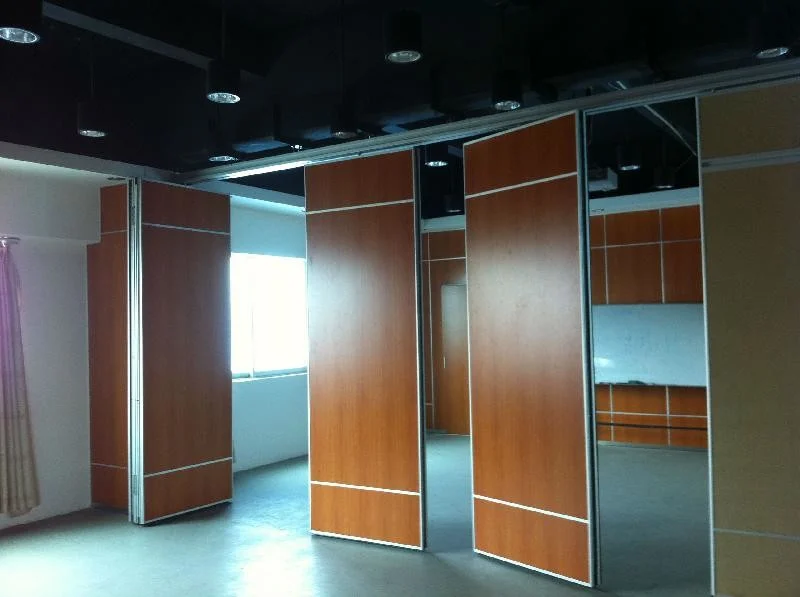
A movable partition is not a single product line item. It is a coordinated assembly: panels that are individually movable, suspended from a top track, crossing the opening without a floor track, and parking at a planned stacking position. When an addendum changes a room boundary, a route or a finish schedule, several linked assumptions can move at once.
The common failure is treating the addendum as a price adjustment only. A revised opening width, a new turning point or a changed parking location can affect how the layout is reviewed, even when the panel finish is unchanged. The bid should show that these items were re-checked, not assumed.
What an addendum can legitimately change
- Room boundaries, opening dimensions or the number of separate partition runs.
- Straight, turning and stacking routes shown on the layout.
- Finish schedules, including laminate, melamine, fabric, leather, glass and other approved surfaces.
- Pass-door requirements and the documentation expected with the submission.
- Submission deadlines, tender forms or required technical schedules.
What an addendum cannot prove by itself
The exact overhead route and support arrangement must be confirmed by the responsible project team from coordinated drawings. Those remain project-specific items to confirm with the responsible parties. The suitability of each route and parking arrangement depends on the approved layout, circulation, ceiling interfaces and operating sequence.
A Step-by-Step Addendum Impact Review Process
Coordination scope: partition tender addendum impact review.
Run the review as a short, documented sequence. The goal is a clear record of what changed, what was re-checked and what still needs confirmation before the bid is submitted.
- Log every addendum. Record the issue date, reference number and the clauses or drawings affected. Confirm that all addenda are included in the bid basis.
- Compare scope, not just price. Identify changes to openings, routes, stacking positions, finishes and pass-door requirements.
- Re-check the layout routes. Confirm that straight, turning and stacking routes remain connected and reviewable on the current drawings.
- Separate confirmed facts from assumptions. Mark any statement about support, acoustics, dimensions or installation that lacks matching project evidence.
- Update the documentation pack. Align technical schedules, finish references and submission forms with the latest addendum.
- Record open items. List questions that must be answered by the design team or client before submission or award.
Who should be in the review
A contractor may see a buildability issue, an architect may see a drawing conflict, and an owner may see a change in room use. Each perspective should be captured in the same addendum log so the bid reflects one coordinated position.
Drawing and Route Checks That Belong in the Bid File
Checklist focus: partition tender addendum impact review.
Movable partition routes are reviewed from the layout. The bid file should show that the current addendum drawings were used, and that the proposed movement path is continuous and supported by the project design. The exact route, junction arrangement, continuous overhead path and parking position must be confirmed from the coordinated project drawings.
Parking style is customized to the customer layout and project requirements and may support compact stacking when the coordinated design permits it. The bid should state the parking approach shown on the reviewed layout, and flag any addendum change that affects the stacking position.
Evidence note: what the bid should not claim
Do not derive hidden acoustic, fire, durability, load, maintenance, certification or commercial performance from a visible shape, finish, photograph or drawing. Comparative, absolute and causal statements require corresponding evidence; otherwise remove them or state the exact project-specific confirmation boundary.
Finish, Pass-Door and Documentation Coordination
Review focus: partition tender addendum impact review.
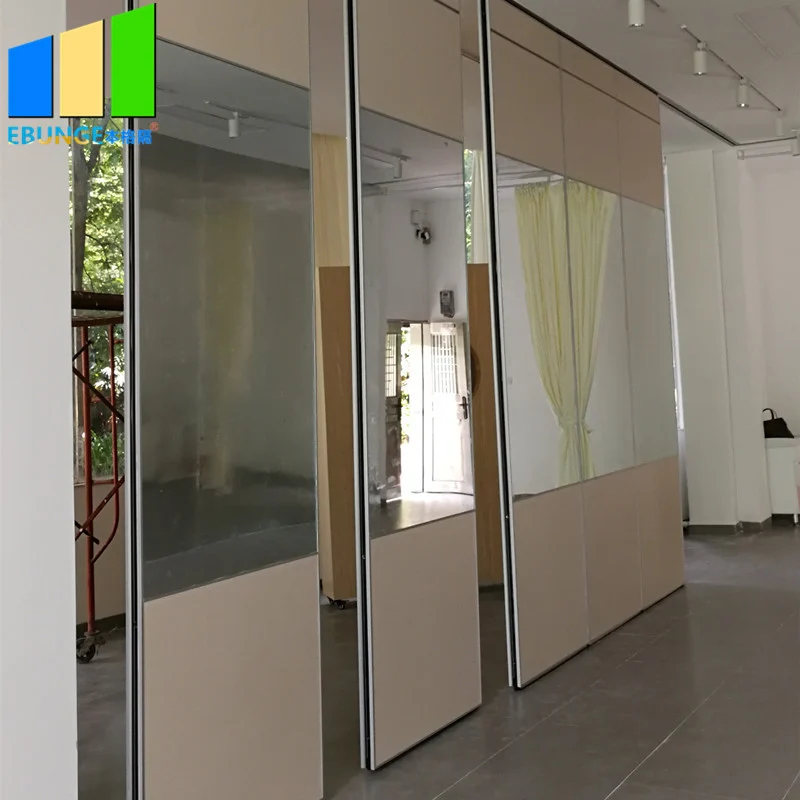
Confirmed finish options include laminate, melamine, fabric, leather, glass and other approved surfaces. An addendum that changes a finish schedule should be checked against the approved list and the project’s own requirements.
Pass-door requirements and project documentation can be discussed with the supplier. If an addendum introduces a pass door or changes its position, the bid should note the revised requirement and confirm the associated documentation before submission.
Compact comparison: original tender versus addendum review
| Review area | Original tender basis | Addendum review action |
|---|---|---|
| Opening and routes | Drawings issued at tender | Re-check straight, turning and stacking routes on the latest layout |
| Finish schedule | Approved finish list | Confirm changes against laminate, melamine, fabric, leather, glass or other approved surfaces |
| Pass doors | Stated requirements | Confirm revised pass-door needs and documentation |
| Performance statements | Specification clauses | Mark as project-specific confirmation items, not inferred results |
| Submission pack | Original forms and schedules | Align all documents with the latest addendum |
Common Addendum Review Mistakes to Avoid
Panel handling and the operating sequence must be confirmed for the selected layout and project conditions. Teams under deadline pressure may accept an addendum without re-reading the affected drawings, or they may carry forward an assumption from the original bid that no longer applies.
- Pricing the addendum without checking route or stacking changes.
- Assuming a finish change has no coordination impact.
- Leaving performance statements unqualified when evidence is not available.
- Submitting a documentation pack that mixes old and new drawing revisions.
- Failing to record open items for the design team or client.
How to keep the bid defensible
A defensible bid states its basis clearly. It identifies the addendum revision used, lists the confirmed product facts, and separates project-specific confirmation items from settled scope. This protects the bidder and gives the reviewer a clear picture of what is included.
Frequently Asked Questions
What is a partition tender addendum impact review?
It is a structured check of how addenda change the scope, drawings, finishes, routes and documentation of a movable partition package before the bid is submitted.
Does every addendum require a full re-pricing?
Not necessarily. The review should first identify what actually changed. Some addenda affect documentation only, while others change openings, routes, stacking positions or finishes and need commercial re-checking.
Can acoustic performance be confirmed from the addendum drawings?
No.
How should route changes be handled before submission?
Re-check the straight, turning and stacking routes on the latest layout. Every proposed movement path requires a continuous connected overhead route and project-specific support review.
What documentation should accompany the bid?
Project documentation can be discussed with the supplier. At minimum, the bid should reference the addendum revision used and record any open items that still need confirmation.
Where can teams find more planning guidance?
Review the movable wall systems overview and the project resources for general planning context, then confirm all project-specific requirements directly.
Conclusion and Next Step
A partition tender addendum impact review bid submission is a coordination exercise, not a paperwork formality. By logging changes, re-checking routes and finishes, separating confirmed facts from assumptions, and recording open items, project teams can submit a bid that reflects the current tender basis.
Keep every performance, support and dimensional statement tied to project-specific confirmation. Where evidence is not available, say so clearly rather than inferring a result.
To discuss pass-door requirements, finish options or project documentation for your movable partition package, contact the EBUNGE team and share your latest addendum and layout drawings.