
Quick answer: changeover policy rewrite
Review focus: changeover policy rewrite.
A changeover policy rewrite room scheduling rule conflict is rarely caused by the policy document itself. It appears when the timetable assumes a room can be divided, combined or cleared in a way the physical layout cannot support. The rewrite should start with the movement path, the parking position and the evidence you actually hold, not with a new set of time slots.
Why Scheduling Rules Break Before the Policy Does
Project review term: changeover policy rewrite.
Scheduling rules are written around room names and time blocks. Changeover policy is written around what happens between those blocks. When the two are drafted separately, the conflict stays hidden until a busy week exposes it.
Typical triggers include a booking that needs two smaller rooms joined, a session that needs a large room split, or a clear-floor requirement that conflicts with where panels are expected to rest. None of these are policy failures on their own. They are coordination gaps between the timetable and the installed layout.
Start With the Movement Route, Not the Timetable
Coordination scope: changeover policy rewrite.
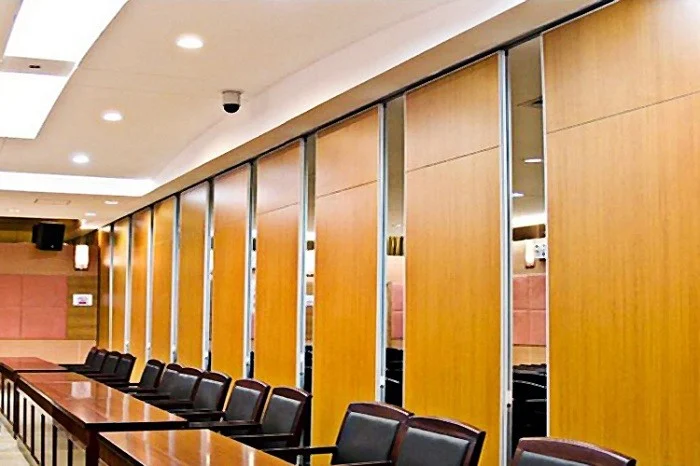
EBUNGE movable wall panels are individually movable, suspended from a top track, cross the opening without a floor track, and park at a planned stacking position. That single sentence carries most of the operational logic a changeover policy needs.
Straight, turning and stacking routes are reviewed from the layout. A route that looks simple on a floor plan may involve a turn, a change of direction or a parking area that overlaps another function. The policy rewrite should describe the route in the same terms the layout uses.
Route questions to settle before rewriting rules
- Where does each panel travel from its closed position to its parked position?
- Does the route require a turn, and is that turn shown on the reviewed layout?
- Is the parking position planned, or is it assumed to be wherever space happens to exist?
- Does the parked position block a door, a service route or another scheduled activity?
Every proposed movement path requires a continuous connected overhead route and project-specific support review. Do not treat a drawing line as confirmation of support, load or clearance.
Parking Position Is a Scheduling Decision
Checklist focus: changeover policy rewrite.
Parking style is customized to the customer layout and project requirements and may support compact stacking when the coordinated design permits it. That flexibility is useful, but it does not remove the need to decide where panels live when the room is open.

If the parking position sits inside another bookable area, the timetable and the changeover policy will keep colliding. The rewrite should either reserve that area or move the parking position during design review.
Compact comparison: policy assumptions vs. layout evidence
| Policy assumption | What the layout must show |
|---|---|
| Panels can be cleared quickly | A defined route from opening to parking position |
| Any staff member can reset the room | Who is responsible, confirmed by the project team |
| Parking fits beside the opening | A planned stacking position that does not block other use |
| Acoustic separation is adequate | Project-specific acoustic requirements confirmed separately |
This table is a coordination tool, not a performance statement. Each row needs project-specific confirmation before it becomes a rule.
Separate Confirmed Facts From Assumptions
A changeover policy rewrite becomes risky when it converts assumptions into commitments. Confirmed finish options include laminate, melamine, fabric, leather, glass and other approved surfaces. Finish choice affects appearance and maintenance planning, but it does not by itself confirm acoustic, fire or durability performance.
Pass-door requirements and project documentation can be discussed with the supplier. If a policy depends on a pass door, that dependency belongs in the specification conversation, not in a scheduling rule written in isolation.
Evidence note: visible shape, finish or a photograph does not confirm acoustic, structural, fire, durability or commercial performance. Those require matching project evidence.
Rewrite the Policy in a Fixed Sequence
A repeatable sequence keeps the rewrite tied to verifiable information and prevents the timetable from driving decisions it cannot support.
- List every room state the timetable requires: open, divided, combined or partially divided.
- Map each state to a reviewed route and a planned parking position.
- Identify which states depend on pass doors or other project documentation.
- Confirm acoustic and dimensional requirements for each state with the project team.
- Write changeover rules only for states the layout can support.
- Record open items and assign them to design review, not to operations.
Steps five and six are where most rewrites succeed or fail. A rule that depends on an unconfirmed item should be marked as provisional until the item is closed.
Coordinate Acoustic Expectations Without Overclaiming
The suitability of each route and parking arrangement depends on the approved layout, circulation, ceiling interfaces and operating sequence. Seals, junctions, adjacent construction and the surrounding building all influence the result.
For policy purposes, the practical question is whether the required separation has been confirmed for the specific opening, panel configuration and project conditions. If it has not, the changeover policy should not promise a level of separation it cannot verify.
What to confirm with the project team
- Acoustic requirements for each room state, expressed as project criteria.
- Dimensional requirements, including opening width and height.
- Support and overhead route conditions along the full movement path.
- Documentation needed for approvals, handover or facilities planning.
Documentation That Makes the Rewrite Defensible
A defensible policy points to the drawings and confirmations behind each rule. Keep the reviewed layout, the route description, the parking position and the list of open items together as one package.
When a scheduling conflict reappears, the team can then check whether the rule, the layout or the booking assumption changed. Panel handling and the operating sequence must be confirmed for the selected layout and project conditions.
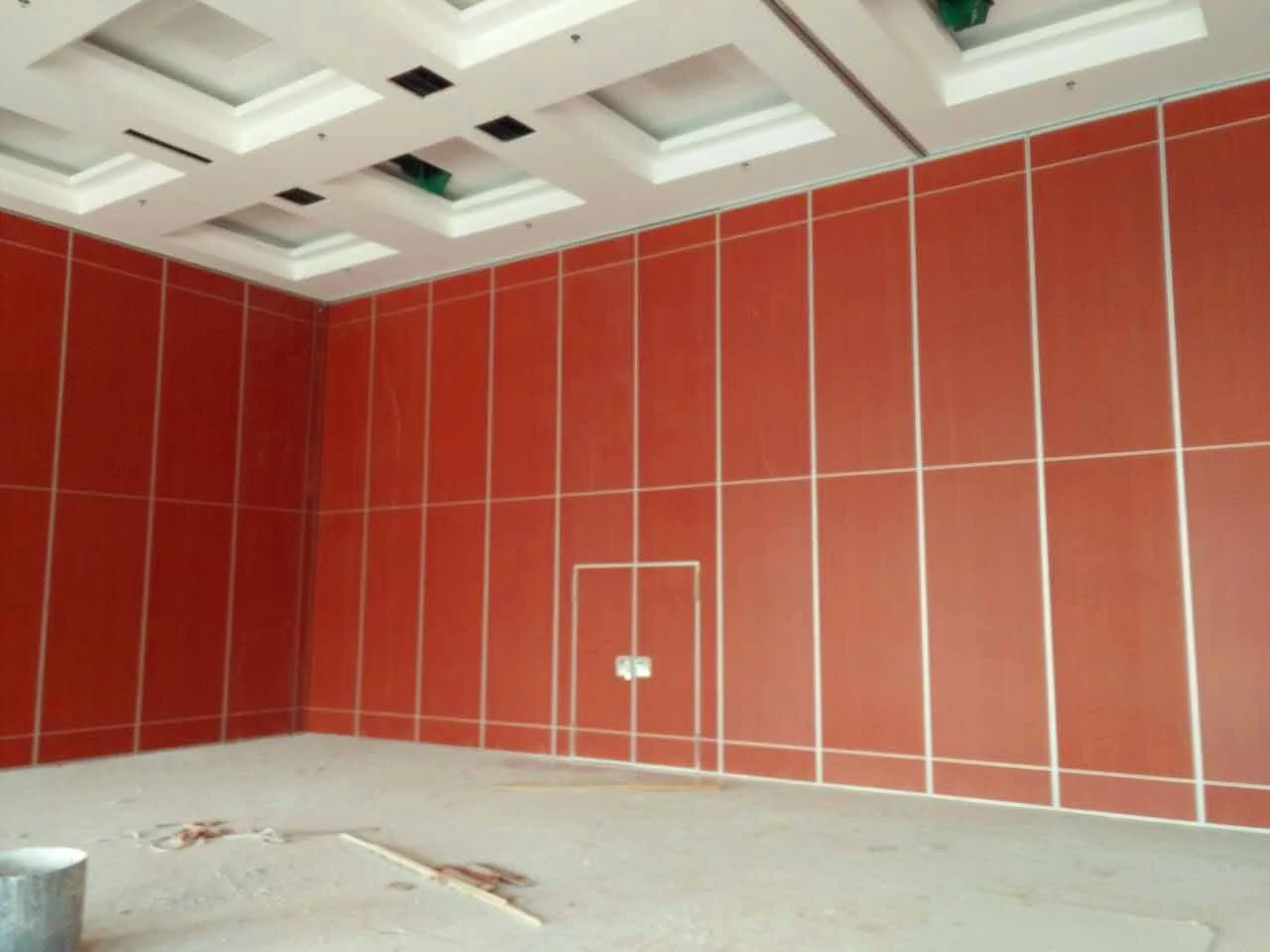
For product context, see the movable walls range. For planning references, use the resources library. When the rewrite depends on project-specific support, acoustic or dimensional confirmation, contact the team with the layout and requirements.
Frequently Asked Questions
What causes a changeover policy rewrite room scheduling rule conflict?
Most conflicts come from a mismatch between booked room states and the reviewed movement route or parking position. The policy is usually the messenger, not the cause.
Do movable partitions need a floor track for changeovers?
EBUNGE movable wall panels are top-hung and cross the opening without a floor track. Routes still require a continuous connected overhead path and project-specific support review.
Can parking be customized to our layout?
Parking style is customized to the customer layout and project requirements and may support compact stacking when the coordinated design permits it. The stacking position should be planned during layout review.
Can the policy rely on acoustic ratings alone?
No. Required separation must be confirmed for the specific opening, configuration and project conditions.
Which finishes can be considered?
Confirmed finish options include laminate, melamine, fabric, leather, glass and other approved surfaces. Finish selection does not by itself confirm acoustic, fire or durability performance.
What should be confirmed before the policy is issued?
Confirm support, acoustic and dimensional requirements, pass-door needs and project documentation with the project team. Mark any rule that depends on an open item as provisional.
Conclusion
A changeover policy rewrite works when it follows the layout rather than arguing with it. Define the room states, verify the routes and parking positions, separate confirmed facts from assumptions, and keep acoustic and dimensional requirements tied to project-specific confirmation.
Done in that order, the rewrite resolves the scheduling conflict without inventing performance, time or cost claims the project cannot support.
Send your layout, room states and open questions through the contact page so the support, acoustic and dimensional requirements can be reviewed against your project.