
Quick answer: partition track datum verification before anchoring
Review focus: partition track datum verification before anchoring.
Partition track datum verification before anchoring is a shared responsibility, not a single trade’s task. On a top-hung movable wall system, panels are individually movable, suspended from a top track, cross the opening without a floor track, and park at a planned stacking position. Cost and maintenance requirements depend on the selected configuration, finish and project conditions and require project-specific confirmation. This article explains who should confirm the datum, what evidence belongs in the record, and how project teams can coordinate the check without assuming performance that has not been verified.
What the Track Datum Actually Controls
Project review term: partition track datum verification before anchoring.
The track datum is the agreed reference line and level from which the overhead track is positioned. The exact route, junction arrangement, continuous overhead path and parking position must be confirmed from the coordinated project drawings. Because the system is top-hung, the floor remains clear along the partition line, but the overhead route must be continuous and supported according to the project design.
A datum error can affect how panels travel, how they meet at the closing point, and whether the stacking position works with the room layout. The suitability of each route and parking arrangement depends on the approved layout, circulation, ceiling interfaces and operating sequence. Those are separate project-specific questions that require matching evidence.
Who Should Verify the Datum Before Anchoring?
Coordination scope: partition track datum verification before anchoring.
Verification is usually a coordinated sign-off rather than one person’s decision. The table below shows typical roles and their focus. Exact responsibilities depend on the contract and local practice.

| Role | Typical verification focus |
|---|---|
| Main contractor or site manager | Confirms the setting-out reference matches approved drawings and site conditions. |
| Architect or designer | Checks that the track route, turning points and stacking zone match the design intent. |
| Structural or support specialist | Reviews the overhead support arrangement and fixing strategy for the project. |
| Partition installer or distributor | Confirms the supplied track and panel interface can follow the coordinated route. |
| Owner or facilities representative | Confirms the stacking position and access do not conflict with operational needs. |
No single role should anchor before the others have had the chance to review the datum against the current drawing set. If the project uses a different responsibility matrix, record that in the coordination notes.
Information to Gather Before the Crew Starts
Checklist focus: partition track datum verification before anchoring.
Good verification depends on having the right documents available. The following checklist is a practical starting point. It is not a substitute for project-specific engineering review.
- Reflected ceiling plan or overhead coordination drawing showing the track route.
- Support structure information relevant to the overhead fixing.
- Confirmed finish schedule for the panels, including laminate, melamine, fabric, leather, glass or other approved surfaces.
- Pass-door requirements, if the layout includes them.
- Any project-specific acoustic or dimensional requirements already agreed by the design team.
If any item is missing or marked as provisional, treat the datum as unverified. Anchoring should wait until the open item is resolved or formally accepted as a project risk.
A Step-by-Step Verification Sequence
The order below helps avoid anchoring to a reference that later changes. It can be adapted to the project’s method statement.
- Confirm the approved drawing revision and issue date.
- Mark the datum on site and compare it with the drawing dimensions.
- Walk the full route, including straight runs, turning points and the stacking zone.
- Check that the overhead support condition matches the coordinated design.
- Record any deviation and obtain a decision before proceeding.
- Complete the sign-off and only then begin anchoring.
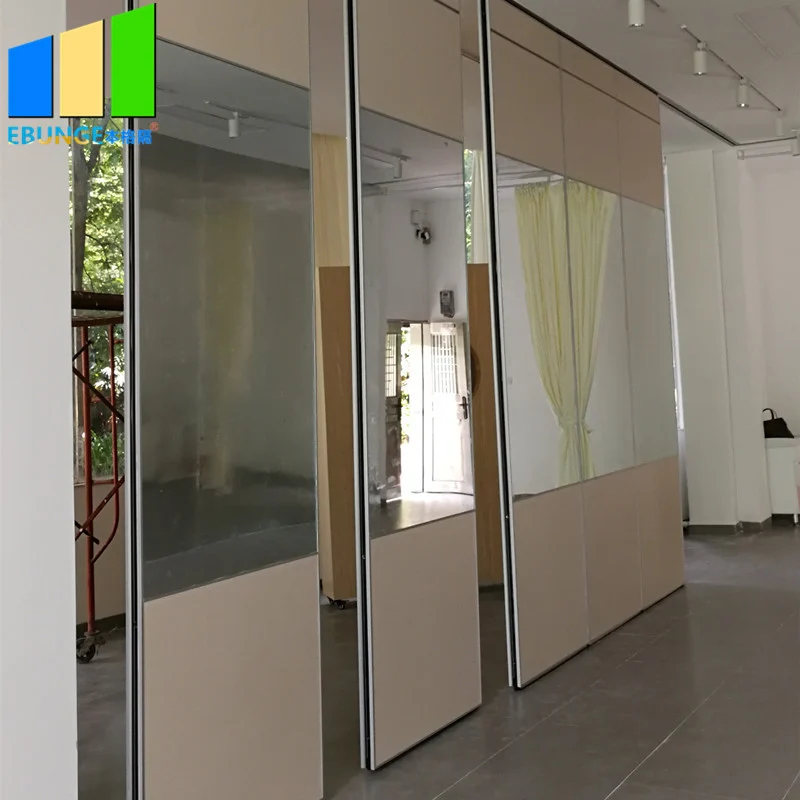
This sequence is about geometry and coordination. Those require separate, project-specific documentation.
Evidence Boundaries: What the Datum Check Cannot Prove
A verified datum is a geometric and coordination milestone.
Similarly, a finish selection such as laminate, melamine, fabric, leather or glass does not by itself confirm cleaning compatibility, impact resistance, or acoustic behavior. Those questions need their own evidence. When a drawing shows a track route, it shows intent, not measured performance.
Coordination Points That Often Cause Rework
Most datum problems surface at interfaces.
Pass-door requirements also need early coordination because they affect panel sequencing and the closing point. If the project includes pass doors, confirm the requirement with the supplier and the design team before the track route is finalized.
Parking style is customized to the layout and project requirements. Compact stacking may be possible when the coordinated design permits it, but it should not be assumed. The stacking position must be shown on the approved layout and reviewed by the relevant parties.
Documentation and Sign-Off
A simple record prevents disputes. The record should identify the drawing revision, the datum reference, the date of verification, the parties present, and any open items. Photographs of the marked datum and the overhead condition can support the record, but they do not replace the signed check.

If the project requires formal documentation, discuss the format with the supplier and the project team. EBUNGE can discuss pass-door requirements and project documentation, but the final responsibility matrix remains a contract matter.
Frequently Asked Questions
Who is responsible for partition track datum verification before anchoring?
Responsibility is usually shared. The contract should define the final sign-off authority.
Can the installer verify the datum alone?
Those need input from the relevant project parties.
What happens if the datum is wrong after anchoring?
Correction may require removing anchors, revising the support arrangement, or adjusting the route. The exact impact depends on the project. This is why verification should happen before anchoring begins.
Does a top-hung system need a floor track?
EBUNGE movable partition panels are top-hung and move without a continuous floor running track or floor hardware along the partition line. The overhead route must still be continuous and supported according to the project design.
Does datum verification confirm acoustic performance?
No. Datum verification is a geometric and coordination check.
What finishes can be considered?
Confirmed finish options include laminate, melamine, fabric, leather, glass and other approved surfaces. Finish selection should be coordinated with the design team and confirmed for the specific project.
Conclusion: Verify First, Anchor Second
Partition track datum verification before anchoring protects the project from avoidable rework. It brings the drawing, the site condition and the overhead route into agreement before irreversible work begins.
For coordination support, review the movable wall product information, consult the project resources, or contact EBUNGE to discuss your layout, pass-door requirements and documentation needs.