
Quick answer: room release buffer
Review focus: room release buffer.
When a changeover policy room release buffer booking pressure conflict appears on a project, it usually shows up as a simple question: how much time must pass between one booking and the next? The honest answer is that the buffer is a planning decision, not a product specification. It depends on the room layout, the movement route, the parking position and the project-specific requirements that only the project team can confirm. This article offers an evidence-bounded framework for setting that buffer without inventing performance, cost or engineering conclusions.
Why the Buffer Question Is a Coordination Problem
Project review term: room release buffer.
Booking pressure tends to pull release times earlier. Changeover policy tends to protect a minimum interval. The buffer sits between them, and it is often treated as a single number when it is really the output of several coordinated decisions.
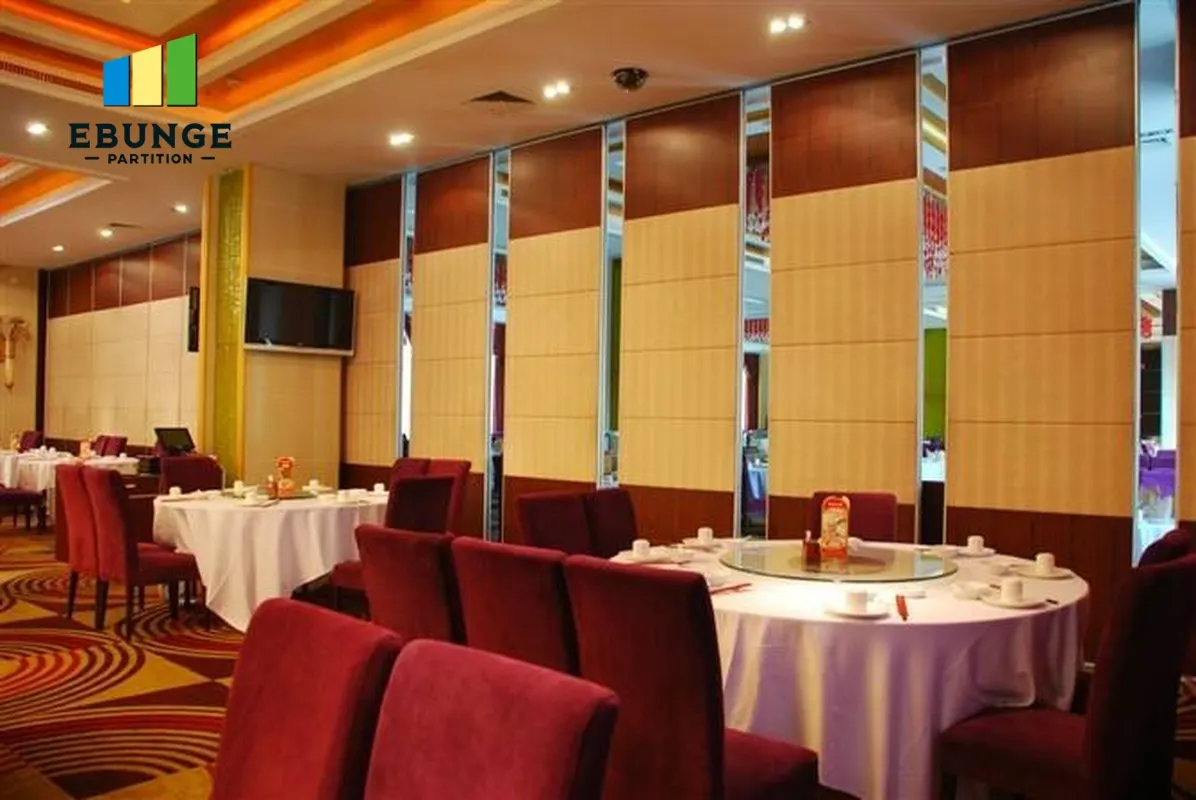
For movable partitions, those decisions include how panels are individually moved, how they are suspended from a top track, how they cross the opening without a floor track, and where they park at a planned stacking position. Each of these is reviewed from the layout, not assumed from a photograph or a generic finish sample.
What the Maintained Product Facts Actually Support
Coordination scope: room release buffer.
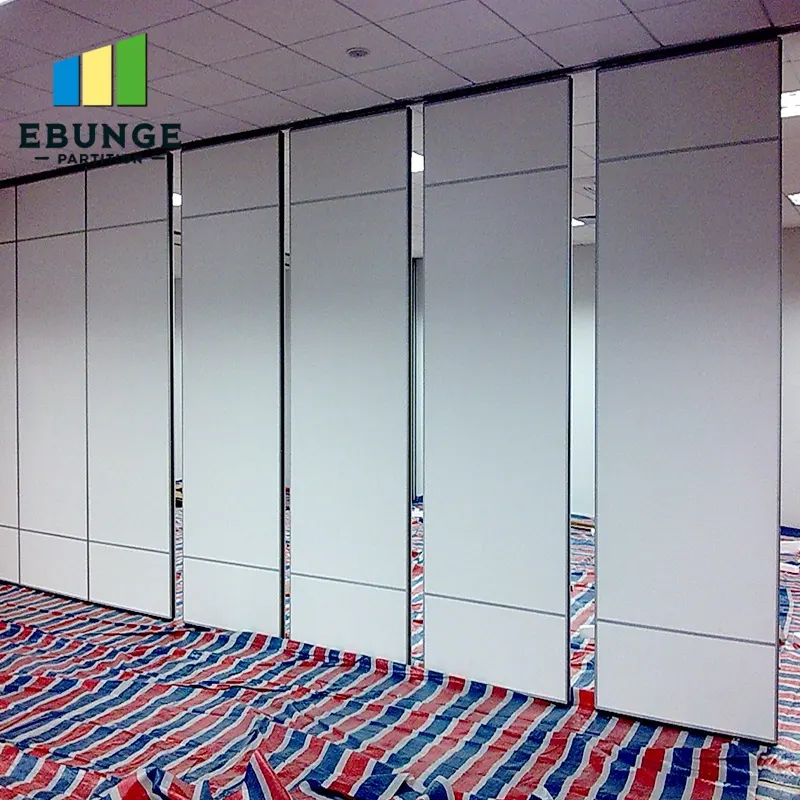
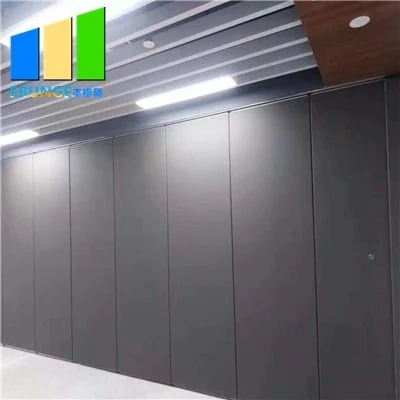
EBUNGE movable wall panels are individually movable and suspended from a top track. They cross the opening without a floor track and park at a planned stacking position. Straight, turning and stacking routes are reviewed from the layout. Confirmed finish options include laminate, melamine, fabric, leather, glass and other approved surfaces. Pass-door requirements and project documentation can be discussed.
Those facts describe movement and configuration. They do not describe how long a changeover takes, how many people are needed, or how a specific room will perform acoustically. Any buffer built on those assumptions would be unsupported.
An Evidence Note for Project Teams
Treat every buffer number as a project-specific planning assumption until the layout, route, parking position and support conditions have been reviewed. Do not convert a visible finish, a drawing or a product photograph into a performance claim.
A Step-by-Step Process for Setting the Buffer
Checklist focus: room release buffer.
The following sequence keeps the discussion anchored to drawings and confirmed requirements rather than to pressure alone.
- Map the booking pattern: identify the highest-pressure changeover windows and the rooms involved.
- Review the layout for straight, turning and stacking routes, including the planned parking position.
- Confirm the overhead route is continuous and connected for every proposed movement path.
- The suitability of each route and parking arrangement depends on the approved layout, circulation, ceiling interfaces and operating sequence.
- Document pass-door needs and any project documentation requirements that affect the changeover sequence.
- Agree the buffer as a planning interval, then record the assumptions that support it.
- Revisit the buffer when the layout, booking pattern or route changes.
Decision Checklist Before You Commit to a Buffer
Use this checklist to expose gaps before the buffer is written into an operating policy.
- Is the parking position shown on the layout and reachable along a continuous overhead route?
- Are turning points and stacking routes reviewed, not inferred?
- Are support and dimensional requirements confirmed for the specific project?
- Are finish selections limited to confirmed options such as laminate, melamine, fabric, leather, glass or other approved surfaces?
- Are pass-door requirements and project documentation discussed with the relevant parties?
- Is the buffer stated as a planning interval rather than a guaranteed changeover time?
How Booking Pressure Distorts the Buffer
When demand is high, the temptation is to shorten the buffer until it matches the shortest observed changeover. That approach hides the assumptions behind the number. A buffer that works for one room configuration may not transfer to another with a different route or parking position.
It is more defensible to separate the buffer into two parts: the interval the project team can control through layout and policy, and the interval that depends on project-specific confirmation. The first can be managed. The second should be documented as an open item rather than presented as a fixed result.
Compact Comparison: What Each Input Can and Cannot Tell You
| Input | Can support | Cannot support |
|---|---|---|
| Layout drawing | Route, turning and parking review | Acoustic or structural performance |
| Finish selection | Confirmed surface option | Cleaning compatibility or durability claims |
| Booking data | Pressure patterns and peak windows | Guaranteed changeover time |
| Product facts | Top-hung, floor-track-free movement | Operator numbers or service life |
Acoustic Concepts Without Invented Numbers
Teams sometimes ask whether a buffer should change because of acoustic requirements.
Seals and acoustic concepts can be explained generically, but the actual performance of a specific partition depends on the project-specific assembly, the opening, the surrounding construction and the confirmed requirements. Confirm acoustic requirements with the responsible project party before linking them to a buffer.
Documentation and Review Rhythm
At concept stage, record the assumed booking pattern and the layout routes. At coordination stage, confirm support, dimensional and acoustic requirements. Before handover, check that the parking position and pass-door arrangements still match the operating policy.
If any of those inputs change, the buffer should be revisited. This is not a sign of indecision; it is how a planning interval stays honest under booking pressure.
Frequently Asked Questions
What is a room release buffer in a changeover policy?
It is the planning interval between one booking releasing a room and the next booking using it. It is a policy and coordination decision, not a fixed product specification.
Can EBUNGE provide a guaranteed changeover time?
No guaranteed changeover time should be assumed. The exact route, junction arrangement, continuous overhead path and parking position must be confirmed from the coordinated project drawings.
Do movable partitions need a floor track?
EBUNGE movable wall panels are top-hung and cross the opening without a floor track. Every proposed movement path still requires a continuous connected overhead route and project-specific support review.
How do finish options affect the buffer?
Confirmed finish options include laminate, melamine, fabric, leather, glass and other approved surfaces.
When should the buffer be reviewed?
Review it whenever the layout, booking pattern, route, parking position or project requirements change, and confirm project-specific support, acoustic and dimensional requirements with the responsible parties.
Conclusion and Next Step
Setting a room release buffer is a coordination exercise. Keep it anchored to maintained product facts, visible evidence limits and drawing review. Confirm project-specific support, acoustic and dimensional requirements before committing the buffer to an operating policy.
To discuss pass-door requirements, project documentation or layout review for your flexible-space project, contact the EBUNGE team. You can also review the movable wall product context and the project planning resources before your next coordination meeting.