
Quick answer: track fixing crew sequence
Review focus: track fixing crew sequence.
When a ceiling grid must close before the movable partition track can be fixed, the track fixing crew sequence ceiling grid closure constraint becomes a programme issue rather than a trade issue. The constraint is simple to state: the overhead route must be installed, inspected and supported before the ceiling closes, but the ceiling closure often controls when the room can be finished. This article sets out an evidence-bounded way to plan that sequence without inventing performance, support or commercial outcomes. The suitability of each route and parking arrangement depends on the approved layout, circulation, ceiling interfaces and operating sequence.
Why Ceiling Grid Closure Controls the Track Fixing Sequence
Project review term: track fixing crew sequence.
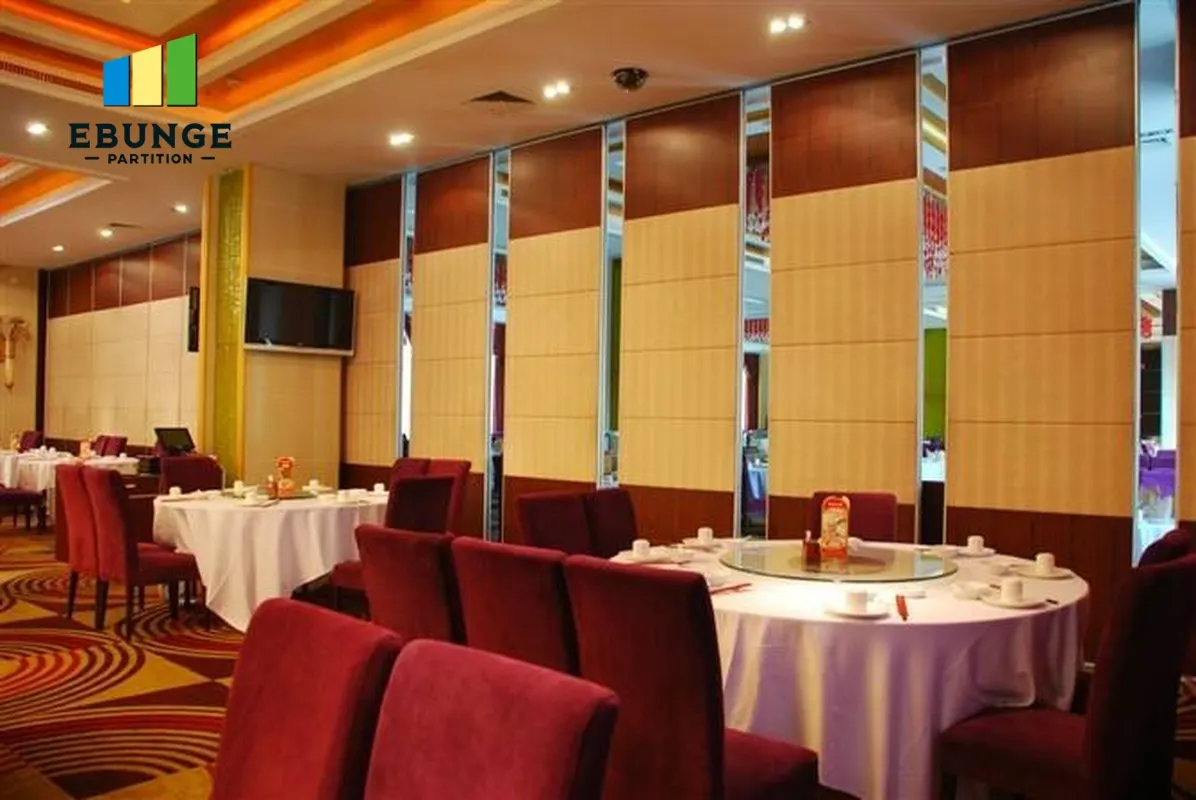
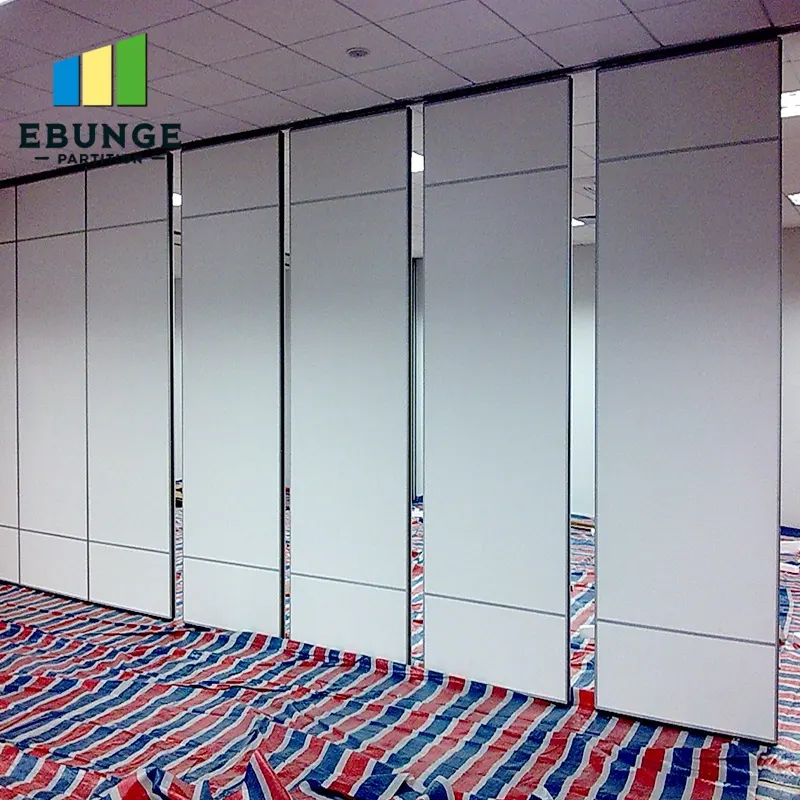
EBUNGE movable partition panels are individually movable, suspended from a top track, cross the opening without a floor track, and park at a planned stacking position. That maintained product fact has a direct planning consequence: the top track and its supporting route must be complete and reviewed before the ceiling grid closes the access zone. If the ceiling closes first, later track work may require partial removal of ceiling elements, which changes the sequence, the inspection points and the handover date.
The constraint is not about panel performance. It is about access, inspection and the order in which trades can verify their work. Straight, turning and stacking routes are reviewed from the layout, so the layout must be agreed before the ceiling closure date is fixed.
Information to Collect Before Sequencing Crews
Coordination scope: track fixing crew sequence.
Sequence planning fails when the team starts with dates instead of drawings. Collect the following before assigning track fixing crews. This is a decision checklist, not a substitute for project-specific engineering.
- Approved layout showing straight, turning and stacking routes, with the planned parking position.
- Ceiling zone drawings identifying which areas close early and which remain open for access.
- Pass-door requirements and their relationship to the track route.
- Inspection and sign-off points agreed with the main contractor and the ceiling trade.
- Finish selections from the confirmed options: laminate, melamine, fabric, leather, glass and other approved surfaces.
- Project documentation requirements, including any acoustic or dimensional confirmation still outstanding.
If any item is missing, treat the sequence as provisional. Visible references can support layout discussion but do not verify hidden construction or performance.
A Numbered Crew Sequence for Constrained Ceilings
Checklist focus: track fixing crew sequence.
The following sequence assumes the ceiling grid closure date is fixed and cannot move. Panel handling and the operating sequence must be confirmed for the selected layout and project conditions.
- Confirm the approved layout and the overhead route, including turning and stacking positions.
- Verify that the supporting route is continuous and connected across every proposed movement path.
- Complete track fixing in zones that will close first, following the project-specific fixing details.
- Arrange inspection of the installed track and support route before ceiling closure in that zone.
- Record any outstanding item in writing, with a named owner and a review date.
- Allow the ceiling trade to close the zone only after the agreed inspection point is cleared.
- Repeat the cycle zone by zone, keeping the stacking position accessible until the final review.
- Confirm pass-door requirements and documentation before panels are moved into the space.
This sequence keeps the ceiling closure as a gate, not as a surprise. It also protects the ability to review the route while it is still visible.
Coordination Points Between Trades
Track fixing and ceiling grid
The track fixing crew and the ceiling crew need a shared zone plan. Where the ceiling grid closes over the track route, the inspection point must be scheduled before closure. Where the ceiling remains open, the track work can follow a later sequence. The decision belongs to the project team, based on the drawings and the agreed inspection regime.
Track fixing and finishing trades
Finish selections do not change the sequence logic, but they can affect when a zone is considered complete. Laminate, melamine, fabric, leather, glass and other approved surfaces are confirmed options; the project team should confirm which surfaces apply and whether any protection is needed during later work.
Track fixing and handover
Handover depends on documentation, not on a verbal assurance. Confirm what the project requires, including any acoustic or dimensional information, and record it before the ceiling closes the last access zone.
Evidence Boundaries and Visible Evidence Limits
Visible evidence has limits.
Evidence note: this article describes a planning sequence only. It does not confirm support points, loads, dimensions, acoustic values, installation time, crew size or commercial outcomes. Those items require matching project evidence and written confirmation.
The exact overhead route and support arrangement must be confirmed by the responsible project team from coordinated drawings.
Common Sequencing Mistakes to Avoid
Most problems come from treating the ceiling closure as a fixed wall rather than a gate. Teams that close a zone before the track route is reviewed often reopen it later, which disrupts the ceiling trade and the finishing sequence. Teams that leave the stacking position blocked create a different problem: the panels cannot park as planned.
The exact route, junction arrangement, continuous overhead path and parking position must be confirmed from the coordinated project drawings. Every proposed movement path requires a continuous connected overhead route and project-specific support review. Do not plan a turning or stacking route that has not been reviewed against the layout.
Confirm project-specific requirements instead.
FAQ: Track Fixing and Ceiling Grid Closure
Can the ceiling grid close before the track is fixed?
It can, but only if the project team accepts the consequences for access and inspection. The safer sequence is to complete and review the track route in each zone before that zone closes. Confirm the inspection point with the main contractor.

What information is required for track fixing crew sequence planning?
Approved layout, ceiling zone drawings, project-specific support and fixing details, pass-door requirements, inspection points and documentation requirements. Without these, the sequence remains provisional.
Do movable partitions need a floor track?
EBUNGE movable partition panels are top-hung and move without a continuous floor running track or floor hardware along the partition line. The overhead route still requires project-specific support review.
How should turning and stacking routes be planned?
Straight, turning and stacking routes are reviewed from the layout. The parking style is customized to the customer layout and project requirements, and may support compact stacking when the coordinated design permits it.
Which finish options are confirmed?
Confirmed finish options include laminate, melamine, fabric, leather, glass and other approved surfaces. Confirm the applicable finish for your project and any protection requirements.
Can acoustic performance be confirmed from a drawing?
No.
Conclusion and Next Step
When ceiling grid closure is the constraint, the track fixing crew sequence should be built around gates: layout approval, route review, track fixing, inspection, closure and handover. Keep every claim inside the evidence boundary, and confirm project-specific support, acoustic and dimensional requirements before work proceeds.
For product context, review the movable walls range and the planning resources. To discuss pass-door requirements, project documentation or a specific sequence, contact the EBUNGE team.