
Quick answer: tender price reasonableness check
Review focus: tender price reasonableness check.
A partition tender price reasonableness check procurement review begins after bids are opened, when the commercial picture is visible but the technical scope still needs to be tested against the drawings. The goal is not to find the lowest number. It is to understand whether each price responds to the same scope, the same movement routes and the same documentation expectations. This article sets out a structured, evidence-bounded method for that review.
Why a Post-Tender Check Is Different From a Pre-Tender Estimate
Project review term: tender price reasonableness check.
A pre-tender estimate tests a budget before the market responds. A post-tender check tests whether returned prices can be compared fairly. The exact route, junction arrangement, continuous overhead path and parking position must be confirmed from the coordinated project drawings. If those interpretations differ, the prices are not yet comparable.
The review should therefore separate commercial comparison from technical clarification. Commercial comparison looks at inclusions, exclusions and stated assumptions. Technical clarification looks at whether the proposed configuration matches the drawn routes and the project-specific support and dimensional requirements.
Step One: Rebuild the Scope Baseline From the Tender Documents
Coordination scope: tender price reasonableness check.
Before comparing prices, rebuild a single scope baseline from the issued documents. List every partition line, every opening, every pass-door requirement and every planned parking position.
This baseline becomes the reference for every bidder response. Where a bidder has priced a different route or a different parking arrangement, record that as a clarification item rather than adjusting the price silently.
Documents to assemble for the baseline
- Issued tender drawings showing partition lines, openings and stacking positions.
- Any addenda, clarifications or pre-tender responses issued to bidders.
- The schedule of finishes, including laminate, melamine, fabric, leather, glass and other approved surfaces.
- Any stated pass-door requirements and project documentation expectations.
Step Two: Normalise the Commercial Responses
Checklist focus: tender price reasonableness check.
Normalisation means putting every bid on the same footing before judging reasonableness. Create a comparison table that lists each bidder against the same scope headings. Do not fill gaps with assumptions; mark them as open items.
| Review heading | What to record | Evidence boundary |
|---|---|---|
| Partition lines and openings | Whether each line and opening is priced | Confirm against issued drawings |
| Movement routes | Straight, turning and stacking routes as drawn | Requires continuous connected overhead route review |
| Finish schedule | Which approved surface is allowed for each area | Finish choice does not by itself confirm performance |
| Pass-door requirements | Whether pass-doors are included or excluded | Confirm project-specific requirement |
| Documentation | What project documentation is promised | Confirm scope with the project team |
Step Three: Test Technical Assumptions Behind Each Price
Price reasonableness depends on technical assumptions. The suitability of each route and parking arrangement depends on the approved layout, circulation, ceiling interfaces and operating sequence. A bid may look high because it includes coordination or documentation that others excluded.
Ask each bidder to state assumptions in writing. Where an assumption touches support, acoustics or dimensions, mark it for project-specific confirmation. Do not infer hidden performance from a visible finish, a photograph or a drawing shape.
Evidence note: what a price cannot tell you
A returned price does not confirm acoustic performance, structural capacity, fire behaviour, durability or service life. Those items require matching project-specific evidence and confirmation. STC and Rw are rating concepts used to describe acoustic performance; they should not be reduced to a direct count of decibels in a tender comparison.
Step Four: Review Movement and Stacking Routes Against the Layout
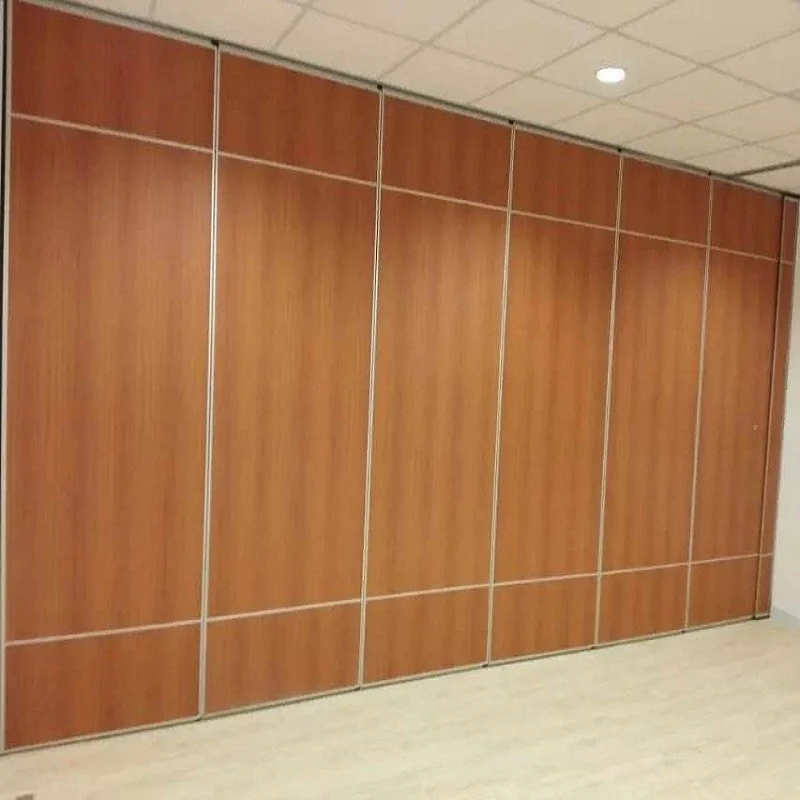
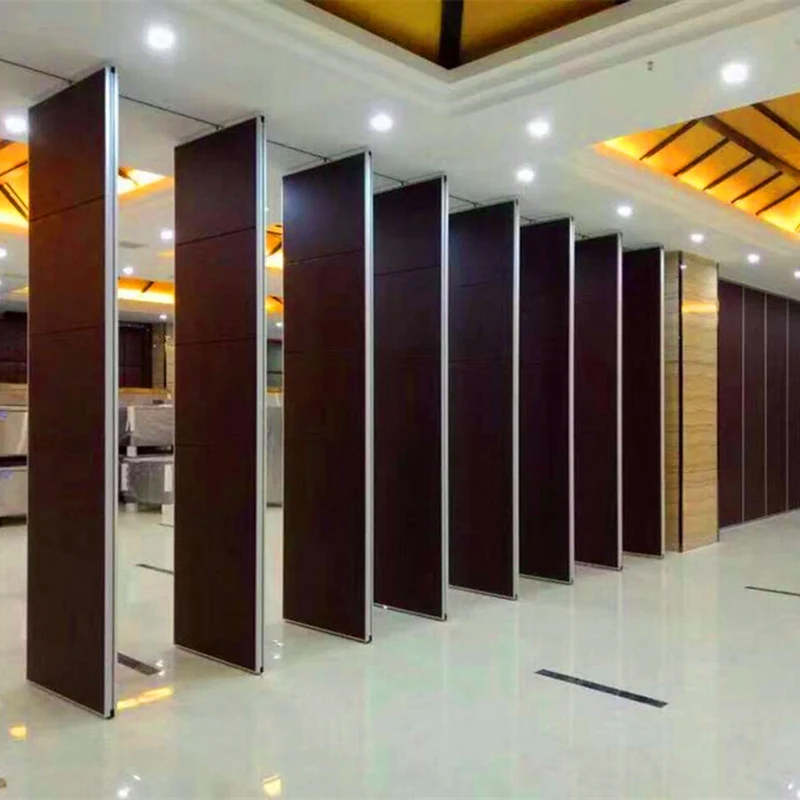
Movable wall panels are individually movable, suspended from a top track, cross the opening without a floor track and park at a planned stacking position. Straight, turning and stacking routes are reviewed from the layout. This means the tender review must check that each bidder has priced the routes actually drawn.
Step Five: Compare Like With Like Before Judging Reasonableness
Once commercial responses are normalised and technical assumptions are clarified, compare the adjusted scope. Reasonableness is a judgement about whether the price responds to the documented scope, not a judgement about the lowest number.
Record any remaining differences as open items. These may include finish selections, pass-door requirements, documentation scope or coordination responsibilities. Each open item should have an owner and a confirmation route.
Decision checklist for the review meeting
- Is the scope baseline agreed and dated?
- Are all movement routes drawn and reviewed?
- Are finish selections matched to the approved schedule?
- Are pass-door requirements stated as included or excluded?
- Are support, acoustic and dimensional requirements flagged for project-specific confirmation?
- Are documentation expectations recorded for each bidder?
Step Six: Document the Outcome and the Boundaries
The output of the check should be a short written record: the agreed scope baseline, the normalised comparison, the clarified assumptions and the open items. This record protects the project team if the scope changes later.
It should also state the boundaries clearly. Where a requirement depends on project-specific support, acoustic or dimensional confirmation, say so. Where a finish is approved for appearance, do not present it as evidence of performance.
For product context, see the movable walls range. For further planning material, see the resources section. To discuss pass-door requirements and project documentation, use the contact page.
Frequently Asked Questions
What is a partition tender price reasonableness check procurement review?
It is a post-tender exercise that compares returned prices against a single scope baseline, normalises commercial responses and clarifies technical assumptions before any judgement about reasonableness is made.
Does the lowest price always indicate the best value?
No. A lower price may reflect a different route, a different parking arrangement or an excluded item. The review should compare like with like before drawing conclusions.
How should movement routes be checked in the tender review?
Straight, turning and stacking routes should be reviewed from the layout. Each proposed path requires a continuous connected overhead route and project-specific support review.
Can finish selections be used to judge acoustic performance?
No. Acoustic requirements need project-specific confirmation.
What should be done when a bidder states an assumption?
Record it in writing, test it against the issued drawings and mark any item that touches support, acoustics or dimensions for project-specific confirmation.
What documentation should the review produce?
A short written record covering the agreed scope baseline, the normalised comparison, clarified assumptions and open items with owners and confirmation routes.
Conclusion
A post-tender price reasonableness check is a discipline of comparison, not a search for the cheapest number. Rebuild the scope baseline, normalise the commercial responses, test technical assumptions and document the boundaries. The exact overhead route and support arrangement must be confirmed by the responsible project team from coordinated drawings.
To discuss pass-door requirements, project documentation or a specific partition package, contact the EBUNGE team.