
Quick answer: ceiling grid datum ownership track
Review focus: ceiling grid datum ownership track.
When a movable partition track must sit between ceiling panels rather than on a visible grid line, the first question is not which fixing to use. It is who owns the ceiling grid datum. That single decision shapes setting-out, inspection and handover. This article offers an evidence-bounded framework for ceiling grid datum ownership track fixing coordination so project teams can assign responsibility clearly and review drawings before work begins.
Why the Datum Question Appears So Late
Project review term: ceiling grid datum ownership track.
Ceiling grids are usually set out for tiles, lights and diffusers. Movable partition tracks are set out for panel travel and parking. These two logics can conflict. When the track lands between panels, the fixing point may not align with a grid intersection or a main runner. The conflict is rarely about one trade being wrong. It is about which datum controls the final position.
If no one owns that datum, each team may assume another has resolved it. The result is rework, not a performance failure. The fix is procedural: name the owner, record the controlling reference, and verify it against the partition layout.
What the Datum Actually Controls
Coordination scope: ceiling grid datum ownership track.
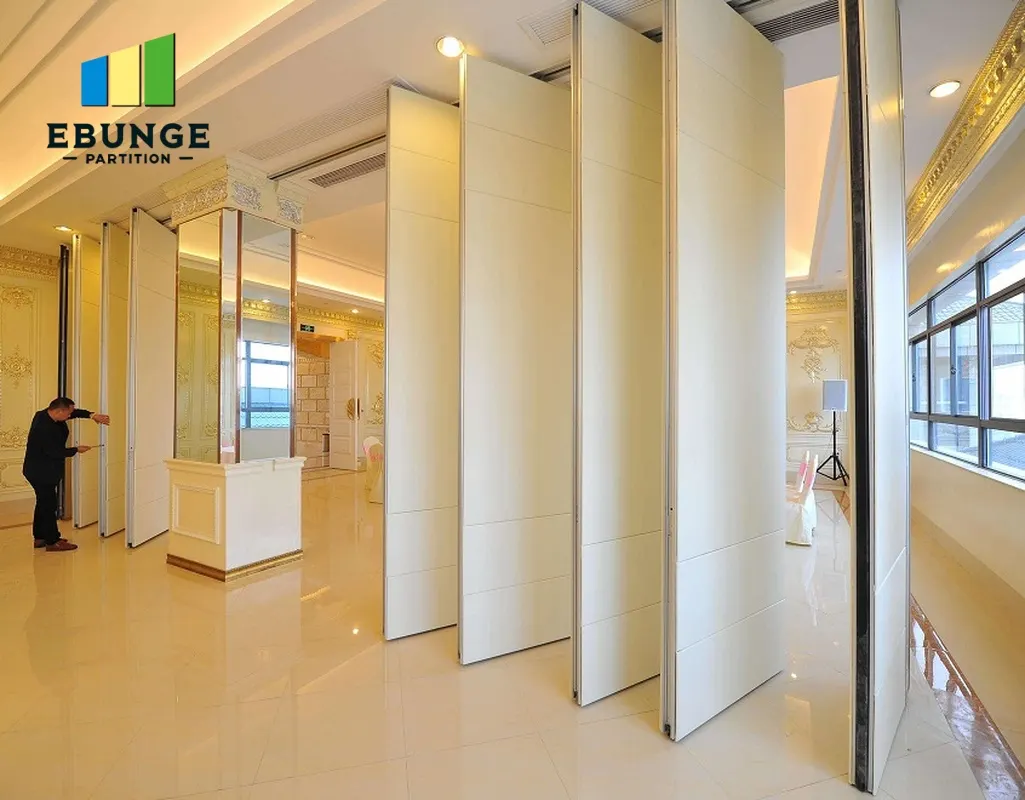
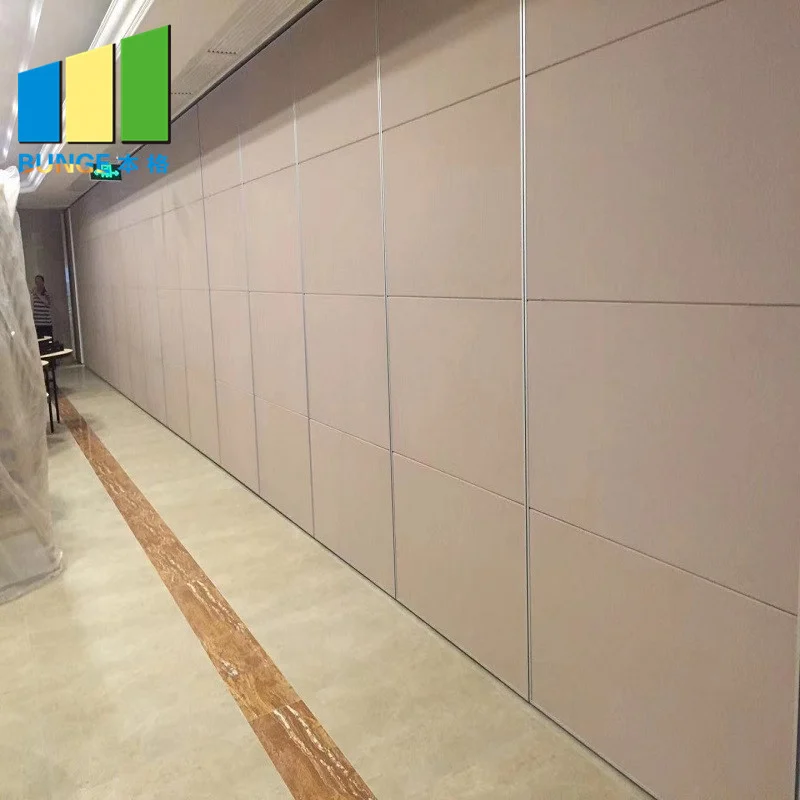
A datum is a fixed reference from which other positions are measured. The suitability of each route and parking arrangement depends on the approved layout, circulation, ceiling interfaces and operating sequence. The choice matters because the track must follow a continuous connected overhead route. EBUNGE movable wall panels are individually movable, suspended from a top track, cross the opening without a floor track, and park at a planned stacking position.
That means the track route, not the ceiling tile pattern, governs where panels can travel and park. If the datum is taken from the grid alone, the route may not match the approved layout. If it is taken from the partition layout alone, the ceiling may need adjustment. The owner of the datum is the person authorized to resolve that trade-off.
A Responsibility Matrix for the Datum Decision
Checklist focus: ceiling grid datum ownership track.
The table below is a coordination aid, not a contractual assignment. Project-specific roles must be confirmed in the contract documents.
| Decision | Typical lead | What to record |
|---|---|---|
| Controlling datum reference | Architect or lead designer | Which line or level governs track setting-out |
| Grid versus track alignment | Ceiling contractor with partition supplier input | Accepted deviation and adjustment zone |
| Support and fixing review | Structural or ceiling engineer | Project-specific support confirmation |
| Route and parking check | Partition supplier with layout reviewer | Straight, turning and stacking routes |
| Inspection and sign-off | General contractor or owner representative | Verified datum before panel installation |
How to Run the Coordination Sequence
- Issue the partition layout early. Share the approved panel travel and parking plan with the ceiling team before grid installation.
- Mark the controlling datum on drawings.
- Review the interface zone. Identify where track fixing falls between panels and note any required ceiling adjustment.
- Confirm support requirements. Ask the responsible engineer to confirm project-specific support; do not infer capacity from the ceiling type.
- Record the agreed deviation. If the track cannot align with the grid, document the accepted position and who approved it.
- Verify before installation. Measure the installed datum and compare it with the approved layout before panels are hung.
Evidence Boundaries You Should State in the Specification
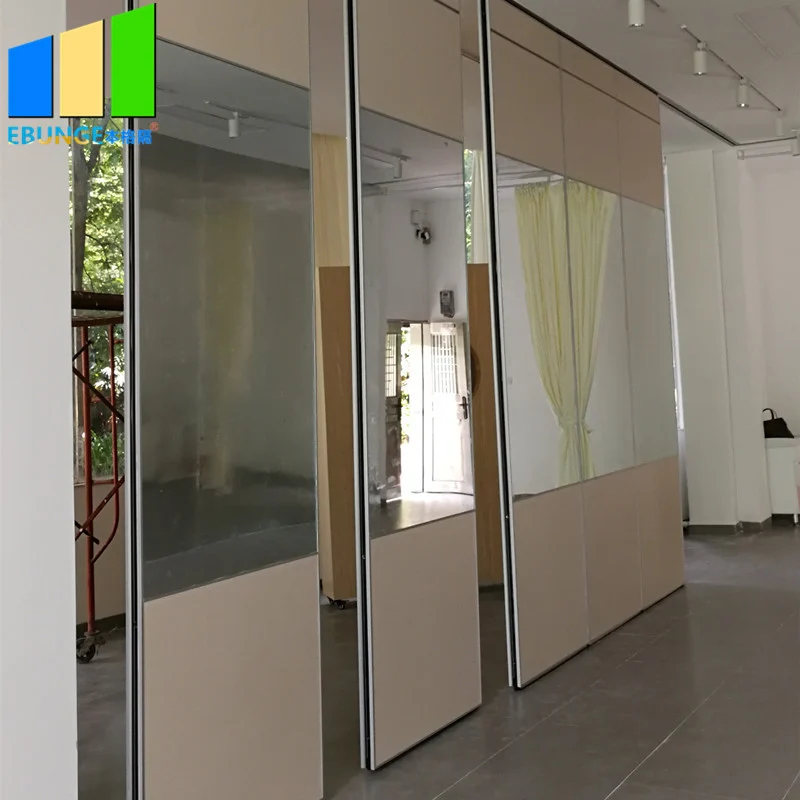
A specification should separate confirmed product facts from project-specific requirements. For EBUNGE movable partitions, confirmed facts include top-hung panel movement, no continuous floor track along the partition line, and parking at a planned stacking position. Confirmed finish options include laminate, melamine, fabric, leather, glass and other approved surfaces. Pass-door requirements and project documentation can be discussed with the supplier.
Visible references can support layout discussion but do not verify hidden construction or performance. Confirm project-specific support, acoustic and dimensional requirements with qualified professionals.
Common Coordination Failures and How to Avoid Them
Assuming the grid line is the track line
Grid lines serve ceiling tiles. Track lines serve panel movement. When they diverge, the datum owner must decide which controls. Record that decision before fixing positions are set.
Leaving the interface to the installation crew
Crews can install to a given datum, but they should not be asked to invent one. The datum should be resolved in drawings and confirmed by the responsible designer or engineer.
Treating parking as an afterthought
Parking style is customized to the customer layout and project requirements.
Frequently Asked Questions
Who usually owns the ceiling grid datum?
Ownership is project-specific. It is often assigned to the architect, lead designer or ceiling contractor, but the contract documents should name the responsible party. The partition supplier can review the route and parking implications.
Can the track be fixed between ceiling panels?
Track fixing positions are project-specific. The layout must be reviewed to confirm that the track route is continuous and supported. Do not assume that a between-panel position is acceptable without drawing review.
Does the ceiling grid determine acoustic performance?
No. Project-specific acoustic requirements need matching evidence.
What should be confirmed before installation?
Confirm the controlling datum, the support requirements, the track route, the parking position and the dimensional coordination. These items should be recorded and verified against the approved drawings.
Can EBUNGE provide documentation for coordination?
Project documentation and pass-door requirements can be discussed with the supplier. The project team remains responsible for confirming support, acoustic and dimensional requirements for the specific site.
Conclusion
Ceiling grid datum ownership track fixing coordination is a documentation task before it is an installation task. Name the datum owner, record the controlling reference, review the route and parking plan, and confirm project-specific support and acoustic requirements. This approach keeps the ceiling and partition scopes aligned without inventing performance claims.
For product information, start with the movable walls product page. For broader planning guidance, see the resources library. To discuss your project drawings and coordination questions, contact the EBUNGE team.