
Quick answer: changeover crew standby roster
Review focus: changeover crew standby roster.
Peak booking weeks turn a flexible venue into a sequence of tight transitions. A movable partition changeover crew standby roster is the planning document that keeps those transitions visible, staffed and reviewable. Panel handling and the operating sequence must be confirmed for the selected layout and project conditions. It is a coordination tool that connects booking patterns, panel movement routes and the confirmed facts of a top-hung movable wall system.
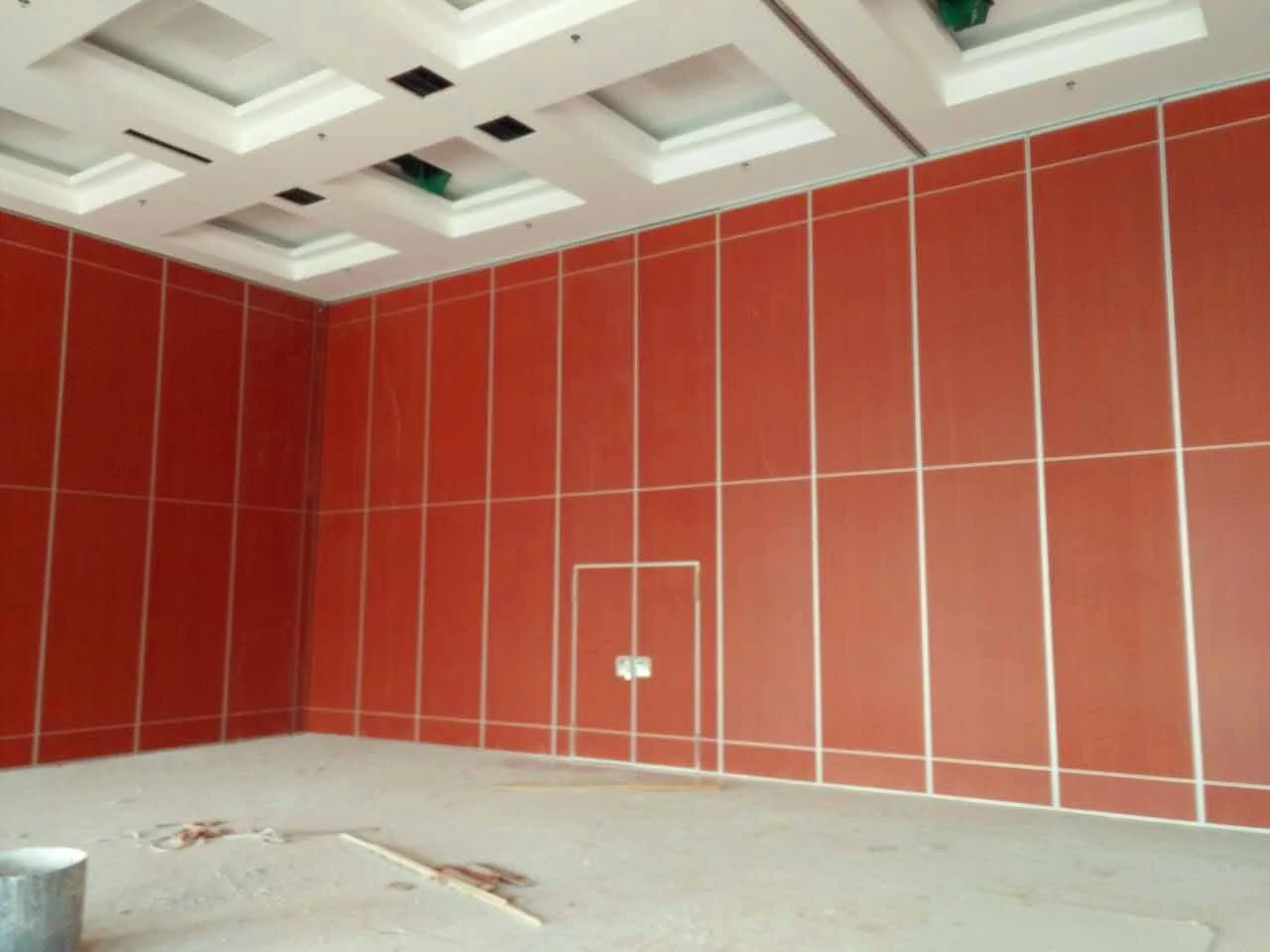
EBUNGE movable partition panels are individually movable, suspended from a top track, cross the opening without a floor track, and park at a planned stacking position. Straight, turning and stacking routes are reviewed from the layout. That is the operational baseline. Everything else in the roster must be confirmed against the project drawings, support conditions and acoustic requirements for the specific room.
Start With the Booking Pattern, Not the Crew List
Project review term: changeover crew standby roster.
A standby roster built before the booking pattern is understood will usually be either overstaffed on quiet days or exposed on peak days. Begin by mapping the week: which rooms combine, which rooms divide, and which transitions happen back-to-back. The goal is to identify changeover windows, not to assume a fixed duration for every move.
For each peak day, record the room, the required configuration, the previous configuration and the available window between bookings. If a room must change from one combined layout to two separate rooms, the route review should already exist from the layout stage. The roster then reflects the sequence rather than inventing it.
Information to collect before drafting the roster
- Confirmed room combinations and divisions for the peak week.
- Approved straight, turning and stacking routes from the project layout.
- Planned parking position for each panel group.
- Any pass-door requirements that affect circulation during changeover.
- Project-specific support, acoustic and dimensional requirements already confirmed by the project team.
Define Standby Roles Without Inventing Manpower Numbers
Coordination scope: changeover crew standby roster.
A standby roster names responsibilities, not unsupported headcounts. The number of people required for a changeover depends on the panel configuration, the route, the building access and the project-specific requirements. Those details must come from the project team and the approved drawings, not from a generic article.
What the roster can do is separate roles clearly. One person can be responsible for confirming the room is released and ready. Another can be responsible for checking that the route is clear and that the parking position is available. A third can act as the coordination point with the venue’s booking team. These are planning roles, not a statement of required crew size.
Role categories to adapt to your project

- Changeover lead: owns the sequence and confirms each room is ready before the next booking.
- Route checker: verifies the approved movement path is clear and that no temporary obstruction blocks the overhead route.
- Parking coordinator: confirms the planned stacking position is available and protected.
- Booking liaison: keeps the front-of-house or sales team informed of any change to the sequence.
- Escalation contact: knows when to stop and request project-specific confirmation.
Build the Roster Around Confirmed Routes and Parking
Checklist focus: changeover crew standby roster.
The most common planning error is treating panel movement as a simple push. In a top-hung system, panels travel along a continuous connected overhead route. The exact route, junction arrangement, continuous overhead path and parking position must be confirmed from the coordinated project drawings.
Parking is equally specific. Parking style is customized to the customer layout and project requirements and may support compact stacking when the coordinated design permits it. The roster should reference the approved parking position for each panel group, not a generic assumption about where panels will sit.
Evidence note: what the roster can and cannot confirm
Roster planning can confirm sequence, roles and route readiness. It cannot confirm structural capacity, acoustic performance, fire performance, durability or dimensional fit. Those items require project-specific documentation and review. Do not infer hidden performance from a finish, a photograph or a drawing.
Use a Decision Checklist for Peak-Week Readiness
Review focus: changeover crew standby roster.
Before the peak week begins, run a readiness check. This is not a performance test. It is a coordination review that confirms the roster matches the approved project information.
| Check | What to confirm | Evidence source |
|---|---|---|
| Booking sequence | Room combinations and divisions match the roster | Venue booking plan |
| Movement routes | Straight, turning and stacking routes are approved | Project layout review |
| Parking positions | Planned stacking positions are available | Coordinated design |
| Pass-door needs | Circulation requirements are discussed | Project documentation |
| Support and acoustic items | Project-specific requirements are confirmed | Project team confirmation |
Coordinate With the Wider Facility Operations Plan
Project review term: changeover crew standby roster.
A changeover roster does not sit alone. It connects to cleaning schedules, catering setup, AV checks and front-of-house preparation. The suitability of each route and parking arrangement depends on the approved layout, circulation, ceiling interfaces and operating sequence.
Facility Operations Planning coordination means sharing the roster with every team that touches the room. The roster should show the room, the configuration, the window and the responsible role. It should also show the point at which the room is handed back. That handback point is often more important than the start time.
Questions to align across teams
- Who confirms the room is released before changeover begins?
- Who confirms the room is ready for the next booking?
- How are last-minute booking changes communicated to the roster lead?
- What happens if a route or parking position is blocked?
- Which project-specific requirements must be rechecked if the layout changes?
Keep the Roster Evidence-Bounded
A roster becomes risky when it starts making claims the project has not confirmed.
Finish options such as laminate, melamine, fabric, leather, glass and other approved surfaces are confirmed product options. If a finish choice affects the changeover plan, confirm it with the project team.

For product context, review the movable walls product page. For broader planning resources, see the resources section. When the roster depends on project-specific support, acoustic or dimensional requirements, contact the EBUNGE team to discuss the documentation needed.
Frequently Asked Questions
What is a movable partition changeover crew standby roster?
It is a planning document that maps peak-week room transitions to roles, routes and parking positions. It helps facility teams coordinate changeovers without making unsupported claims about speed, manpower or performance.
Can the roster be built before the project layout is approved?
A draft can be started, but the movement routes and parking positions must come from the reviewed layout. Straight, turning and stacking routes are reviewed from the layout, so the roster should be finalized after that review.
Does every changeover need the same crew size?
No. Crew size depends on the panel configuration, route, building access and project-specific requirements. The roster should define roles and escalation points rather than assume a fixed number.
How should the roster handle acoustic requirements?
Acoustic requirements should be confirmed through project-specific documentation.
What should happen if a route or parking position is blocked?
The changeover lead should stop the sequence and escalate. Every proposed movement path requires a continuous connected overhead route and project-specific support review.
Can pass-door requirements be included in the roster?
Pass-door requirements and project documentation can be discussed with the project team. If a pass door affects circulation during changeover, include it in the roster as a coordination item.
Conclusion
Map the booking pattern, define roles, reference approved routes and parking positions, and keep every performance or engineering claim tied to project-specific documentation. The roster is a coordination tool, not a substitute for drawing review.
To discuss project-specific support, acoustic and dimensional requirements, contact EBUNGE and share your layout and booking pattern.