
Quick project answer
Review focus: changeover capacity reserve policy.
A changeover capacity reserve policy facility operations framework helps facility teams plan how quickly and reliably a room can shift between uses. Instead of treating every reconfiguration as an emergency, the policy defines what flexibility is available, who confirms it, and which project documents must be reviewed before any commitment. Movable partitions are one planning element because panels are individually movable, top-hung and cross the opening without a floor track. They park at a planned stacking position, so the reserve policy must connect room use, route planning and evidence boundaries.
Why a Reserve Policy Matters for Facility Operations Planning
Project review term: changeover capacity reserve policy.
Facility teams often manage competing demands: a training room becomes a breakout area, a hall splits into two sessions, or a workspace needs a temporary division. Without a reserve policy, each request is handled as a one-off. A policy creates a repeatable way to check whether the space, the partition system and the supporting documentation can accommodate the change.
The policy is not a performance promise. It is a decision framework that separates confirmed product facts from project-specific requirements. The exact route, junction arrangement, continuous overhead path and parking position must be confirmed from the coordinated project drawings.
What the Policy Should Cover
A useful policy names the rooms or zones in scope, the changeover scenarios expected, the people who approve a change, and the drawings that must be checked. It should also state what evidence is missing.
Start With the Room and the Changeover Scenario
Coordination scope: changeover capacity reserve policy.
Begin by listing the room types and the most common changeover patterns. A conference room may need to divide into two smaller meeting rooms. A school hall may need to become an examination space or a dining area. A hotel ballroom may need to split into breakout rooms. These examples are illustrative; the same logic applies wherever flexible spatial division is required.
For each scenario, record the opening width, the desired clear floor area, the parking location and the route the panels will travel. Because panels are suspended from a top track and cross the opening without a floor track, the route must be a continuous connected overhead path.
Document the Route in Plain Language
Straight, turning and stacking routes should be reviewed from the layout. A simple route description helps the project team see where panels will park and whether the stacking position conflicts with doors, services or circulation. This is a planning check, not an engineering conclusion.
Build the Reserve Policy Around Confirmed Product Facts
Checklist focus: changeover capacity reserve policy.
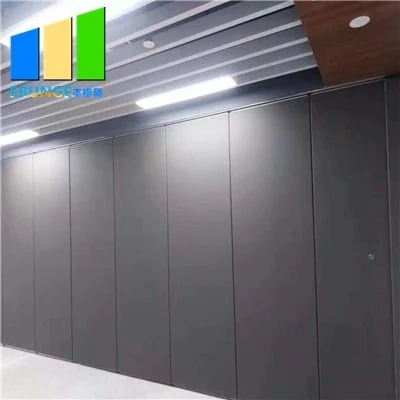
EBUNGE movable wall panels are individually movable, suspended from a top track, cross the opening without a floor track, and park at a planned stacking position. Confirmed finish options include laminate, melamine, fabric, leather, glass and other approved surfaces. Pass-door requirements and project documentation can be discussed with the project team.
The suitability of each route and parking arrangement depends on the approved layout, circulation, ceiling interfaces and operating sequence. Visible references can support layout discussion but do not verify hidden construction or performance. The policy should require project-specific confirmation of support, acoustic and dimensional requirements.
Evidence Note: What a Drawing Can and Cannot Show
An overhead track line on a drawing shows a proposed route. It does not prove support capacity, acoustic separation, fire performance or code compliance. Those items require separate project-specific evidence and review by the responsible professionals.
A Decision Checklist for Changeover Requests
Use this checklist before approving a changeover that depends on movable partitions. It keeps the policy practical and prevents unsupported assumptions from entering the schedule.
- Is the room and changeover scenario listed in the current policy?
- Has the opening width and clear floor area been checked against the layout?
- Is the parking position identified and free of conflicts?
- Is the movement route a continuous connected overhead route?
- Have support, acoustic and dimensional requirements been confirmed for this project?
- Are pass-door needs and project documentation discussed with the responsible team?
- Has the finish selection been reviewed against the approved options?
- Is there a named person who approves the change and records the decision?
Coordinate With Project Documentation and Stakeholders
A changeover capacity reserve policy facility operations specification should reference the drawings, schedules and approvals that govern the space. The policy does not replace those documents. It helps facility teams ask the right questions before a change is promised to occupants or event organizers.
For overseas projects, coordination may involve contractors, architects, interior designers, owners, renovation companies, distributors and construction teams. Each party may hold part of the evidence. The policy should identify who confirms support, who confirms acoustic requirements, and who confirms dimensional tolerances. If those answers are not available, the changeover should be treated as unconfirmed.
Keep a Simple Register
A register can list each room, the approved changeover scenarios, the reviewed route, the parking position and the outstanding confirmations. This is not a performance claim; it is a record of what has been checked and what still needs project-specific review.
Review and Update the Policy as the Facility Changes
Facilities change. Rooms are refurbished, furniture moves, and new uses emerge. The reserve policy should be reviewed when layouts change or when a new changeover pattern is requested. A route that worked for one layout may need re-checking if the parking area or adjacent circulation changes.
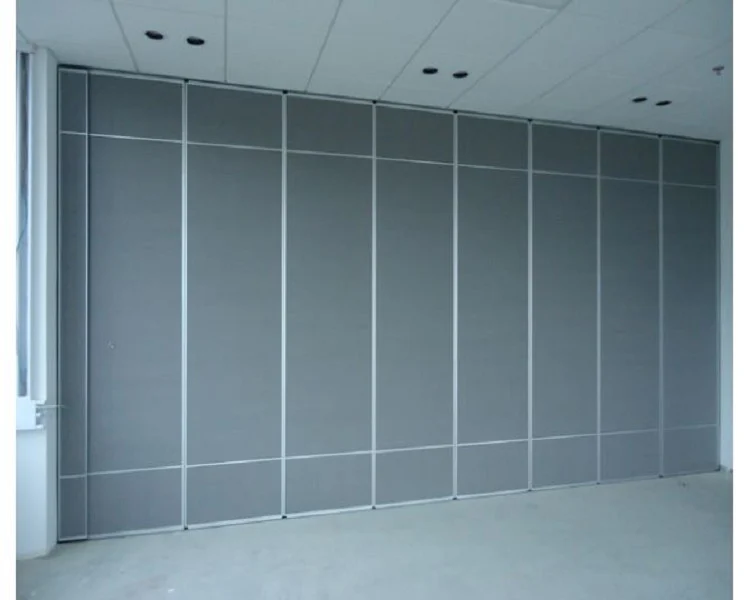
The review should also confirm that finish options remain appropriate for the intended use. Laminate, melamine, fabric, leather, glass and other approved surfaces are available, but the policy should not assume cleaning compatibility or durability without project-specific evidence.
Comparison Table: Policy Inputs and Evidence Boundaries
| Policy Input | What It Helps Decide | Evidence Boundary |
|---|---|---|
| Room use scenarios | Which changeovers are in scope | Confirm with owner or facility manager |
| Opening and layout dimensions | Whether the route and parking fit | Confirm against project drawings |
| Overhead route | Whether panels can travel and park | Requires continuous connected route and support review |
| Finish selection | Which approved surface is considered | Does not prove acoustic or structural performance |
| Acoustic requirement | Whether separation is specified | Confirm project-specific acoustic design |
FAQ: Changeover Capacity Reserve Policy Facility Operations
What is a changeover capacity reserve policy in facility operations?
It is a documented framework for deciding how a space can change between uses, which movable partition routes are available, and which project-specific confirmations are required before a change is approved.
Do movable partitions require a floor track for changeovers?
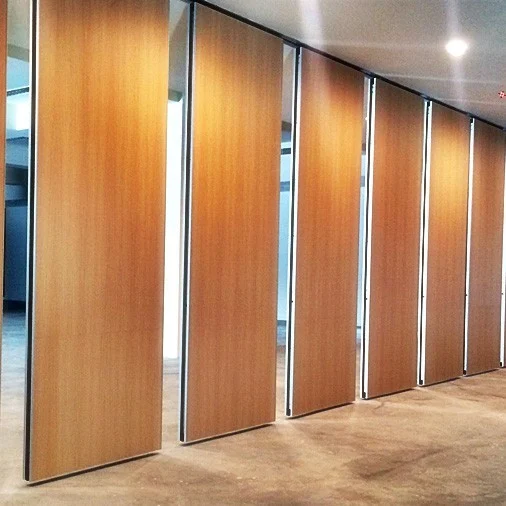
EBUNGE movable wall panels are top-hung and cross the opening without a floor track.
Can the policy guarantee acoustic separation?
No. Actual performance depends on the project-specific assembly and must be confirmed for the room.
How should parking positions be planned?
Parking style is customized to the customer layout and project requirements. The policy should identify a planned stacking position and check it against the layout for conflicts.
What documentation should be reviewed?
Review the layout, route, opening dimensions, support requirements, acoustic requirements and any pass-door needs. Project documentation can be discussed with the EBUNGE team and the responsible project professionals.
Can the same policy apply to different room types?
Yes, the framework can be adapted. Named venues are examples only; movable partitions can be considered wherever flexible spatial division, combination or reconfiguration is required.
Conclusion: Make the Reserve Policy a Review Habit
A changeover capacity reserve policy facility operations framework works when it is used before commitments are made. Start with the room and scenario, document the route and parking, rely only on confirmed product facts, and route performance questions to project-specific evidence.
To discuss movable partition options for your project, review the movable walls product page, explore planning resources, or contact EBUNGE to discuss your layout, pass-door requirements and project documentation.