
Quick answer: stacking pocket wheelchair turning clearance circulation review
Review focus: stacking pocket wheelchair turning clearance circulation review.
A stacking pocket wheelchair turning clearance circulation review asks one practical question: when movable wall panels are parked, does the remaining floor area still allow a wheelchair user to approach, turn and continue? The suitability of each route and parking arrangement depends on the approved layout, circulation, ceiling interfaces and operating sequence. It depends on the coordinated layout, the parking position, the route geometry and the project-specific accessibility requirements that apply. This review sets out what project teams can check on drawings, what must be confirmed with matching evidence, and where assumptions commonly replace verification.
Why the Stacking Pocket Is a Circulation Decision, Not Just a Storage Decision
Project review term: stacking pocket wheelchair turning clearance circulation review.
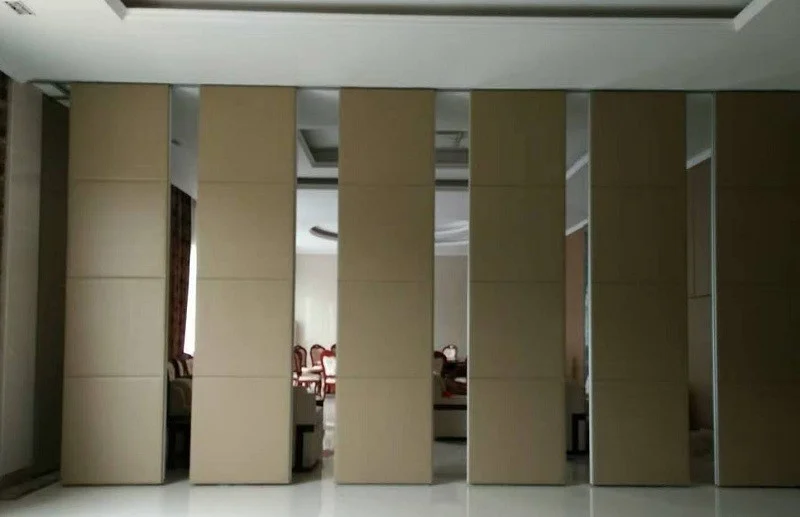
EBUNGE movable wall panels are individually movable, suspended from a top track, cross the opening without a floor track, and park at a planned stacking position. That parking position is part of the circulation plan. A pocket that reads well on a partition layout can still narrow an approach route, sit inside a turning zone, or interrupt a clear path once panels are stacked.
Because panels are top-hung and the floor along the partition line stays clear, the main accessibility question shifts to the parked condition. Reviewers should treat the stacking pocket as occupied floor area during the periods when the room is open. The review is therefore a coordination task between the partition layout, the room programme and the accessible route.
What the Drawings Must Show Before Clearance Can Be Judged
Coordination scope: stacking pocket wheelchair turning clearance circulation review.
Clearance cannot be assessed from a product image or a single panel elevation. It requires a coordinated plan showing the opening, the travel path of each panel, the stacking position and the surrounding fixed elements. Without that plan, any statement about turning space is an assumption rather than a finding.
Information to request from the project team
- Dimensioned plan of the opening, the stacking pocket and adjacent walls, columns or joinery.
- Indicative parked footprint of the stacked panels, based on the coordinated design.
- Intended accessible route through the space in both the open and closed conditions.
- Location of doors, pass-doors, furniture zones and any fixed equipment near the pocket.
- Applicable local accessibility guidance and the project’s own design criteria.
These items allow the team to test whether the parked panels sit outside the route or intrude into it. They also clarify whether a pass-door is required within the partition run, which is a separate coordination point that can be discussed with the supplier.
A Step-by-Step Circulation Review Sequence
Checklist focus: stacking pocket wheelchair turning clearance circulation review.
A repeatable sequence helps teams avoid reviewing the pocket in isolation. The aim is to test the route as a continuous journey, not as a set of disconnected clearances.
- Mark the accessible route on the plan for the open-room condition.
- Overlay the parked panel footprint at the planned stacking position.
- Identify any point where the route narrows, changes direction or meets a door.
- Check whether the turning area remains outside the parked footprint.
- Confirm the overhead route is continuous and supported for the full travel and parking path.
- Record open questions for the supplier, the accessibility consultant and the project team.
The exact route, junction arrangement, continuous overhead path and parking position must be confirmed from the coordinated project drawings. Every proposed movement path needs a continuous connected overhead route and project-specific support review. A pocket that looks convenient on plan may require a route that has not yet been coordinated.
Where Turning Space Is Commonly Lost
Review focus: stacking pocket wheelchair turning clearance circulation review.
Turning space is usually lost gradually rather than dramatically. Several small encroachments can combine to make a route unusable even when each element appears acceptable on its own.
Typical pressure points
- Stacked panels projecting into a corridor or lobby approach.
- A pocket placed directly opposite a door swing or a secondary opening.
- Furniture, service counters or temporary storage placed near the parked position.
- Changes in floor finish or level that affect the usable route width.
- Signage, columns or wall returns that reduce the effective turning zone.
None of these can be resolved by a generic rule. Each requires the project’s own dimensions and accessibility criteria. The review should state clearly which items are verified on the coordinated drawings and which remain open.
Evidence Boundaries: What Can and Cannot Be Claimed
Project review term: stacking pocket wheelchair turning clearance circulation review.

Accessibility statements should be tied to the evidence available. A partition layout drawing can show geometry.
Evidence note: confirm project-specific support, acoustic and dimensional requirements before treating any circulation review as final. Finish options such as laminate, melamine, fabric, leather, glass and other approved surfaces describe appearance and surface selection; they do not establish accessibility, structural or acoustic outcomes.
Coordination Questions for Contractors, Architects and Owners
Different team members hold different parts of the answer. Contractors can confirm site dimensions and services. Architects and interior designers can confirm route intent and finish coordination. Owners can confirm how the space will actually be used and who will operate the partitions.
Questions worth tabling early
- Will the pocket be used daily, occasionally or only for specific events?
- Does the accessible route pass the pocket in both open and closed conditions?
- Is a pass-door needed, and where should it sit relative to the route?
- Which local accessibility guidance applies, and who confirms compliance?
- What documentation is required for the project file?
Pass-door requirements and project documentation can be discussed with the supplier as part of the coordinated design. The outcome remains project-specific.
FAQ: Stacking Pocket Wheelchair Turning Clearance
Can a wheelchair user always turn at the stacking pocket?
No universal answer exists. Turning depends on the parked footprint, the route geometry and the applicable accessibility criteria. These must be checked on the coordinated project drawings.
Do movable partitions need a floor track that affects the route?
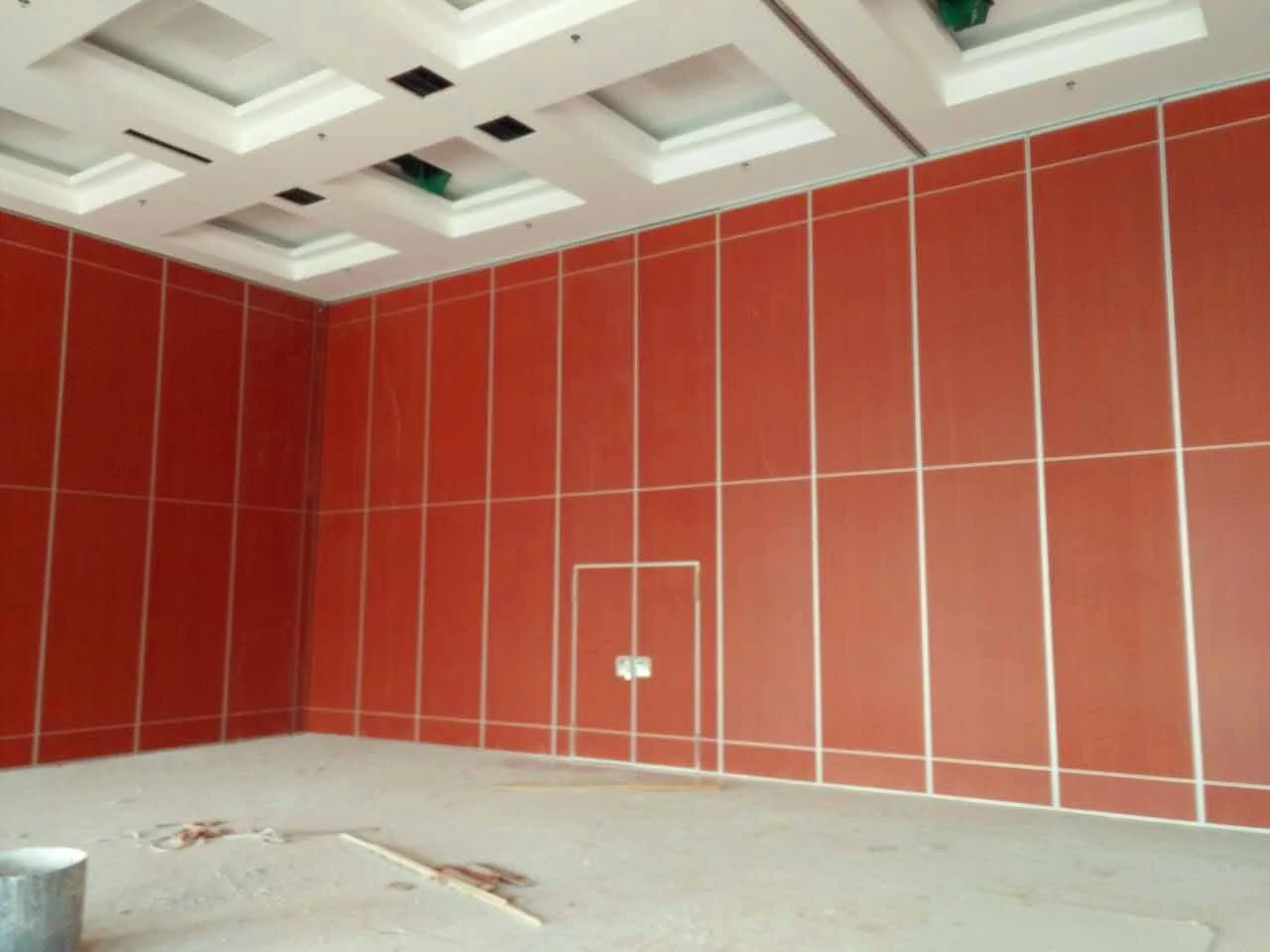
EBUNGE movable wall panels are top-hung and cross the opening without a floor track along the partition line. The parked panels still occupy floor area at the stacking position, which is what the circulation review must address.
What information should be submitted for review?
A dimensioned plan showing the opening, the stacking position, the accessible route and adjacent fixed elements. Indicative parked footprint information based on the coordinated design is also useful.
Can the stacking position be adjusted to improve clearance?
Parking style is customized to the customer layout and project requirements, and may support compact stacking when the coordinated design permits it. Any change still requires review of the overhead route and support.
Does the finish affect turning clearance?
Finish selection describes appearance and surface choice. It does not determine the parked footprint or the turning space available, so clearance must be assessed from the layout.
Who confirms accessibility compliance?
The project team, including the relevant accessibility specialist and local authority where applicable. The supplier can support coordination but does not replace project-specific compliance confirmation.
Conclusion and Next Step
A stacking pocket wheelchair turning clearance circulation review is a drawing-based exercise. It tests the parked condition, the continuous route and the turning zone against the project’s own criteria. It cannot be settled by a product photograph, a generic dimension or an assumption about how panels will stack.
Teams that review the pocket early, with the right plan information, can raise the right questions before the layout is fixed. Confirm project-specific support, acoustic and dimensional requirements with the relevant specialists, and keep the evidence for each statement on file.
To discuss a specific layout, pass-door requirement or project documentation, contact the EBUNGE team. You can also review the movable wall product range and browse the planning resources before the next coordination meeting.