
Quick answer: movable partition renovation temporary separation dependency chain map
Review focus: movable partition renovation temporary separation dependency chain map.
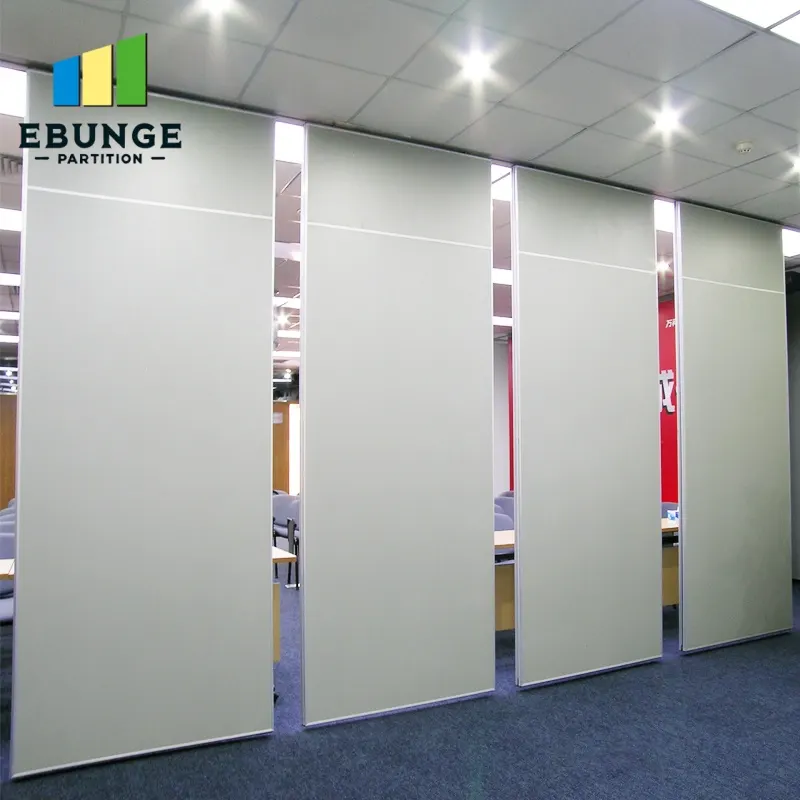
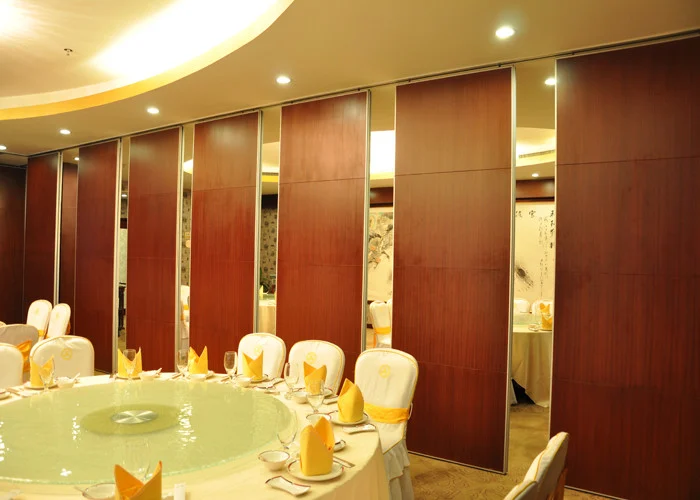
A movable partition renovation temporary separation dependency chain map is a sequencing tool, not a performance promise. It helps a project team decide which occupied zones must keep a working acoustic boundary before any demolition release is granted. The map links four things: the zones that stay occupied, the temporary boundary that protects them, the overhead route that supports every panel movement, and the release gate that allows the next work package to begin. Because EBUNGE movable panels are individually movable, suspended from a top track, cross the opening without a floor track, and park at a planned stacking position, the map must be drawn from the actual layout rather than from a generic sequence.
Why Renovation Phasing Needs a Separation Dependency Chain
Project review term: movable partition renovation temporary separation dependency chain map.
In occupied renovations, demolition is rarely the first constraint. The first constraint is the boundary that must remain in service while work proceeds elsewhere. A dependency chain makes that boundary explicit. Each zone is tagged as protected, transitional, or released. A zone cannot move from protected to transitional until its replacement boundary is verified in place. It cannot move from transitional to released until the release gate is signed off.
The suitability of each route and parking arrangement depends on the approved layout, circulation, ceiling interfaces and operating sequence. Treat any acoustic figure as a project-specific confirmation item, not as a planning assumption.
Reading the Layout Before Drawing the Chain
Coordination scope: movable partition renovation temporary separation dependency chain map.
The chain starts with the drawing set. The exact route, junction arrangement, continuous overhead path and parking position must be confirmed from the coordinated project drawings.
Route review questions
- Where does each panel travel from its closed position to its planned parking position?
- Does every proposed route stay on a continuous connected overhead track?
- Which turning points or intersections need project-specific support review?
- Does the parking position remain accessible while temporary works are present?
- Which finish surfaces face occupied zones and need protection during the phase?
Confirmed finish options include laminate, melamine, fabric, leather, glass, and other approved surfaces. Finish selection affects appearance and protection planning, but it does not by itself establish acoustic, fire, or durability performance. Those remain project-specific confirmation items.
The Dependency Chain Map: A Six-Step Sequence
Checklist focus: movable partition renovation temporary separation dependency chain map.
Use this sequence as a working method. It is deliberately conservative: no zone is released until the boundary that replaces its protection is confirmed.
- Inventory occupied zones. List every area that must remain in use during the phase, including circulation and shared facilities.
- Assign a boundary to each zone. Identify whether the existing partition, a temporary movable partition, or another approved separation is the working boundary.
- Map panel routes and parking. Confirm straight, turning, and stacking routes from the layout, and confirm the parking position for each panel group.
- Define the release gate. State what must be verified before demolition release is granted for the adjacent work package.
- Sequence the phases. Order work so that no occupied zone loses its boundary before its replacement is in place.
- Record confirmations. Note every item that still requires project-specific support, acoustic, or dimensional confirmation.
Release Gates and Evidence Boundaries
Review focus: movable partition renovation temporary separation dependency chain map.
A release gate is a documented decision point. It should name the zone, the boundary condition, the person or role authorizing release, and the evidence reviewed. Evidence may include the coordinated layout, the support review, and the dimensional check. It should not include inferred performance from a photograph, a finish sample, or a similar-looking project.
Evidence note: a visible track, a finish sample, or a completed-looking installation does not prove acoustic performance, structural capacity, or code compliance. Those require matching project-specific evidence.
Pass-door requirements and project documentation can be discussed with the supplier early, because a pass door changes circulation and may change how a zone is protected during a phase. Raising it at the mapping stage is cheaper than discovering it after demolition release.
Coordination Roles and Handover Points
The map works only when roles are clear. The contractor owns the sequence and the release gate. The architect or designer owns the layout intent and finish coordination. The owner or operator owns the occupied-zone priorities. The supplier supports route review, parking coordination, and documentation. Handover points should be written into the phase plan, not left to verbal agreement.
Compact comparison: protected vs. released zone
| Item | Protected zone | Released zone |
|---|---|---|
| Boundary status | Working boundary must remain in service | Replacement boundary confirmed |
| Panel movement | Limited to approved routes and parking | Routes may be reconfigured per plan |
| Demolition | Not released | Released by signed gate |
| Open items | Support, acoustic, dimensional confirmations | Closeout and snag items |
Common Sequencing Mistakes to Avoid
Most phasing failures come from treating the partition as a late installation rather than an early boundary. If the temporary separation is scheduled after demolition, occupied zones lose protection before the replacement exists. If parking is decided on site, panels may be left in a route that blocks circulation or temporary works.
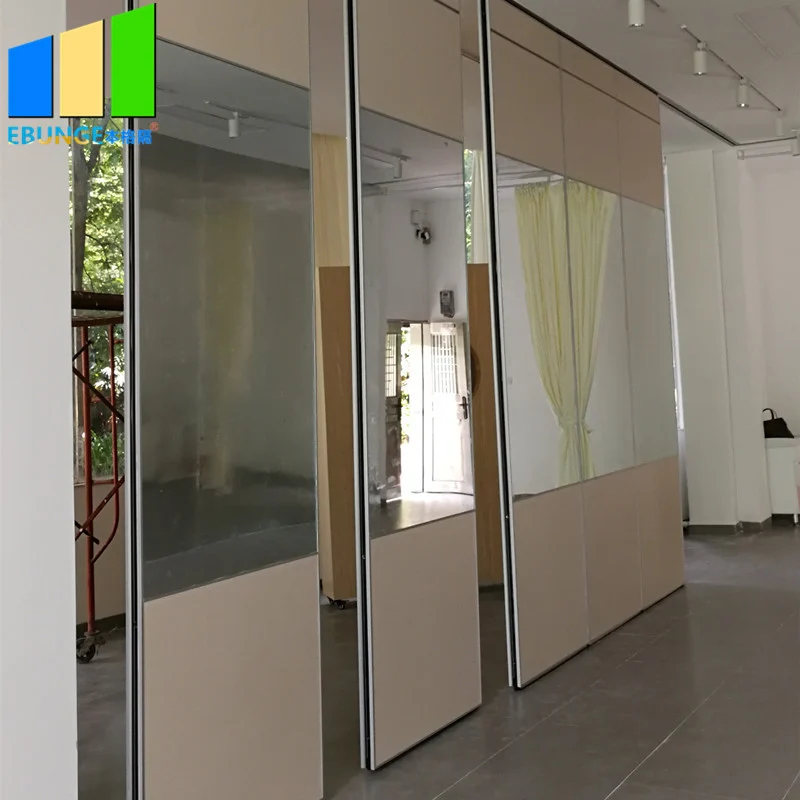
Every proposed movement path requires a continuous connected overhead route and project-specific support review. A third mistake is treating a finish choice as an acoustic decision. Finish and acoustic behavior are separate confirmation tracks.
FAQ: Renovation Phasing and Temporary Separation
What is a temporary separation dependency chain map?
It is a sequencing document that links occupied zones, their working boundaries, panel routes and parking, and the release gates that allow demolition to proceed. It is a coordination tool, not a performance certificate.
When should the map be created?
Before demolition release is granted for any phase that affects an occupied zone. It should be reviewed whenever the layout, occupancy, or route changes.
Do movable partitions need a floor track?
EBUNGE movable panels are top-hung and move without a continuous floor running track or floor hardware along the partition line. Every route still requires a continuous connected overhead track and project-specific support review.
Can STC or Rw be used as a direct decibel count?
No.
What must be confirmed before release?
Confirm the replacement boundary, the support condition for every route, the dimensional fit, and any acoustic requirement specific to the project. Confirm pass-door needs and documentation early.
Which finishes can be considered?
Confirmed options include laminate, melamine, fabric, leather, glass, and other approved surfaces. Finish selection does not establish acoustic, fire, or durability performance by itself.
Conclusion: Sequence the Boundary, Then Release the Work
A movable partition renovation temporary separation dependency chain map keeps occupied zones protected while renovation proceeds. Draw it from the layout, confirm every route and parking position, define release gates in writing, and treat acoustic and support questions as project-specific confirmations. Review the movable wall systems and the planning resources, then contact EBUNGE to discuss pass-door requirements, documentation, and drawing review for your phase plan.