
Quick answer: movable partition track anchor point load path attribution matrix
Review focus: movable partition track anchor point load path attribution matrix.
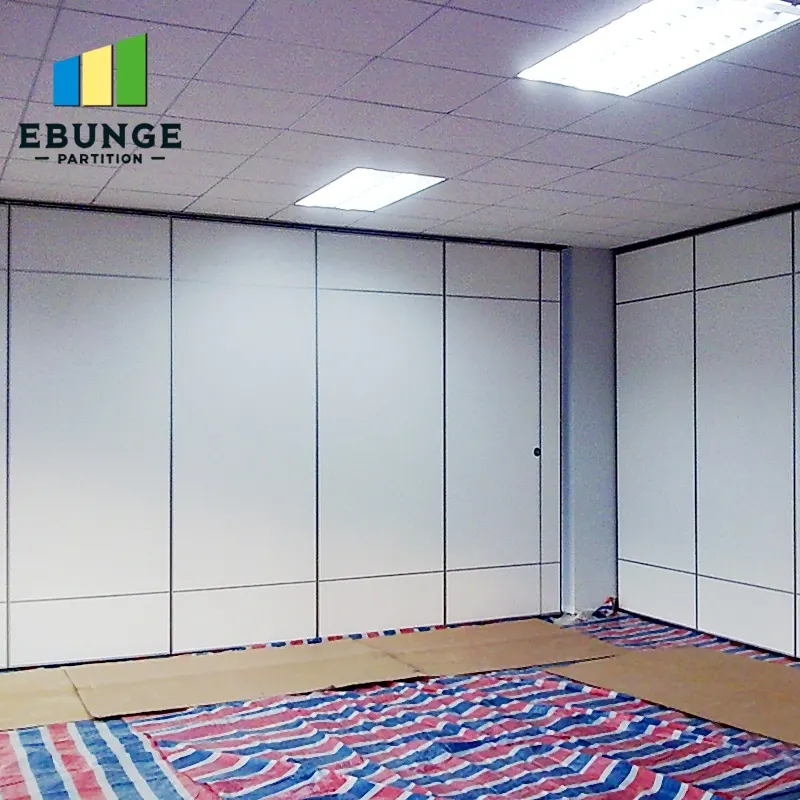
Before a fixing trade drills the first anchor, the project team needs a movable partition track anchor point load path attribution matrix. The suitability of each route and parking arrangement depends on the approved layout, circulation, ceiling interfaces and operating sequence. It records which party owns each load path from the top track to the supporting structure, so no anchor point is left unassigned or claimed by two scopes. Because EBUNGE movable partition panels are individually movable and suspended from a top track, they cross the opening without a floor track and park at a planned stacking position.
Why the Ceiling Interface Needs a Responsibility Matrix
Project review term: movable partition track anchor point load path attribution matrix.
Movable partitions are top-hung. The panels travel below the track, and the track must be supported along the full route. Straight, turning and stacking routes are reviewed from the layout. If the ceiling grid is treated as the default support, or if the slab is assumed without review, the fixing trade may commit to an anchor point that no single party has accepted. A matrix prevents that gap by naming the owner of each interface decision before installation begins.
It organizes the questions that review must answer. It also gives the architect, contractor and owner a single reference when the ceiling zone contains lighting, air devices, sprinklers or access panels that compete for the same overhead space.
Defining the Three Load Path Zones
Coordination scope: movable partition track anchor point load path attribution matrix.
Structural slab or primary structure
The exact overhead route and support arrangement must be confirmed by the responsible project team from coordinated drawings. It should not assume capacity from a drawing alone.
Ceiling grid and secondary framing
Ceiling grids are often designed for ceiling loads, not for partition track support. The matrix should state whether the grid is bypassed, coordinated with, or excluded from the track support path.
Partition track and panel scope
The partition scope covers the track, the panels and the movement route. The matrix should identify who confirms the track line, the stacking position and the interface with the ceiling. It should also record who verifies that the overhead route is continuous and connected for every proposed movement path.
Building the Attribution Matrix Before Fixing
Use a simple table to assign each item to one responsible party. The matrix is most useful when it is completed before any fixing trade commits to anchor positions.
| Interface item | Responsible party | Evidence or confirmation needed |
|---|---|---|
| Track support condition | Structural engineer or responsible party | Project-specific support review |
| Ceiling grid coordination | Ceiling contractor | Drawing showing track support path |
| Track line and route | Partition supplier and contractor | Layout review of straight, turning and stacking routes |
| Anchor point positions | Fixing trade | Approved setting-out drawing |
| Pass-door requirements | Project team | Documented requirement and review |
The matrix should be updated when the ceiling layout changes. A late change to lighting or air devices can move the track support path and invalidate an earlier anchor point assumption.
Information to Collect Before Any Fixing Trade Commits

Confirm the stacking position and the pass-door requirements. Confirm finish options where they affect panel weight or interface details; confirmed finish options include laminate, melamine, fabric, leather, glass and other approved surfaces. Visible references can support layout discussion but do not verify hidden construction or performance.
- Confirm the full movement route, including straight, turning and stacking sections.
- Confirm the support condition for the track at each route segment.
- Confirm how the ceiling grid is coordinated or bypassed.
- Confirm anchor point positions on an approved drawing.
- Confirm pass-door and project documentation requirements.
- Record the responsible party for each item in the matrix.
Evidence Boundaries and Project-Specific Confirmation
This article explains coordination concepts.
Evidence note: the matrix records responsibility. It does not replace the project-specific support, acoustic and dimensional review required before fixing.
Coordination Workflow for Overseas Project Teams
Start with the layout review. Identify the track route and the stacking position. Record the outcome in the matrix. Only after the matrix is complete should the fixing trade set out anchor points. This sequence reduces the risk of overlapping or unassigned load paths.
For product context, see the movable partition wall page. For planning resources, see the resources page. Project teams can discuss pass-door requirements and project documentation through contact.

FAQ: Track Anchor Point Load Path Attribution
What is a movable partition track anchor point load path attribution matrix?
Provide the current layout, opening dimensions, ceiling information, intended room use, and relevant project drawings for review. The exact overhead route and support arrangement must be confirmed by the responsible project team from coordinated drawings.
Does the ceiling grid support the movable partition track?
Do not assume that. The matrix should state whether the grid is bypassed, coordinated with, or excluded from the support path. Project-specific support review is required.
Can the track route include turns and stacking?
Straight, turning and stacking routes are reviewed from the layout. Every proposed movement path requires a continuous connected overhead route and project-specific support review.
What finish options are confirmed?
Confirmed finish options include laminate, melamine, fabric, leather, glass and other approved surfaces.
When should the matrix be completed?
Before any fixing trade commits to anchor positions. It should be updated if the ceiling layout or partition route changes.
Does the matrix replace engineering review?
No. It organizes responsibility.
Conclusion and Next Step
A movable partition track anchor point load path attribution matrix keeps the ceiling interface coordinated before fixing. It separates slab, ceiling grid and partition responsibilities, records the evidence needed for each item, and prevents overlapping or unassigned load paths. Use it alongside project-specific support, acoustic and dimensional review. To discuss your layout, pass-door requirements and project documentation, contact EBUNGE.