
Quick answer: movable partition track fixing crew pre-task hazard access briefing register
Review focus: movable partition track fixing crew pre-task hazard access briefing register.
A movable partition track fixing crew pre-task hazard access briefing register is a simple but disciplined tool: it records that each installer has been walked through the specific workface conditions before work starts. For overseas contractors, the value is not paperwork for its own sake. It is the moment when the supervisor confirms that the overhead route, access path, prior-trade status and local hazards have been seen and understood by the people who will actually fix the track.
Why a Task-Level Briefing Beats a Generic Induction
Project review term: movable partition track fixing crew pre-task hazard access briefing register.
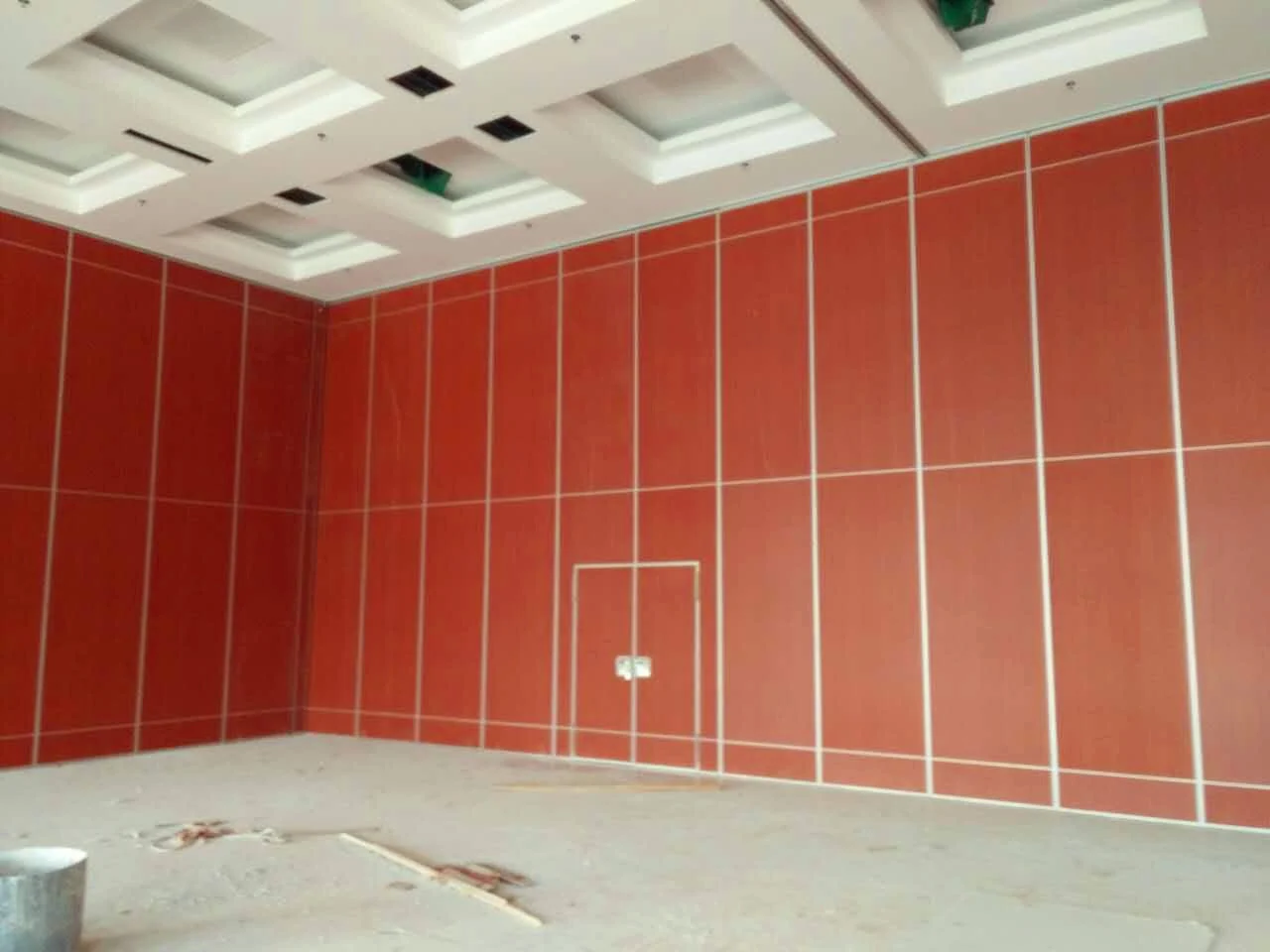
A site induction usually covers site-wide rules. It rarely covers the fact that a ceiling void above a particular opening has been opened by another trade, or that a temporary access route has changed since yesterday. Track fixing is sensitive to those local conditions because the panels are top-hung and travel on an overhead route.
The briefing register should therefore be tied to a workface, not to a person’s start date. One crew may work in three different rooms in a week, each with different access, different prior-trade status and different overhead conditions. The register confirms each of those separately.
What the Register Should Capture Before Release
Coordination scope: movable partition track fixing crew pre-task hazard access briefing register.
The register is a record of a conversation and a walk. It should be short enough to complete in minutes but specific enough to be useful. The following fields are a practical starting point; project teams should adapt them to local regulations and contract requirements.
Workface identification and scope
- Room, zone or opening reference from the approved layout drawing.
- Track route type under review: straight, turning or stacking route.
- Planned stacking position and whether it has been marked on site.
- Drawing revision number and date reviewed with the crew.
Access and prior-trade status
- Current access route to the workface and any temporary restrictions.
- The suitability of each route and parking arrangement depends on the approved layout, circulation, ceiling interfaces and operating sequence.
- Whether the overhead route is continuous and connected for the proposed movement path.
- Any known obstruction, stored material or unfinished interface in the work area.
Hazard and control confirmation
- Working-at-height arrangements and local fall-protection requirements.
- Overhead services, temporary lighting or other trades working above or nearby.
- Housekeeping, exclusion zones and pedestrian routes.
- Emergency arrangements and local site rules confirmed for this workface.
A Numbered Pre-Task Briefing Process

Checklist focus: movable partition track fixing crew pre-task hazard access briefing register.
- Confirm the workface is released. Check that prior trades have finished or that interfaces are formally handed over.
- Walk the route with the crew. Follow the straight, turning and stacking routes shown on the layout, including the parking position.
- Review the drawing revision. Confirm the crew is working from the current layout and not a superseded version.
- Identify local hazards together. Ask the crew what they see, rather than reading a list at them.
- Confirm access and egress. Agree how people and materials reach the workface and how the area is kept clear.
- Record attendance and questions. Note who attended, what was asked and any point requiring clarification.
- Release the workface. Only start when the supervisor and crew confirm the briefing is complete.
Coordination With Other Trades and the Layout Drawing
Review focus: movable partition track fixing crew pre-task hazard access briefing register.
Track fixing depends on decisions made before the crew arrives. The overhead route must be continuous and connected for the proposed movement path; a gap in the supporting route is a design and coordination issue, not something the crew can resolve on the day. The briefing should therefore confirm that the route shown on the layout matches what is actually available above the opening.
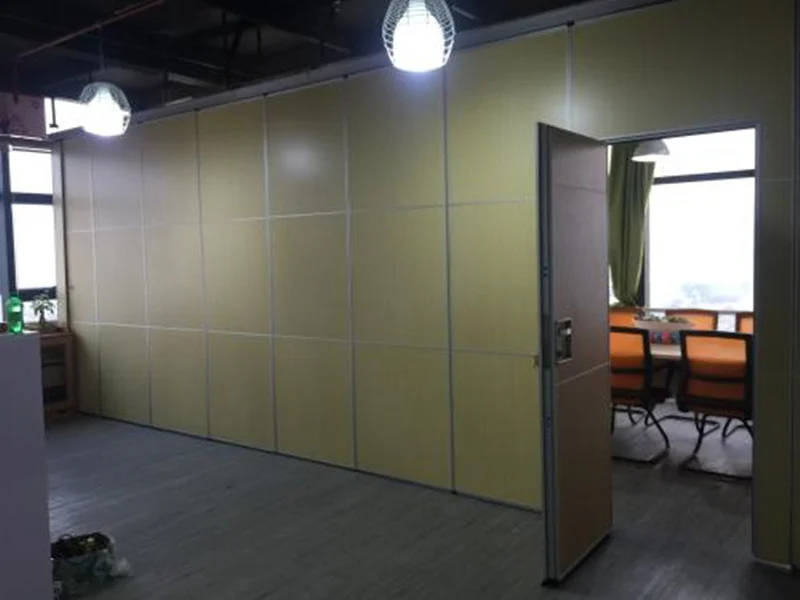
Parking style is customized to the customer layout and project requirements, and compact stacking may be possible when the coordinated design permits it. The briefing register should record where the panels are planned to park, because that position affects access, adjacent trades and the final usable room area.
Evidence Boundaries: What the Register Does Not Prove
Project review term: movable partition track fixing crew pre-task hazard access briefing register.
Evidence note: A completed briefing register confirms that a walk-through took place. Those matters require project-specific review against the approved drawings, supporting structure and local requirements.
Where acoustic separation matters, the project team should confirm the required rating and the supporting construction details separately.
Finish options include laminate, melamine, fabric, leather, glass and other approved surfaces. Those points need their own confirmation.
Common Failure Points the Register Helps Prevent
Coordination scope: movable partition track fixing crew pre-task hazard access briefing register.
| Failure point | What the briefing confirms |
|---|---|
| Superseded layout used on site | Drawing revision reviewed with the crew |
| Overhead route not continuous | Route walked and interfaces checked |
| Access changed by another trade | Current access route agreed before start |
| Parking position unclear | Stacking position identified on site |
| Hazards known only to supervisor | Local hazards discussed with installers |
Adapting the Register to Different Project Types
The same method applies whether the workface is a hotel ballroom, a school hall, an office training room or a conference suite. The named venue is an example only; movable partitions can be considered wherever flexible spatial division, combination or reconfiguration is required. What changes between projects is the specific access, the prior-trade sequence and the local hazard profile.
For renovation projects, the briefing should pay particular attention to existing overhead conditions and to any area where the previous layout differs from the new drawing. For new-build projects, the focus often shifts to coordination with ceiling and services trades. In both cases, the register is completed at the workface, not in an office.
Frequently Asked Questions
Who should sign the pre-task briefing register?
The supervisor who delivers the briefing and each installer who attends should sign or otherwise confirm attendance. Project teams should follow local site rules and contract requirements for any additional signatures.
How often should the briefing be repeated?
Repeat it whenever the workface changes, when access conditions change, or when a new crew member joins the task. A daily repetition is not automatically required, but a new workface normally needs its own briefing.
Does the register replace a risk assessment or method statement?
No. It supports them at task level. The project’s risk assessment, method statement and local regulatory documents remain the controlling documents, and the register should reference them rather than replace them.
What should happen if the overhead route is not continuous?
Work should not proceed on that movement path until the route and its support are reviewed against the approved layout. This is a project-specific design and coordination matter, not something to resolve informally on site.
Can the register be used for pass-door requirements?
Pass-door requirements and project documentation can be discussed with the supplier and recorded in the project file. The briefing register can note that a pass-door decision is pending, but the technical confirmation comes from the project documentation.
How does the register relate to acoustic requirements?
It records that the crew has been briefed on the workface.
Conclusion: Brief the Workface, Then Release It
A track fixing crew can only build what the site and the drawings allow. The pre-task briefing register gives the supervisor a repeatable way to confirm that each installer has seen the actual workface conditions, understands the access constraints and knows what other trades have or have not completed. It reduces the chance of rework caused by assumptions, and it creates a clear record of what was confirmed before work started.
Keep the register short, tie it to the drawing revision, and treat any unresolved route, support or access question as a reason to pause rather than proceed. The exact route, junction arrangement, continuous overhead path and parking position must be confirmed from the coordinated project drawings.
To discuss movable partition configuration, finishes, pass-door requirements or project documentation, contact EBUNGE. You can also review the movable wall product range and the project planning resources for further coordination guidance.