
Quick answer: movable partition track segment reach envelope obstruction clearance register
Review focus: movable partition track segment reach envelope obstruction clearance register.
Handover is the last practical moment to confirm how each movable partition track segment can be reached for inspection. A movable partition track segment reach envelope obstruction clearance register turns that question into a drawing-based record: for every run, what space is physically available around the track, and what blocks it. Because EBUNGE panels are individually movable, suspended from a top track, cross the opening without a floor track, and park at a planned stacking position, the maintenance access conversation belongs to the overhead route and its surroundings, not to the floor line.
This article sets out a register format that project teams can complete before handover. It does not replace project-specific support, acoustic or dimensional confirmation. It simply makes access assumptions visible while they can still be resolved.
Why a Reach Envelope Register Belongs in Handover Documentation
Project review term: movable partition track segment reach envelope obstruction clearance register.
The suitability of each route and parking arrangement depends on the approved layout, circulation, ceiling interfaces and operating sequence. A register records the physical reach envelope around a track segment and the obstructions that fall inside it. It is a coordination document, not a performance claim.
Without a register, access decisions tend to be made on site when a problem appears. The register moves those discoveries into the drawing review stage.
What the register is and is not
It is a per-segment record of reachable space, obstruction type, and agreed access mode. Those items require their own project-specific confirmation.
Defining the Track Segment Reach Envelope
Coordination scope: movable partition track segment reach envelope obstruction clearance register.
The reach envelope is the volume of space that must remain available around a track segment for the agreed inspection method. Its shape depends on the access mode selected for that run.
- Removable ceiling panel access: the envelope extends upward from the track through the ceiling plane to the panel opening.
- Floor hatch access: the envelope extends downward from the track through the floor build-up where a hatch is proposed.
- Open-side inspection: the envelope extends laterally from the track to the nearest open face, with no fixed obstruction in between.
Each segment should be identified by its position in the run, not by a generic room name. A run may need more than one access mode if its geometry changes along the route.
Obstruction Clearance: What to Record for Each Segment
Checklist focus: movable partition track segment reach envelope obstruction clearance register.

Obstructions are anything that reduces the reach envelope. Record them by type and location so the project team can decide whether the access mode still works or whether the layout needs adjustment.
| Obstruction type | What to record | Access implication |
|---|---|---|
| Structural member | Position relative to track segment | May block upward or lateral reach |
| Closed ceiling void | Extent and finish type | May require removable panel |
| Fixed wall or column | Distance from track line | May block open-side inspection |
| Service duct or pipe | Route and clearance zone | May reduce usable envelope |
| Floor build-up | Depth and finish | May affect hatch feasibility |
Record only what is visible on drawings or confirmed by the project team. Do not infer hidden structure or performance from a finish or a photograph.
Choosing the Access Mode for Each Run
Review focus: movable partition track segment reach envelope obstruction clearance register.
Access mode selection follows from the envelope and obstruction record. The goal is a documented decision, not a default assumption.
- List every track segment in the run.
- Sketch the reach envelope for each candidate access mode.
- Mark obstructions that fall inside each envelope.
- Select the mode that remains workable with those obstructions.
- Record the decision and the reason in the register.
- Confirm the decision with the project-specific support and dimensional review.
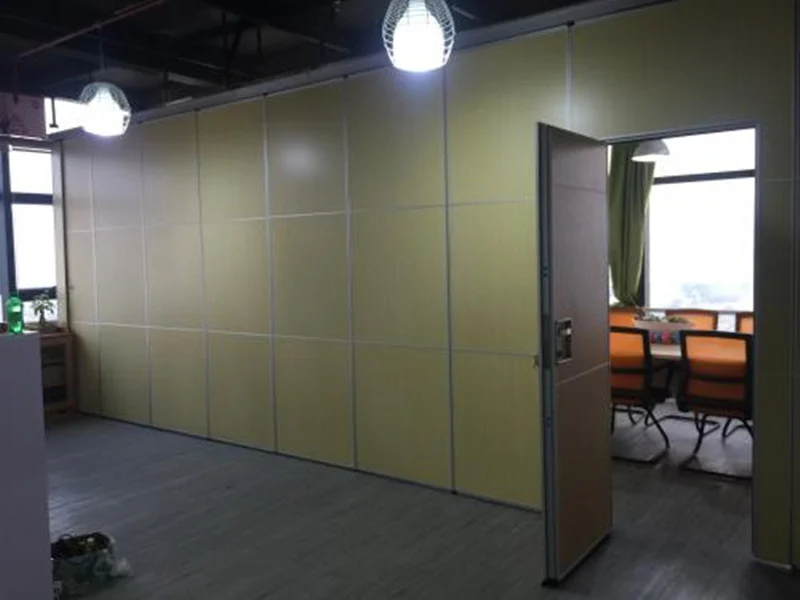
Where a run turns or stacks, review the route from the layout. Straight, turning and stacking routes each have their own geometry, and the access mode may change along the route.
Removable ceiling panels
These suit runs where the track is above a ceiling plane and the void can be opened without disturbing fixed finishes. The register should note panel size, location and any services that cross the opening.
Floor hatches
These are relevant where access from below is proposed. Because EBUNGE panels cross the opening without a floor track, a floor hatch is not a default requirement; it is a project-specific decision that must be confirmed against the floor build-up and the layout.
Open-side inspection
It depends on keeping that face free of fixed obstructions for the life of the installation, which should be noted in the register.
Documenting the Register Before Handover
Project review term: movable partition track segment reach envelope obstruction clearance register.
The register should be a controlled document, not a sketch. It belongs with the project documentation set and should be reviewed alongside the layout drawings.
Evidence note: the register records visible and confirmed conditions. It does not certify structural capacity, acoustic performance, or maintenance outcomes. Those require separate project-specific confirmation.
For each segment, the register should state the access mode, the envelope dimensions as drawn, the obstructions recorded, and the person who confirmed the decision. Where a decision depends on a removable panel or hatch, the register should cross-reference the relevant drawing.
If the project team needs to discuss pass-door requirements or project documentation, that conversation can be part of the same review cycle. The register is a coordination tool, and its value depends on being completed before handover rather than after.
Coordinating with Finishes and Adjacent Trades
Finish choices affect how access points are detailed. Confirmed finish options include laminate, melamine, fabric, leather, glass and other approved surfaces. The register should note where a finish plane must remain removable or openable.
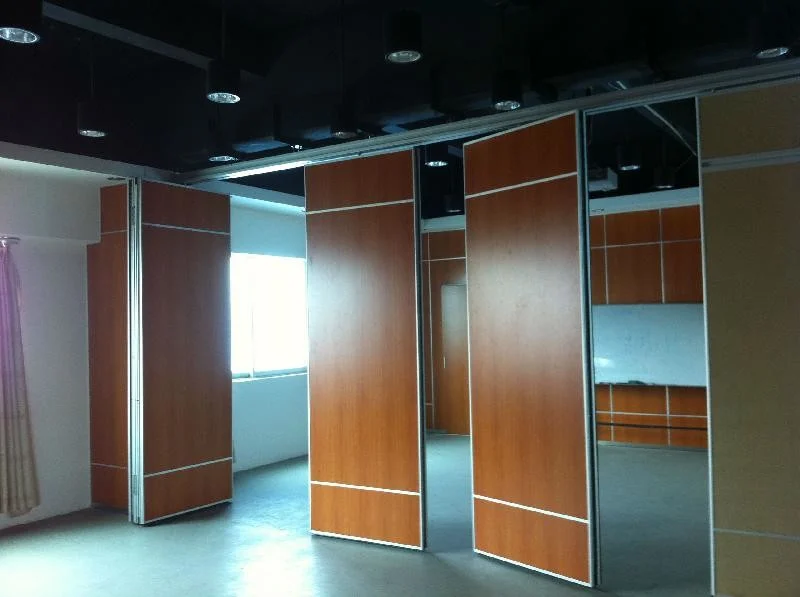
Adjacent trades can also obstruct a reach envelope after handover. Ductwork, lighting, sprinkler runs and ceiling services should be checked against the register during coordination. A segment that was accessible at handover may not remain so if a later trade closes the route.
Frequently Asked Questions
What is a track segment reach envelope?
It is the volume of space that must remain available around a track segment for the agreed inspection method. Its shape depends on whether access is from above, below or the open side.
Does every movable partition run need removable ceiling panels?
No. The access mode depends on the layout, the ceiling condition and the obstructions recorded for each segment. Some runs may be reachable from an open side, while others may need a removable panel or hatch.
Can the register be completed after handover?
It can be started later, but its main value is before handover, when access decisions can still be coordinated with the layout and adjacent trades. After handover, changes are usually more disruptive.
How does the register relate to acoustic performance?
The register is an access planning document.
What should be recorded for each obstruction?
Record the obstruction type, its position relative to the track segment, and the access implication. Use only visible or confirmed information from drawings and project coordination.
Who should confirm the final access mode?
The project team should confirm the access mode against project-specific support, acoustic and dimensional requirements. The register documents that confirmation; it does not replace it.
Conclusion: Decide Access Before Handover
A movable partition track segment reach envelope obstruction clearance register gives project teams a shared record of how each run will be reached. It keeps access decisions visible, ties them to drawings, and reduces the chance of improvising during service. Because the panels are top-hung and cross the opening without a floor track, the register focuses attention on the overhead route and the space around it.
Start the register early, review it with the layout, and confirm every project-specific support, acoustic and dimensional requirement before handover. For product context, see the movable walls range and the planning resources. To discuss pass-door requirements or project documentation, contact the EBUNGE team.