
Quick answer: movable partition post-changeover ambulant route clearance verification
Review focus: movable partition post-changeover ambulant route clearance verification.
Movable partition post-changeover ambulant route clearance verification is the step that confirms a room is genuinely usable after panels have been moved, not merely that the changeover itself is complete. EBUNGE movable wall panels are individually movable, suspended from a top track, cross the opening without a floor track, and park at a planned stacking position. The exact route, junction arrangement, continuous overhead path and parking position must be confirmed from the coordinated project drawings. Those questions belong to the project drawings and the responsible design team.
Why Post-Changeover Verification Is a Separate Task
Project review term: movable partition post-changeover ambulant route clearance verification.
Changeover and verification answer different questions. Changeover asks whether the panels reached their intended configuration. Verification asks whether the resulting space still works for the people who will use it, including people who walk with assistance, push a trolley, or move more slowly through a doorway.
When teams treat these as one activity, small obstructions survive into daily operation: a parked stack that narrows a corridor, a chair left in a turning zone, a sign placed where it reduces passage. None of these are partition defects, yet all of them affect circulation. A short, repeatable check after every changeover catches them before users do.
What the Product Facts Do and Do Not Establish
Coordination scope: movable partition post-changeover ambulant route clearance verification.
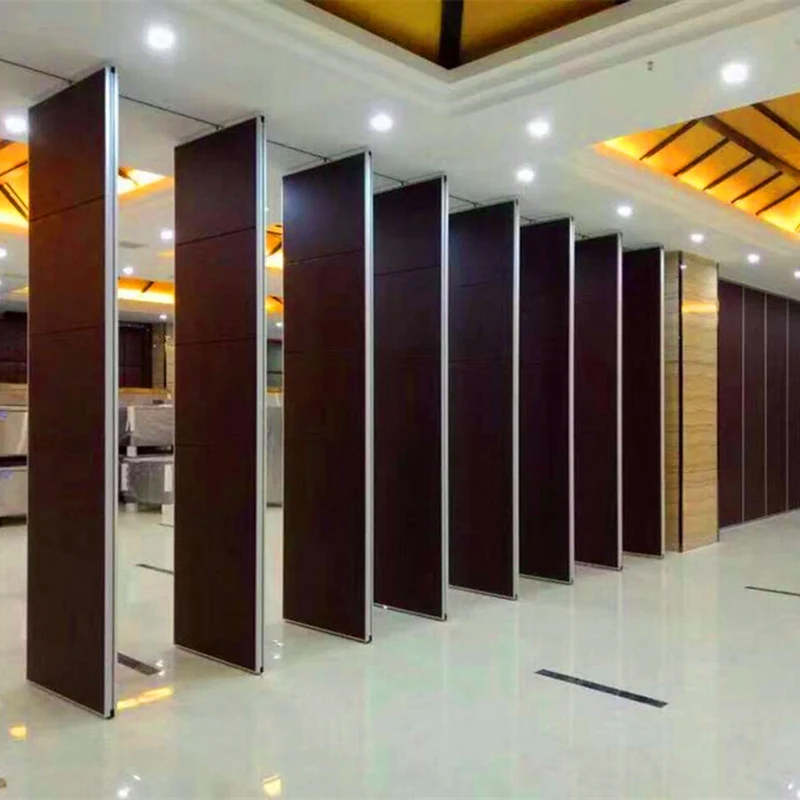
Because panels are top-hung and cross the opening without a floor track, the finished floor along the partition line is not interrupted by running hardware. That is useful for circulation planning, and it is the reason many flexible-space projects consider this system. The suitability of each route and parking arrangement depends on the approved layout, circulation, ceiling interfaces and operating sequence.
Straight, turning and stacking routes are reviewed from the layout. This means the movement path, the parking position and any turning geometry are project-specific decisions. Confirm support, acoustic and dimensional requirements with the responsible engineers and the EBUNGE project team before treating any route as fixed.
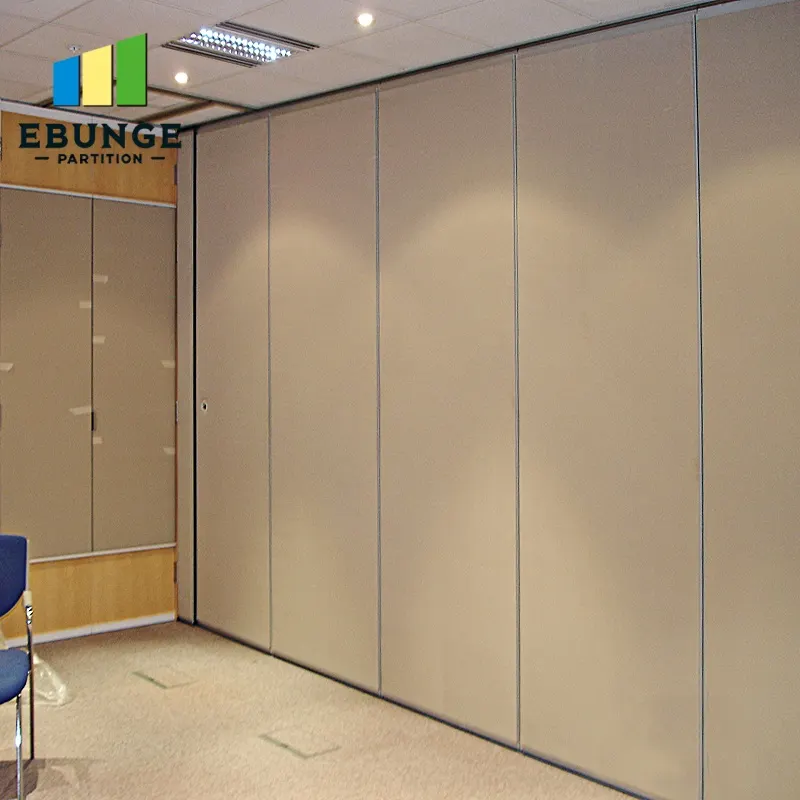
Evidence note: a clear floor line is a visible product characteristic. It is not a measurement of route width, door clearance, turning space or acoustic separation. Those values must come from project drawings and confirmed specifications.
A Six-Step Verification Sequence for Facility Teams
Checklist focus: movable partition post-changeover ambulant route clearance verification.
- Confirm the intended configuration. Identify which panels should be open, closed or parked for the current room use.
- Walk the primary route. Follow the path a user would take from entry to the far side of the space.
- Check the parked stack zone. Confirm the stack sits within its planned position and does not intrude into the walking line.
- Inspect turning and approach areas. Look at corners, door approaches and any point where the route changes direction.
- Record obstructions. Note movable items, temporary signage or stored equipment that reduce passage.
- Remove and re-walk. Clear each obstruction, then repeat the walk before signing off.
This sequence is deliberately simple. It does not require instruments, and it does not replace a formal accessibility audit where one is required. It gives the facility team a defensible routine between audits.
Obstruction Removal and the Sign-Off Record
Review focus: movable partition post-changeover ambulant route clearance verification.
An obstruction is anything that reduces the usable route after changeover. Some obstructions are permanent-looking but movable, such as a display stand. Others are temporary, such as cleaning equipment. The sign-off record should distinguish between them, because the response differs: movable items are cleared immediately, while recurring obstructions may need a layout or storage decision.
Keep the record short and factual. Date, configuration, route walked, obstructions found, action taken, and the name of the person who re-walked the route. Avoid recording performance conclusions that the check cannot support.
Coordination With Design, Contractors and Owners
Project review term: movable partition post-changeover ambulant route clearance verification.
Architects and interior designers can show the intended straight, turning and stacking routes on the layout. Contractors can confirm that the installed condition matches that layout. Owners and facility teams can then verify the same routes in operation.
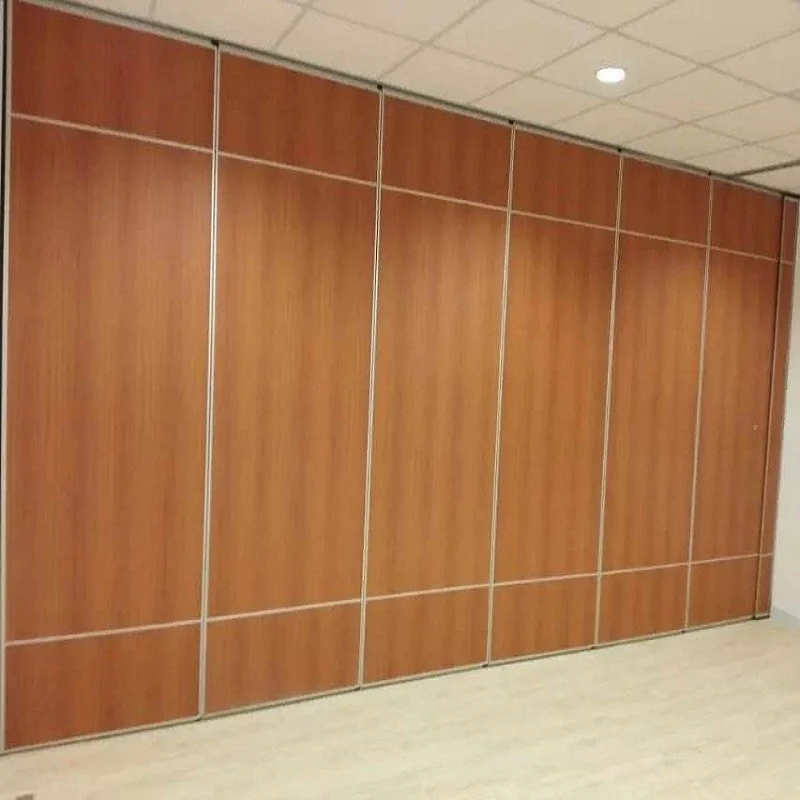
Where a route depends on a pass-door arrangement or on project documentation, raise it early. Pass-door requirements and project documentation can be discussed with EBUNGE so that the drawing review reflects the actual proposal rather than an assumption.
Common Verification Mistakes to Avoid
- Treating changeover completion as route clearance.
- Checking only the open side of the room and ignoring the parked stack.
- Assuming a clear floor line means the route is wide enough.
- Leaving temporary items in turning zones because they are ‘only there for now’.
Each mistake has the same root cause: substituting a visible impression for a project-specific confirmation. The correction is to keep the check tied to the layout and to the people who use the space.
How Finishes and Layout Choices Affect Circulation Review
Confirmed finish options include laminate, melamine, fabric, leather, glass and other approved surfaces. Finish choice affects appearance and maintenance planning, but it does not change route geometry. Do not infer cleaning compatibility, durability or acoustic behaviour from a finish name.
Layout choices matter more for circulation. The exact overhead route and support arrangement must be confirmed by the responsible project team from coordinated drawings. Parking style is customized to the customer layout and project requirements, so the review should follow the coordinated design rather than a generic assumption.
Frequently Asked Questions
Who should carry out the post-changeover route check?
A trained member of the facility or operations team can carry out the walk, provided the project has defined the intended routes. Where a formal accessibility requirement applies, the responsible consultant should confirm the method and frequency.
Does a floor-track-free system guarantee a clear route?
No. It removes running hardware from the partition line, but route clearance also depends on parked panel position, furniture, doors and the layout as a whole. Confirm these from the project drawings.
How often should verification be repeated?
Repeat it after each changeover that alters the room configuration, and whenever furniture or storage arrangements change. The appropriate frequency is a project decision, not a fixed rule.
Can the check confirm acoustic performance?
No. Acoustic requirements need separate project-specific confirmation.
What should be recorded if an obstruction cannot be removed immediately?
Record the location, the reason it remains, and the interim arrangement. Escalate it to the person responsible for the space so that a layout or storage decision can be made.
Does EBUNGE confirm route widths or support points?
Share the layout and intended movement routes so the relevant checks can be coordinated.
Conclusion and Next Step
Post-changeover verification is a small routine with a clear purpose: confirm that the room still works for the people moving through it. Keep the check tied to the layout, record only what the walk can show, and remove obstructions before sign-off. Where a route, pass-door arrangement or documentation point needs clarification, contact the EBUNGE team with your drawings. You can also review the movable wall systems and the project resources before the next coordination meeting.