
Quick answer: movable partition renovation temporary separation lease register
Review focus: movable partition renovation temporary separation lease register.
During phased renovation, occupied zones often rely on boundaries that belong to adjacent areas. A movable partition renovation temporary separation lease register gives the project team a single place to record which zone is borrowing an acoustic boundary, why the borrowing is necessary, and when that boundary must be returned to its original function. The register is a coordination tool, not a performance guarantee. It helps contractors, architects, designers and owners keep temporary separation decisions visible while permanent work proceeds.
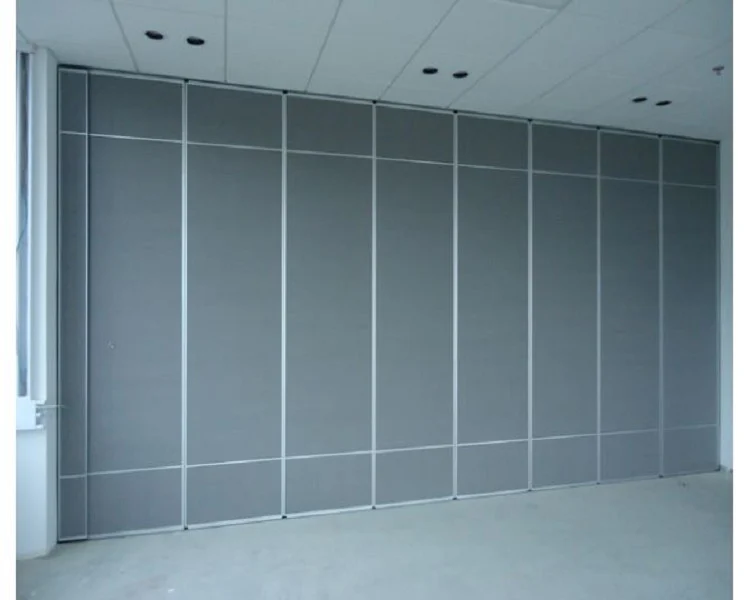
Movable partition panels are individually movable, suspended from a top track, cross the opening without a floor track, and park at a planned stacking position. The suitability of each route and parking arrangement depends on the approved layout, circulation, ceiling interfaces and operating sequence. Every borrowed boundary still needs project-specific review.
Why a Temporary Separation Lease Register Matters in Renovation Phasing
Project review term: movable partition renovation temporary separation lease register.
Renovation work rarely stops all building activity. Some zones remain occupied while others are demolished, rebuilt or refinished. In that overlap, a boundary that normally separates two finished areas may temporarily serve a different pair of uses. The register names that arrangement and gives it an end date.
Without a register, temporary separations can drift. A partition may remain in a borrowed position after the original zone needs it back. Or a team may assume that a movable partition will provide the same separation as a permanent wall without reviewing the actual route, support and acoustic requirements. The register does not solve those questions, but it exposes them early enough for drawing review.
What the register is not
The register is not a certificate, a test report or a substitute for project documentation. It simply tracks the temporary arrangement and the conditions under which it must be returned.
Core Fields for Tracking Borrowed Acoustic Boundaries
Coordination scope: movable partition renovation temporary separation lease register.
A useful register is short enough to maintain and specific enough to act on. Each row should identify the borrowing zone, the lending zone, the boundary in question, the reason for the temporary arrangement, and the return trigger. The return trigger might be a construction milestone, a handover date or the completion of a permanent separation.
Teams should also record the drawing reference that shows the proposed movable partition route. Straight, turning and stacking routes are reviewed from the layout. If the route changes, the register entry should change with it.
Evidence note
Those attributes require matching project evidence. The register should point to the drawing or specification that actually governs the temporary condition.
A Numbered Process for Setting Up the Register
Checklist focus: movable partition renovation temporary separation lease register.
- List occupied zones and their required boundaries. Identify which areas must remain usable during each phase and what separation they currently rely on.
- Identify borrowed boundaries. Mark any boundary that belongs to an adjacent area but is temporarily serving the occupied zone.
- Record the movable partition route. Note whether the route is straight, turning or stacking, and reference the layout drawing that shows it.
- Assign a return trigger. State the milestone or condition that ends the borrowing arrangement.
- Confirm support and dimensional requirements. Ask the project engineer or qualified reviewer to confirm the overhead route, support conditions and dimensions for the specific location.
- Review the register at each phase change. Update entries when zones open, close or change use.
Coordinating the Register with Movable Partition Drawings
Review focus: movable partition renovation temporary separation lease register.
Movable partitions are top-hung and move without a continuous floor running track or floor hardware along the partition line. That characteristic can be useful in renovation phasing because the floor remains clear for occupied zones. However, the absence of a floor track does not remove the need for a continuous connected overhead route and project-specific support review.
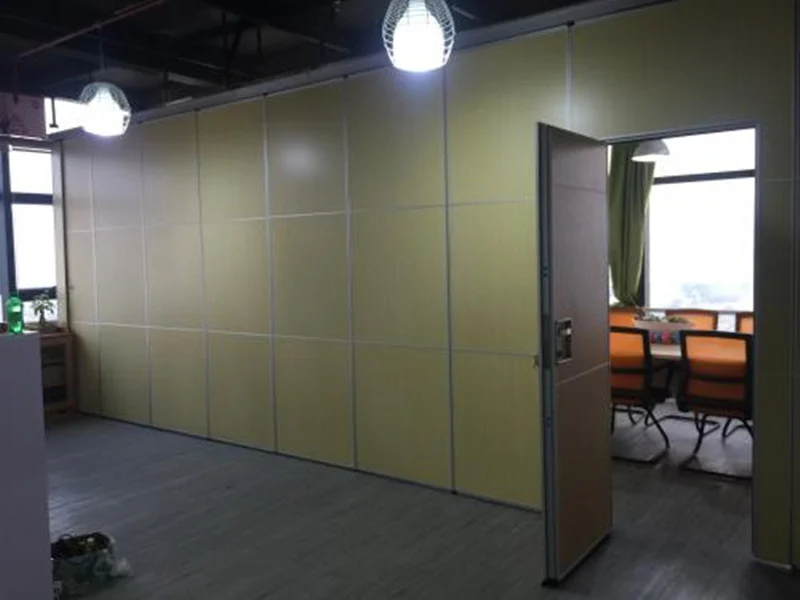
The register should cross-reference the partition layout, the parking position and any pass-door requirements. Pass-door requirements and project documentation can be discussed with the supplier or design team. The exact route, junction arrangement, continuous overhead path and parking position must be confirmed from the coordinated project drawings.
Compact comparison: register entry versus drawing review
| Register entry | Drawing review |
|---|---|
| Names the borrowing zone and lending zone | Shows the physical route and stacking position |
| Records the return trigger | Confirms phase sequence and access |
| References the governing drawing | Confirms support and dimensional conditions |
| Flags pass-door needs | Coordinates opening size and location |
The table is a coordination aid, not a performance statement. Any acoustic requirement for a borrowed boundary must be confirmed for the specific project.
Finish and Surface Considerations for Temporary Boundaries
Project review term: movable partition renovation temporary separation lease register.
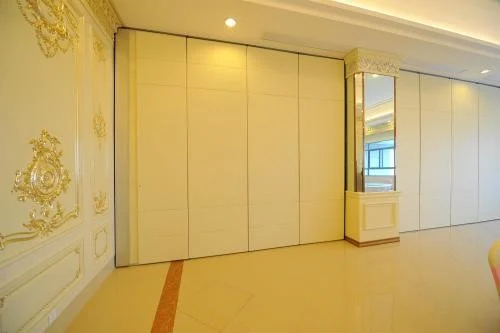
Confirmed finish options include laminate, melamine, fabric, leather, glass and other approved surfaces. Finish choice affects appearance and maintenance planning, but it does not by itself confirm acoustic, fire or durability performance. The register can note the finish selected for the temporary boundary, but the project specification remains the controlling document.
For occupied zones, the visual character of a temporary partition may matter to users. A finish that suits a permanent installation may or may not suit a short-term separation. That is a design and procurement decision, not a performance claim. Teams should confirm finish availability and suitability through the approved project documentation.
Returning Borrowed Boundaries Without Disrupting Occupied Zones
The return date is the most important field in the register. When a borrowed boundary is returned, the lending zone may need the partition to move to a different position or to park at a planned stacking position. That movement should be coordinated with the phase plan and with the users of both zones.
Returning a boundary is not only a physical task. It also closes the temporary arrangement in the project record. The register should show who confirmed the return, what drawing governed the original borrowing, and whether any follow-up review is needed.
Decision checklist for each borrowed boundary
- Is the borrowing zone clearly identified?
- Is the lending zone and its original function recorded?
- Is the movable partition route shown on a coordinated drawing?
- Is the return trigger specific and measurable?
- Have support and dimensional requirements been reviewed?
- Are pass-door and documentation needs noted?
- Is the finish selection recorded without implying performance?
Frequently Asked Questions
What is a movable partition renovation temporary separation lease register?
It is a coordination document that tracks which occupied zones are temporarily borrowing acoustic boundaries from adjacent areas, and when each borrowed boundary must be returned. It supports renovation phasing but does not replace project-specific engineering or acoustic review.
Does a movable partition guarantee acoustic separation for a borrowed boundary?
No. Confirm acoustic requirements for each project.
Can movable partitions be used without a floor track?
EBUNGE movable partition panels are top-hung and move without a continuous floor running track or floor hardware along the partition line.
How often should the register be updated?
Update it at each phase change, whenever a zone opens or closes, and whenever the movable partition route or stacking position changes.
What finish options can be recorded in the register?
Confirmed finish options include laminate, melamine, fabric, leather, glass and other approved surfaces. Record the selected finish for coordination, but confirm suitability and performance through the project specification.
Who should review the temporary separation lease register?
The contractor, architect, designer, owner representative and any qualified reviewer responsible for support, acoustic and dimensional requirements should review it. The register is most useful when it is part of the regular renovation phasing meeting.
Conclusion: Keep Borrowed Boundaries Visible and Returnable
A temporary separation lease register turns an informal phasing arrangement into a trackable project record. It helps teams see which occupied zones depend on borrowed acoustic boundaries, which movable partition routes are proposed, and when each boundary must be returned.
To discuss pass-door requirements, project documentation or movable partition planning for your renovation, contact EBUNGE. You can also review movable walls and the resources for general planning context. Confirm support, acoustic and dimensional requirements with the qualified reviewers on your project before finalizing any temporary separation arrangement.