
Quick answer: movable partition stacking pocket approach
Review focus: movable partition stacking pocket approach.
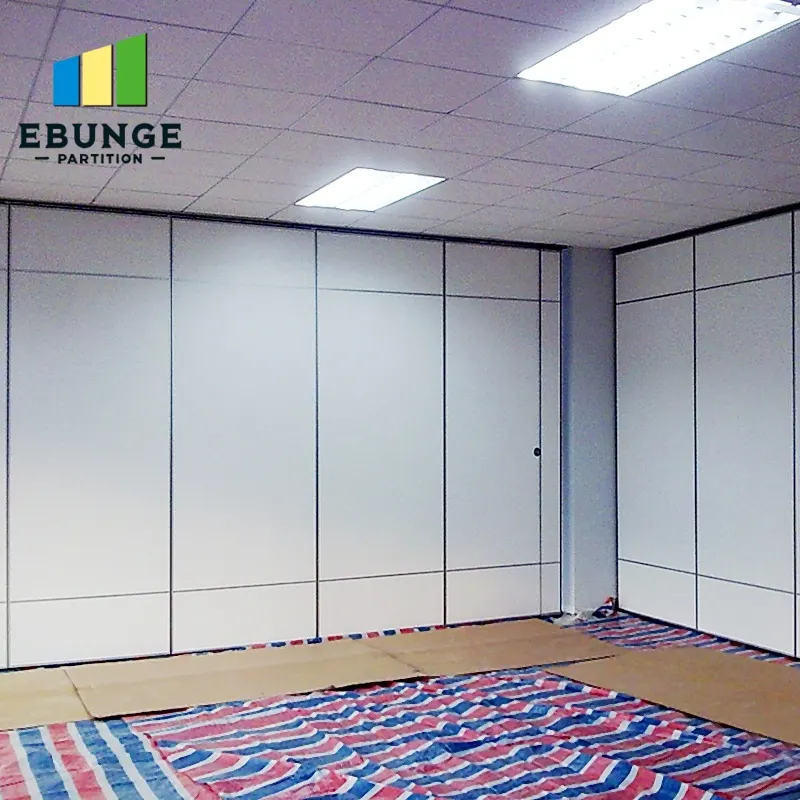
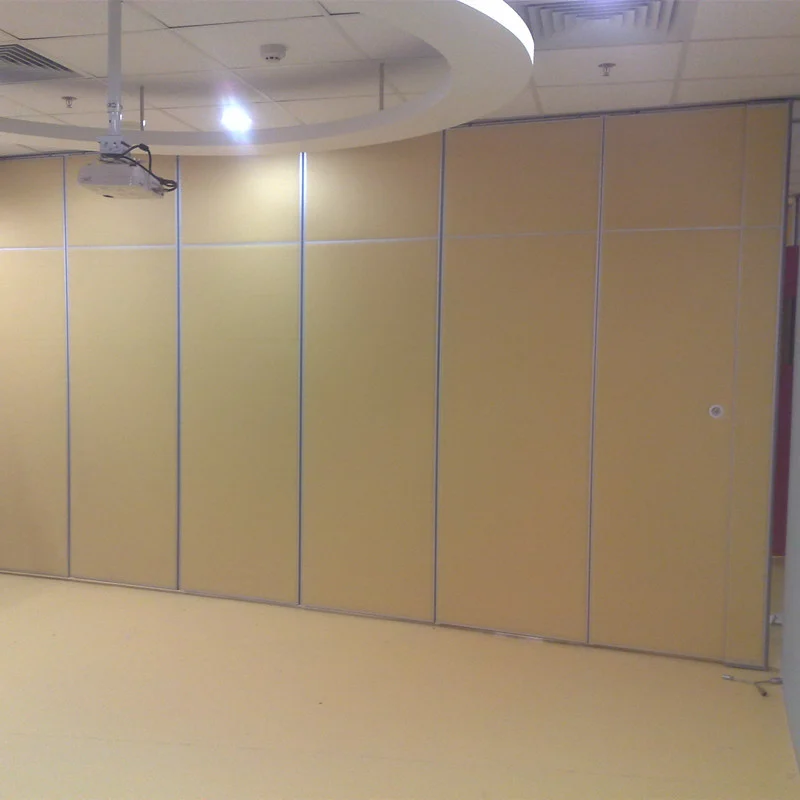
Movable partition stacking pocket approach zone ambulant route width verification is a drawing-review task, not a product selection shortcut. EBUNGE movable wall panels are individually movable, suspended from a top track, cross the opening without a floor track, and park at a planned stacking position. Because the panels travel overhead, the route they follow and the space where they rest must be checked against the same set of project drawings that define the ambulant route. This article sets out a coordination framework for overseas contractors, architects, interior designers, owners, renovation teams and distributors.
Why the Approach Zone and the Ambulant Route Must Be Reviewed Together
Project review term: movable partition stacking pocket approach.
A stacking pocket is not only a storage location. It is the end point of a movement path that begins at the closed partition line. The approach zone is the area immediately in front of and around that end point where panels are guided into their parked position. If the approach zone is treated as leftover space, it can conflict with the clear route that building users need when the partition is open, closed or in motion.
The review therefore links three drawings: the partition elevation, the reflected ceiling or track route plan, and the general circulation plan. Straight, turning and stacking routes are reviewed from the layout. A route that looks acceptable on the partition drawing may still cross a door swing, a service riser or a designated accessible path on the circulation drawing. Confirm project-specific support, acoustic and dimensional requirements before treating any route as fixed.
Information to Collect Before Any Route Is Confirmed
Coordination scope: movable partition stacking pocket approach.
Verification starts with complete project information. Missing inputs are the most common reason a stacking pocket approach zone is revised late, when changes are expensive and disruptive.
- Dimensioned partition line, opening width and intended stacking position.
- Track route drawings showing straight, turning and stacking paths.
- Ambulant route widths required by the applicable local accessibility standard.
- Door swings, adjacent furniture, fixed joinery and service outlets near the pocket.
- The suitability of each route and parking arrangement depends on the approved layout, circulation, ceiling interfaces and operating sequence.
- Finish direction, including laminate, melamine, fabric, leather, glass or other approved surfaces.
- Pass-door requirements and any project documentation needed for approval.
This list is a starting point. Each project adds its own constraints, and no item should be assumed from a previous job.
A Step-by-Step Verification Sequence for Project Teams
Checklist focus: movable partition stacking pocket approach.
The sequence below keeps the approach zone and the ambulant route in the same review cycle rather than treating them as separate packages.
- Mark the closed partition line and the planned stacking position on the circulation plan.
- Draw the full movement path, including straight, turning and stacking segments.
- Overlay the ambulant route and check where the two paths share space.
- Check the approach zone against door swings, fixed elements and adjacent room functions.
- Confirm the overhead route is continuous and supported along its full length.
- Record every conflict and assign a responsible discipline for resolution.
- Reissue the drawings and repeat the overlay after any layout change.
The exact route, junction arrangement, continuous overhead path and parking position must be confirmed from the coordinated project drawings. Every proposed movement path requires a continuous connected overhead route and project-specific support review. Where a conflict cannot be resolved, the stacking position or the route may need to change.
Evidence Boundaries: What Drawings Can and Cannot Show
Review focus: movable partition stacking pocket approach.
Drawings show geometry, not performance. Visible references can support layout discussion but do not verify hidden construction or performance.
Evidence note: STC and Rw are rating systems used to describe acoustic performance in project documentation. They are not a direct count of decibels, and this article does not state any tested value. Acoustic requirements must be confirmed for the specific project, assembly and configuration.
Where a claim matters to approval, ask for the matching project documentation rather than inferring it from a catalogue image.
Coordinating the Approach Zone Across Different Configurations
Project review term: movable partition stacking pocket approach.
The same opening may be used in several ways: fully open, partly closed, or closed with a pass door in use. Each configuration changes how people move past the stacking pocket.
Fully open configuration
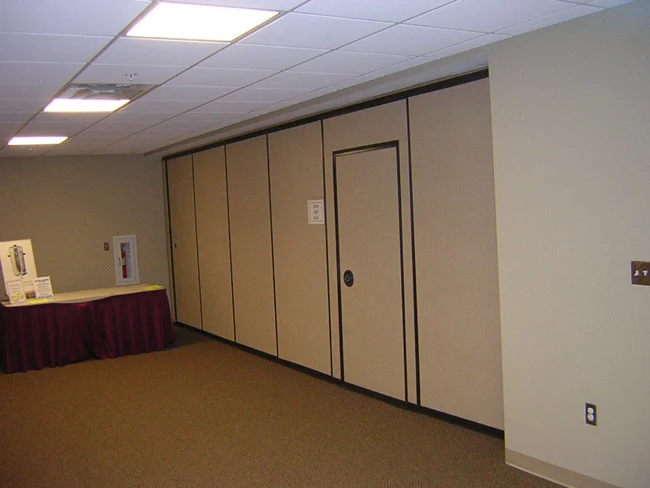
Panels are parked. The approach zone may be clear, but the parked panels still occupy plan space and can narrow the adjacent route. Check the parked footprint against the ambulant route.
Partially closed configuration
Panels are in motion or held mid-route. The approach zone may be temporarily obstructed. Confirm how the route is maintained during operation and who controls the area.
Closed configuration with pass door
The pass door becomes part of the circulation path. Pass-door requirements and project documentation can be discussed with the supplier so the door position does not conflict with the stacking pocket or the ambulant route.
Common Coordination Gaps and How to Close Them
| Gap | Risk to the review | Closing action |
|---|---|---|
| Stacking position chosen before circulation plan is issued | Approach zone conflicts with ambulant route | Re-overlay both drawings and confirm the position |
| Track route shown as a single line without support notes | Support responsibility unclear | Request project-specific support review |
| Finish selected before route is fixed | Late changes to panel edges or pocket trim | Confirm finish after route and pocket are coordinated |
| Accessibility standard not identified | Route width cannot be verified | Confirm the applicable local requirement |
These gaps are planning issues, not product defects. They are resolved by drawing coordination and project-specific confirmation.
Documentation to Carry Into Construction
Keep a single coordinated drawing set that shows the partition line, track route, stacking position, approach zone and ambulant route. Record the revision date and the discipline responsible for each element. Where the project requires accessibility verification, include the applicable standard and the confirmed route width. Where acoustic separation is required, include the project-specific acoustic documentation rather than a generic description.
For product context, see the movable walls range. For general planning material, visit the resources page. When the drawing set is ready for review, contact the team to discuss pass-door requirements and project documentation.
FAQ: Stacking Pocket and Ambulant Route Verification
What is a stacking pocket approach zone?
It is the area around the planned stacking position where panels are guided into their parked location. It must be reviewed together with the ambulant route because both occupy plan space near the opening.
Can movable partitions cross an untracked gap?
No. Every proposed movement path requires a continuous connected overhead route and project-specific support review. Straight, turning and stacking routes are reviewed from the layout.
Does a floor track affect the ambulant route?
EBUNGE movable wall panels cross the opening without a floor track. The route review still matters because the parked panels and the approach zone occupy plan space.
Which finish options are available?
Confirmed finish options include laminate, melamine, fabric, leather, glass and other approved surfaces. Finish selection should follow route and pocket coordination, not precede it.
How is acoustic performance confirmed?
Provide the current layout, opening dimensions, ceiling information, intended room use, and relevant project drawings for review. The exact overhead route and support arrangement must be confirmed by the responsible project team from coordinated drawings.
What should be confirmed before construction?
Confirm project-specific support, acoustic and dimensional requirements, the applicable accessibility standard, and the coordinated drawing set showing the approach zone and ambulant route.
Conclusion: Verify the Route, Then Confirm the Details
Movable partition stacking pocket approach zone ambulant route width verification is a repeatable drawing-review discipline. Collect the project information, overlay the movement path with the ambulant route, check the approach zone across open, partial and closed configurations, and record every conflict for resolution. Keep performance claims inside their evidence boundary and confirm project-specific support, acoustic and dimensional requirements before construction.
Ready to review your layout? Contact EBUNGE to discuss pass-door requirements, project documentation and the coordinated drawing set for your movable partition configuration.