
Quick answer: movable partition renovation temporary separation coverage handover certificate
Review focus: movable partition renovation temporary separation coverage handover certificate.
The suitability of each route and parking arrangement depends on the approved layout, circulation, ceiling interfaces and operating sequence. A movable partition renovation temporary separation coverage handover certificate gives facility teams and contractors a repeatable stage gate: each occupied zone is inspected, its acoustic boundary is confirmed as still in place, and only then is the following phase released. The certificate is not a performance guarantee. It is a documented check that the temporary separation described in the approved layout is still physically present and correctly positioned.
Why Renovation Phasing Needs a Separation Gate
Project review term: movable partition renovation temporary separation coverage handover certificate.
Demolition sequencing in a live building creates a moving boundary problem. As work advances, the separation between active construction and occupied areas can be altered, moved or partially removed. Without a formal gate, the next phase may begin while an occupied zone has lost the very boundary that was intended to separate it from noise, dust and disruption.
A separation gate converts this risk into a scheduled checkpoint. It does not claim that any zone becomes silent. It confirms that the agreed physical separation exists at the moment of release. That distinction matters for owners, contractors and facility managers who must coordinate multiple trades across a phased programme.
What the Handover Certificate Should Record
Coordination scope: movable partition renovation temporary separation coverage handover certificate.
The certificate is a structured record, not a marketing document. It should identify the zone, the date and time of inspection, the responsible parties, and the specific separation elements observed. It should also state clearly what was not verified, so that no reader infers hidden performance from a signed form.
Core fields for each zone
- Zone identifier and the occupied area it protects.
- Location of the temporary separation line as shown on the approved layout.
- Confirmation that the movable partition panels are present, individually movable and suspended from the top track.
- Confirmation that the opening is crossed without a floor track along the partition line.
- Parking position of panels when the opening is clear.
- Any pass-door requirements noted for the zone.
- Outstanding items and the person responsible for closing them.
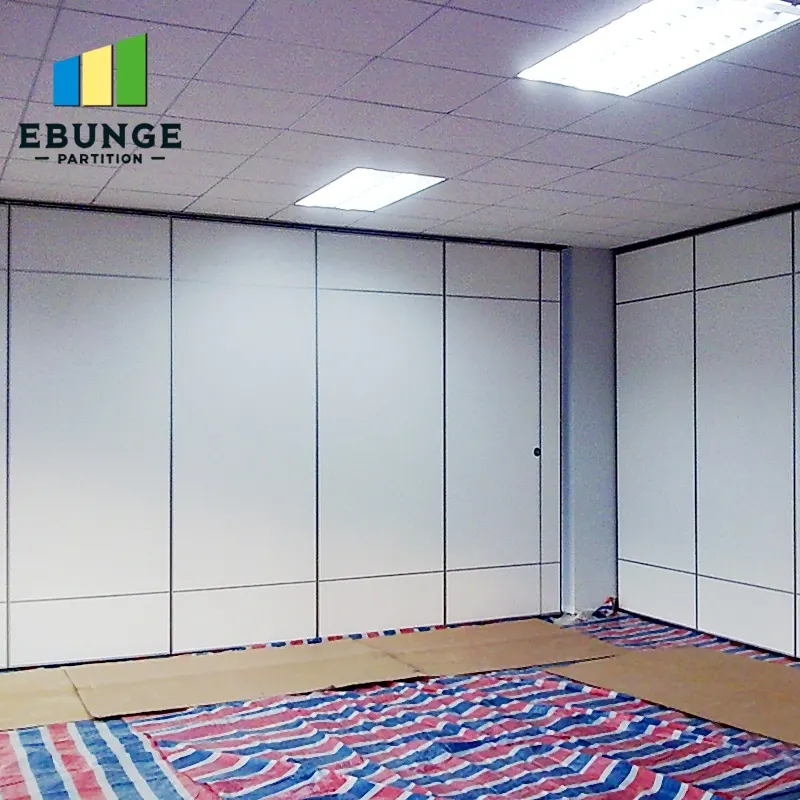
Because EBUNGE panels are top-hung and move without a continuous floor running track, the inspection focuses on the overhead route, the panel line and the planned stacking position. The certificate should reference the reviewed drawing rather than describing the system in general terms.
A Stage-Gate Process for Releasing the Next Phase
Checklist focus: movable partition renovation temporary separation coverage handover certificate.
Each step produces a visible record that the next trade can rely on before mobilising.
- Confirm the zone boundary. Compare the installed separation line with the approved layout and note any deviation.
- Inspect the movement route. Verify that the straight, turning and stacking routes remain continuous and connected overhead, as reviewed for the project.
- Check the parked condition. Confirm panels are parked at the planned stacking position and that the opening is either closed or clear as required.
- Record the acoustic boundary status. State whether the intended separation is in place, partially in place, or absent. Do not record a sound level or a rating unless project-specific testing evidence exists.
- List exceptions. Note missing panels, damaged finishes, blocked routes or incomplete pass-door arrangements.
- Sign and release. Only after exceptions are closed should the next demolition stage be released for that zone.
Evidence Boundaries: What the Certificate Can and Cannot Show
Review focus: movable partition renovation temporary separation coverage handover certificate.
A handover certificate is a visual and positional record. It can show that panels are present, that the route is connected, and that the parked position matches the plan.
Acoustic terms such as STC or Rw describe laboratory or field ratings under defined conditions. They are not a simple count of decibels, and a certificate should never reduce them to one. Where acoustic performance matters, the project team must confirm the required rating and the supporting evidence separately.
Seals and acoustic concepts can be explained generically, but the certificate should avoid naming seal materials or implying that a visible seal guarantees a particular result. If the project requires verified acoustic separation, that verification belongs in a separate, evidence-backed document.
Coordinating Finishes, Pass Doors and Documentation
Renovation phasing often overlaps with finish selection. Confirmed finish options include laminate, melamine, fabric, leather, glass and other approved surfaces. The certificate should record the finish only as an identifier, not as evidence of cleaning compatibility, impact resistance or acoustic behaviour.
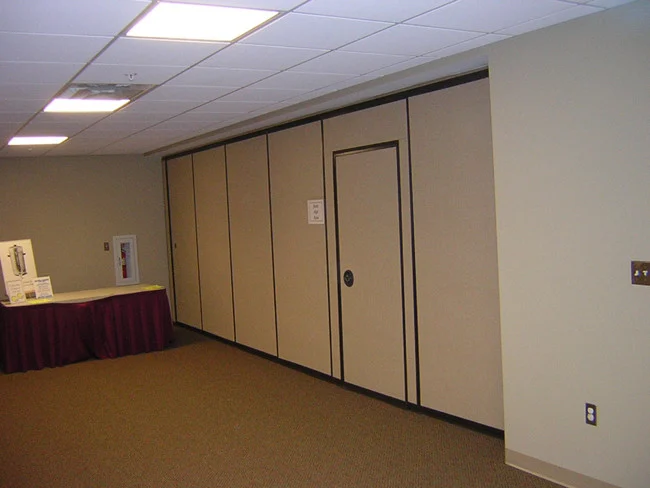
Pass-door requirements and project documentation can be discussed with the supplier during planning. Where a pass door is part of the temporary separation, the certificate should confirm that the agreed arrangement is installed and that the door does not interrupt the overhead route.
For teams comparing options, the movable wall systems page provides maintained product context. Additional planning guidance is available in the resources section.
Common Failure Points in Phased Renovations
Most gate failures are procedural rather than technical. A zone is released because the previous certificate was assumed to still apply, or because a route change was made without updating the layout. The following checks reduce that risk.
| Failure point | What to verify |
|---|---|
| Certificate reused from an earlier phase | Confirm the zone and date; re-inspect if the layout changed. |
| Route altered without review | Check that straight, turning and stacking routes remain connected overhead. |
| Parking position changed | Confirm panels are parked at the planned stacking position. |
| Acoustic assumption carried forward | Separate positional checks from any acoustic verification. |
| Pass-door arrangement incomplete | Record the outstanding item and hold the release. |
Frequently Asked Questions
Does the handover certificate prove acoustic performance?
No. It records that the intended separation is physically in place.
Can the certificate be used for every zone in a phased project?
Yes, provided each zone has its own reviewed layout and inspection record. A certificate from one zone should not be applied to another without re-inspection.
What if the movable partition route changes during the works?
The change should be reviewed against the layout before the next phase is released. Straight, turning and stacking routes must remain continuous and connected overhead.
How are finishes recorded on the certificate?
Finishes such as laminate, melamine, fabric, leather, glass or other approved surfaces may be recorded as identifiers. They are not evidence of acoustic, fire or durability performance.
Who should sign the certificate?
The responsible facility and contractor representatives for the zone should sign. The exact sign-off structure should be agreed at project level.
Does the certificate replace project documentation?
No. It supplements the reviewed drawings and project documentation. Pass-door requirements and dimensional checks should be confirmed separately.
Conclusion: A Gate That Keeps Occupied Zones Protected
A movable partition renovation temporary separation coverage handover certificate is a practical control for phased work in live buildings. It forces a zone-by-zone check before demolition advances, keeps the reviewed layout visible, and separates positional confirmation from acoustic claims. Used consistently, it helps contractors, facility teams and owners avoid releasing a phase into an unprotected occupied area.
To discuss pass-door requirements, finish options or project documentation for your phased renovation, contact the EBUNGE team and confirm the support, acoustic and dimensional requirements for your specific project.