
Quick answer: movable partition changeover scenario stress
Review focus: movable partition changeover scenario stress.
Room release assumptions often harden into scheduling policy long before anyone tests them against a bad day. A movable partition changeover scenario stress-test register is a working document that forces those assumptions into the open. It asks what happens when peak booking and crew shortage arrive together, and it records which answers are confirmed by project evidence and which remain open questions. This guide is for overseas contractors, architects, interior designers, owners, renovation teams and distributors who need to plan changeovers without inventing performance, cost or time outcomes.
What the Stress-Test Register Is and Is Not
Project review term: movable partition changeover scenario stress.
The register is a structured list of changeover scenarios, each paired with the assumptions it depends on, the evidence available, and the confirmation still required. It is not a performance guarantee, a staffing plan, or a substitute for project drawings. It does not predict how fast a room will turn over, because that depends on layout, route, support conditions and project-specific review.
Its value is discipline. By writing assumptions down, teams can see where scheduling policy is resting on habit rather than confirmed information. The register also creates a clean handover point between operations, design and construction stakeholders.
Start With Confirmed Product Facts, Not Assumptions
Coordination scope: movable partition changeover scenario stress.
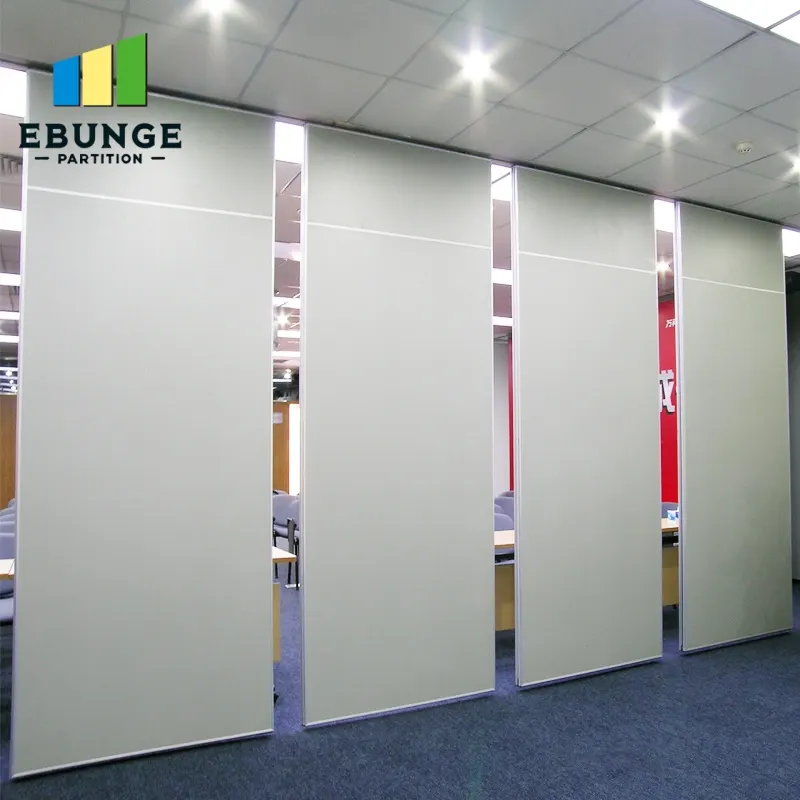
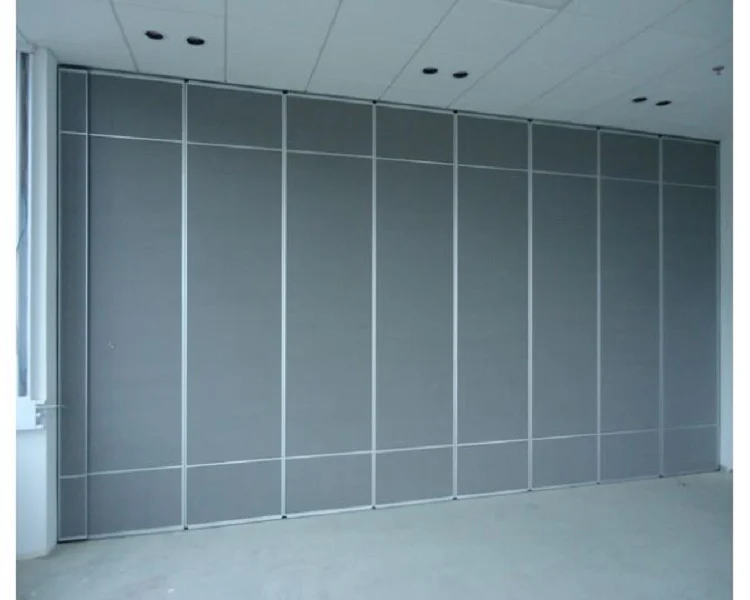
EBUNGE movable wall panels are individually movable and suspended from a top track. They cross the opening without a floor track, and they park at a planned stacking position. Straight, turning and stacking routes are reviewed from the layout. Confirmed finish options include laminate, melamine, fabric, leather, glass and other approved surfaces. Pass-door requirements and project documentation can be discussed.
Those facts define the operating envelope. They do not tell you how a specific room will behave under pressure. Every proposed movement path requires a continuous connected overhead route and project-specific support review. Visible references can support layout discussion but do not verify hidden construction or performance.
Building the Register: A Numbered Process
Checklist focus: movable partition changeover scenario stress.
- List every changeover scenario. Include routine daily turns, back-to-back peak bookings, and events that require partial room division rather than full opening or closing.
- Name the assumption behind each scenario. The suitability of each route and parking arrangement depends on the approved layout, circulation, ceiling interfaces and operating sequence.
- Attach the evidence status. Mark each assumption as confirmed by project documentation, pending drawing review, or unverified.
- Add the crew-shortage overlay.
- Record the confirmation owner. Assign each open item to the party responsible for resolving it before policy is locked.
- Set a review trigger. Revisit the register when layout, booking patterns or project documentation changes.
Scenario Categories Worth Pressure-Testing
Review focus: movable partition changeover scenario stress.
Peak booking with normal crew
This is the baseline. Even here, the register should confirm that the planned stacking position does not conflict with furniture, servicing or egress routes. If the stacking position is assumed to be clear but is not shown on the layout, that is an open item.
Peak booking with reduced crew
Reduced crew is a planning condition, not a product claim. The register should identify which assumptions depend on simultaneous activity and which can be sequenced. It should not estimate completion times unless the project has evidence to support them.
Partial division and turning routes
The exact route, junction arrangement, continuous overhead path and parking position must be confirmed from the coordinated project drawings. A scenario that requires a turning movement should be checked against the continuous overhead route and support conditions.
Compact Comparison: Assumption Types and Evidence Needs
| Assumption type | Typical register entry | Evidence needed before policy lock |
|---|---|---|
| Route continuity | Panels can move from opening to stacking position | Layout review confirming a continuous connected overhead route and support conditions |
| Stacking position | Parking area remains available during peak use | Coordinated layout showing the planned stacking position and adjacent uses |
| Finish suitability | Selected finish matches the room’s intended use | Project-specific confirmation; a finish sample is not evidence of acoustic or durability performance |
| Pass-door need | A pass door is required for the configuration | Discussion with the project team and documentation of the requirement |
| Acoustic intent | The room needs a certain level of separation | Project-specific acoustic review; STC and Rw are rating concepts, not a simple count of decibels |
Evidence Notes: What the Register Must Not Claim
Record only what project documentation confirms. If a scenario depends on support, acoustic or dimensional conditions that have not been reviewed, mark it open. Do not convert an open item into a scheduling promise.
This boundary protects everyone. It prevents operations from planning around unverified assumptions and prevents suppliers from being asked to guarantee outcomes outside their confirmed scope. For broader planning context, see the EBUNGE resources page.
Coordinating the Register Across Project Teams
Architects and interior designers can flag layout dependencies. Contractors can confirm route and support review status. Owners can decide which assumptions are acceptable to carry as open items and which must be resolved before policy is locked.
Keep the language neutral. Instead of writing that a changeover will take a certain time, write that the scenario assumes a release window and that the assumption is pending confirmation.

For product context, review the movable walls product page. For project-specific questions, contact the EBUNGE team.
Frequently Asked Questions
What is a movable partition changeover scenario stress-test register?
It is a working document that lists changeover scenarios, the assumptions each depends on, the evidence available, and the confirmation still required before scheduling policy is locked.
Does the register predict how long a changeover will take?
No. It identifies assumptions and evidence gaps. It does not estimate times unless the project has specific evidence to support them.
Can the register be used for any room type?
Yes, as a planning framework. Named venues and room types are examples only. Movable partitions can be considered wherever flexible spatial division, combination or reconfiguration is required.
How does crew shortage fit into the register?
Crew shortage is treated as a planning condition. The register asks which assumptions depend on simultaneous activity and which can be sequenced, without inventing staffing numbers or completion times.
What evidence is needed before locking scheduling policy?
Project-specific confirmation of support, acoustic and dimensional requirements, plus layout review of straight, turning and stacking routes. Open items should remain visible until resolved.
Does a finish sample prove acoustic performance?
No. Finish options such as laminate, melamine, fabric, leather and glass are surface choices.
Conclusion: Test Assumptions Before They Become Policy
A changeover scenario stress-test register turns hidden assumptions into visible decisions. It helps facility teams probe room release assumptions under peak booking and crew shortage conditions without inventing performance, cost or time outcomes. Start with confirmed product facts, mark every open item, and review the register whenever the layout or booking pattern changes.
To discuss pass-door requirements, project documentation or layout review for your project, contact EBUNGE. Confirm project-specific support, acoustic and dimensional requirements before finalizing scheduling policy.