
Quick answer: movable partition track segment access mode decision matrix
Review focus: movable partition track segment access mode decision matrix.
Maintenance access for a movable partition is not a single decision for the whole room. It is a segment-by-segment decision that must be made before ceiling and floor finishes are fixed. A movable partition track segment access mode decision matrix helps the project team compare removable ceiling panels, floor hatch access and open-side inspection against service frequency, obstruction risk and reinstatement effort. This article explains how to build that matrix using confirmed product facts and project-specific drawing review, without inventing performance or installation outcomes.
Why Track Segment Access Planning Belongs in the Early Drawing Set
Project review term: movable partition track segment access mode decision matrix.
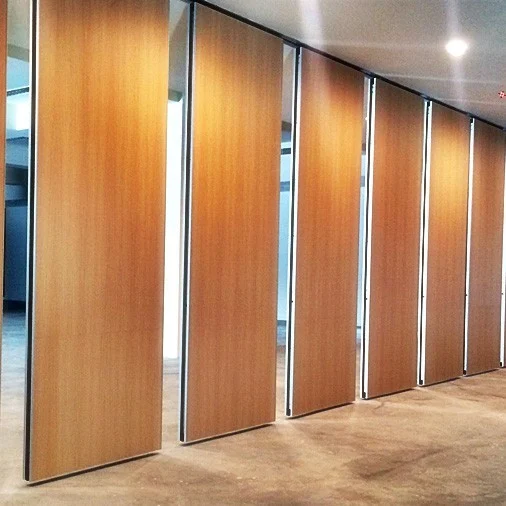
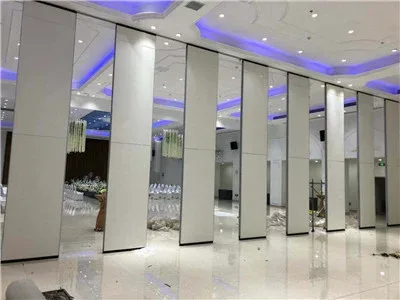
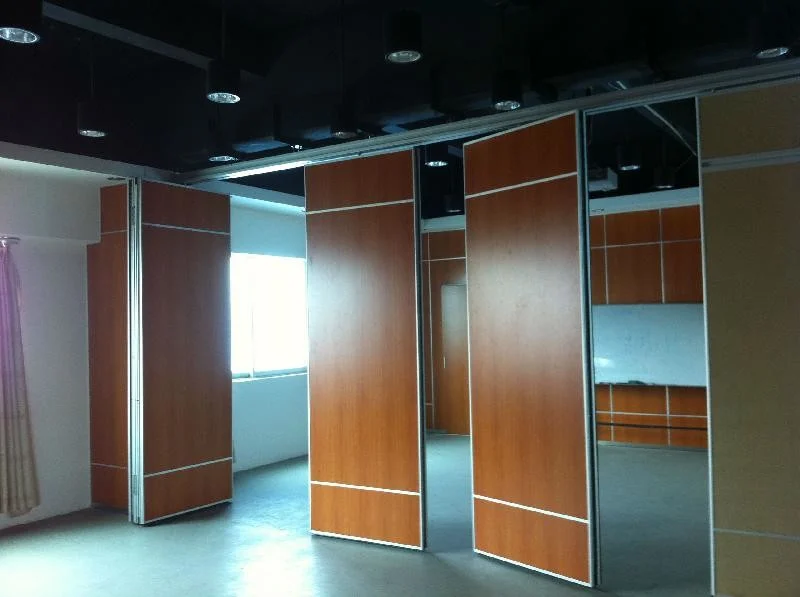
EBUNGE movable wall panels are individually movable, suspended from a top track, cross the opening without a floor track, and park at a planned stacking position. Because the panels travel on an overhead route, the track itself is a continuous element that may need inspection or adjustment over the life of the installation. If the ceiling is closed before access routes are agreed, later work can become disruptive.
The planning goal is not to predict failures. It is to make sure that each track segment can be reached by a defined method when service is required. That method should be documented on the same drawings that show the partition layout, the stacking position and the surrounding finishes.
What the Decision Matrix Must Compare
Coordination scope: movable partition track segment access mode decision matrix.
A useful matrix compares three access modes against project conditions. The suitability of each route and parking arrangement depends on the approved layout, circulation, ceiling interfaces and operating sequence. The right choice depends on where the track segment sits, how often it is expected to be serviced, and what reinstatement would involve.
| Access mode | Typical planning condition | Reinstatement consideration |
|---|---|---|
| Removable ceiling panel | Track runs above a accessible ceiling zone | Panel removal and replacement must be coordinated with ceiling finish and services |
| Floor hatch access | Track or support zone is reached from below | Hatch location, floor finish and surrounding structure must be coordinated |
| Open-side inspection | Track end or turning zone is exposed at a wall or opening | No ceiling or floor removal, but reach and clearance must be confirmed |
Each row should be completed with project-specific information. The matrix is a coordination tool, not a performance claim.
Service Frequency: A Planning Input, Not a Prediction
Checklist focus: movable partition track segment access mode decision matrix.
Service frequency describes how often the project team expects the track segment to be visited for inspection or adjustment. It is an assumption that should be agreed with the owner or facilities team. High-frequency segments may justify a more direct access mode, while low-frequency segments may accept a less convenient route if the reinstatement effort is manageable.
Do not convert frequency into a service-life statement. The matrix only records the planning assumption and the access consequence.
Obstruction Risk and Reinstatement Effort
Reinstatement effort covers what must be removed and restored after access. These two factors often pull in opposite directions. A ceiling panel may be easy to remove but difficult to reinstate if the ceiling finish is continuous. A floor hatch may avoid ceiling work but require careful floor detailing.
The matrix should record both factors for every segment. Where the risk is high and the reinstatement effort is also high, the team should consider whether the track route can be adjusted or whether an open-side inspection point can be planned.
Building the Matrix: A Step-by-Step Process
- The exact route, junction arrangement, continuous overhead path and parking position must be confirmed from the coordinated project drawings.
- For each segment, record the expected service frequency as an agreed planning assumption.
- Record obstruction risk from ceiling, floor, structure and adjacent finishes.
- Record reinstatement effort for each candidate access mode.
- Document the decision on the layout drawing and confirm it with the project team.
This process should be repeated whenever the layout changes. A revised stacking position or a new ceiling feature can change the access decision for several segments.
Coordinating with Finishes, Structure and Services
Access planning is a shared responsibility. The ceiling contractor needs to know where removable panels are required. The floor contractor needs to know where hatches are planned. The partition supplier needs to review the track route and the proposed access points.
Because EBUNGE panels are top-hung and cross the opening without a floor track, the floor hatch option is not about a running track. It is about reaching the overhead track or support zone from below where the project layout makes that practical. This must be confirmed against the specific drawings.
Documentation and Evidence Boundaries
Project documentation can be discussed with EBUNGE, including pass-door requirements and the information needed for review. Any acoustic requirement must be confirmed for the specific project.
Evidence note: The access mode decision matrix is a coordination record. It does not replace project-specific support, acoustic or dimensional review. Confirm all requirements against the approved drawings and the relevant project evidence.
Common Coordination Gaps to Avoid
One common gap is treating the whole track as a single access zone. Another is choosing a ceiling panel without checking whether the ceiling finish can be reinstated. A third is planning a floor hatch without confirming the floor build-up and finish. Each gap can be avoided by completing the matrix segment by segment and reviewing it with the finishes and structure teams.
For broader planning resources, see the EBUNGE resources page. For product context, see movable walls.
FAQ: Track Segment Access Mode Planning
What is a movable partition track segment access mode decision matrix?
It is a project coordination table that records, for each track segment, the chosen access mode and the reasons for that choice based on service frequency, obstruction risk and reinstatement effort.
When should the matrix be started?
Before ceiling and floor finishes are fixed. Early coordination allows the team to adjust the track route, the ceiling layout or the floor detailing if an access mode is not practical.
Can one access mode be used for the whole track?
It can, but it should be a deliberate decision. Different segments may have different obstruction risks or reinstatement efforts, so a single mode may not fit every condition.
Does the matrix require acoustic test data?
No. Acoustic requirements are separate and must be confirmed for the specific project. The matrix only records access planning decisions.
What information should be shown on the drawings?
The track route, the segment boundaries, the selected access mode for each segment, and any coordination notes for ceiling, floor or structure. The project team should confirm the final documentation.
How does EBUNGE support this planning?
EBUNGE can discuss project documentation and pass-door requirements.
Conclusion: Decide Access Before Finishes Close
The most reliable time to plan track segment access is before ceilings and floors are fixed. By building a movable partition track segment access mode decision matrix, the project team can compare removable ceiling panels, floor hatch access and open-side inspection against real project conditions. The matrix does not promise performance or service life. It creates a clear, reviewable record that helps contractors, architects, designers and owners coordinate the installation and future maintenance of the movable partition system.
To discuss your project layout, track route and documentation requirements, contact EBUNGE.