
Quick answer: architect coordination assumption provenance supersession ledger movable partition
Review focus: architect coordination assumption provenance supersession ledger movable partition.
An architect coordination assumption provenance supersession ledger movable partition is a simple register that records where each interface assumption came from, which revision is current, and which earlier version has been withdrawn. Movable partition walls are top-hung: panels are individually movable, suspended from a top track, cross the opening without a floor track, and park at a planned stacking position. Because those track, stack and ceiling decisions touch structure, ceiling, finishes and services at once, a withdrawn assumption can survive in one discipline’s model long after another discipline has moved on.
Why a Ledger Beats a Coordination Meeting Alone
Project review term: architect coordination assumption provenance supersession ledger movable partition.
Meetings produce decisions, but they rarely produce a durable record of which decision replaced which. On a flexible-room project, the overhead route, the parking position and the ceiling zone above the opening are all interface items. Each may be revised for reasons that have nothing to do with the partition itself.
A ledger does not replace drawing review or engineering sign-off. It makes the review auditable. When a contractor asks why a ceiling zone was built to a certain depth, the ledger should point to the assumption, its source, its revision and its current status.
The Five Fields Every Assumption Row Needs
Coordination scope: architect coordination assumption provenance supersession ledger movable partition.
Keep the register deliberately small. A row that is hard to complete will not be maintained. These five fields are enough to make provenance and supersession visible without turning the ledger into a second drawing set.
- Assumption statement. One sentence describing the interface condition, written so it can be confirmed or rejected.
- Origin. Who raised it and in what forum, such as a design workshop, a request for information, or a drawing review comment.
- Revision reference. The drawing, model or document revision in which the assumption currently lives.
- Status. Open, confirmed, superseded or withdrawn. Only one status may apply at a time.
- Superseded by. The row that replaced this one, so a reader can follow the chain forward rather than guessing.
Track, Stack and Ceiling: Three Assumption Families
Checklist focus: architect coordination assumption provenance supersession ledger movable partition.
Most coordination drift clusters into three families. Naming them helps teams assign ownership and review them in a consistent order.
Track and overhead route assumptions
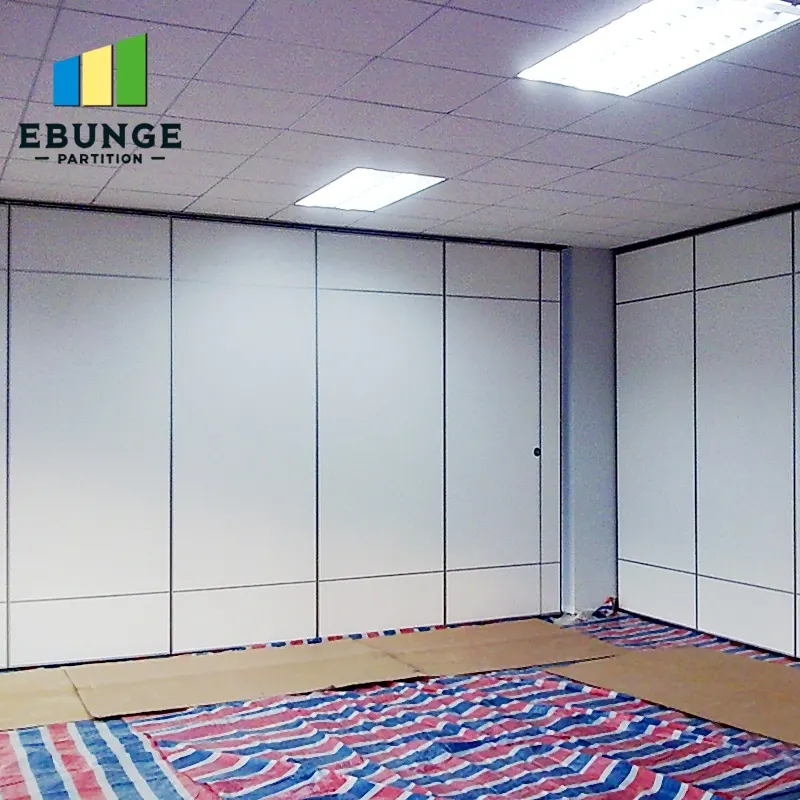
Straight, turning and stacking routes are reviewed from the layout. The ledger should record the assumed route geometry and whether the overhead route is continuous and connected for the proposed movement path. A route that stops short of a turning or stacking position is an open item, not a detail to resolve later.
Stacking and parking assumptions
Parking style is customized to the customer layout and project requirements, and may support compact stacking when the coordinated design permits it. Record the assumed parking position, the space reserved for it, and whether that space is still available after later layout changes.
Ceiling and finish interface assumptions
Confirmed finish options include laminate, melamine, fabric, leather, glass and other approved surfaces. Finish selection can affect ceiling detailing and adjacent interfaces, so the ledger should note when a finish assumption is provisional rather than confirmed.
A Compact Status Model for Supersession
Review focus: architect coordination assumption provenance supersession ledger movable partition.
Supersession is the point of the ledger. Without an explicit status, a replaced assumption looks identical to a live one. The table below is a working model, not a contractual classification.
| Status | Meaning | Action required |
|---|---|---|
| Open | Raised but not yet confirmed by the responsible discipline | Confirm, revise or withdraw |
| Confirmed | Accepted for the current design revision | Carry into coordinated drawings |
| Superseded | Replaced by a later row | Point readers to the replacement |
| Withdrawn | No longer valid and not replaced | Remove from downstream models |
Running the Ledger Through the Design Phase
Project review term: architect coordination assumption provenance supersession ledger movable partition.
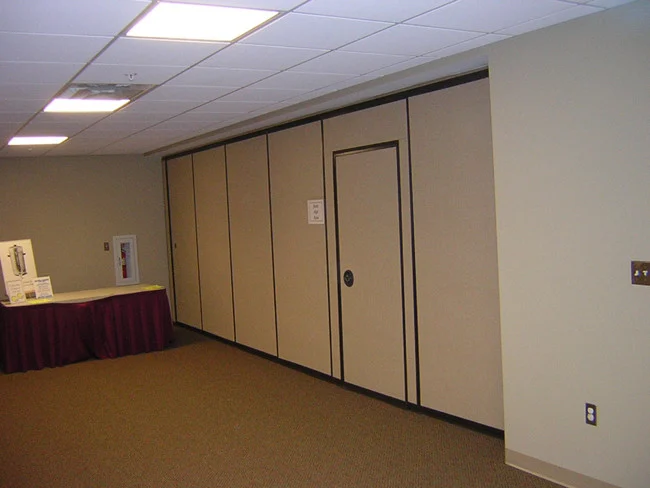
The suitability of each route and parking arrangement depends on the approved layout, circulation, ceiling interfaces and operating sequence. The sequence below keeps it tied to real design events.
- Open a row whenever a track, stack or ceiling assumption is first stated.
- Assign a single owner for each row, even when several disciplines are affected.
- Review open rows at each coordination checkpoint and update status only with a named source.
- When a row is superseded, link it to the replacement before closing the discussion.
- Before issue for construction, confirm that no downstream drawing references a superseded or withdrawn row.
Evidence Boundaries: What the Ledger Should Not Claim
The ledger records assumptions and their provenance. It does not certify performance. Visible references can support layout discussion but do not verify hidden construction or performance.
Evidence note: pass-door requirements and project documentation can be discussed with the supplier, but support, acoustic and dimensional requirements must be confirmed for the specific project. A ledger row marked confirmed means the design team accepted the assumption, not that a performance target has been verified.
Where a claim matters, it needs matching project-specific evidence.
Common Coordination Failure Patterns
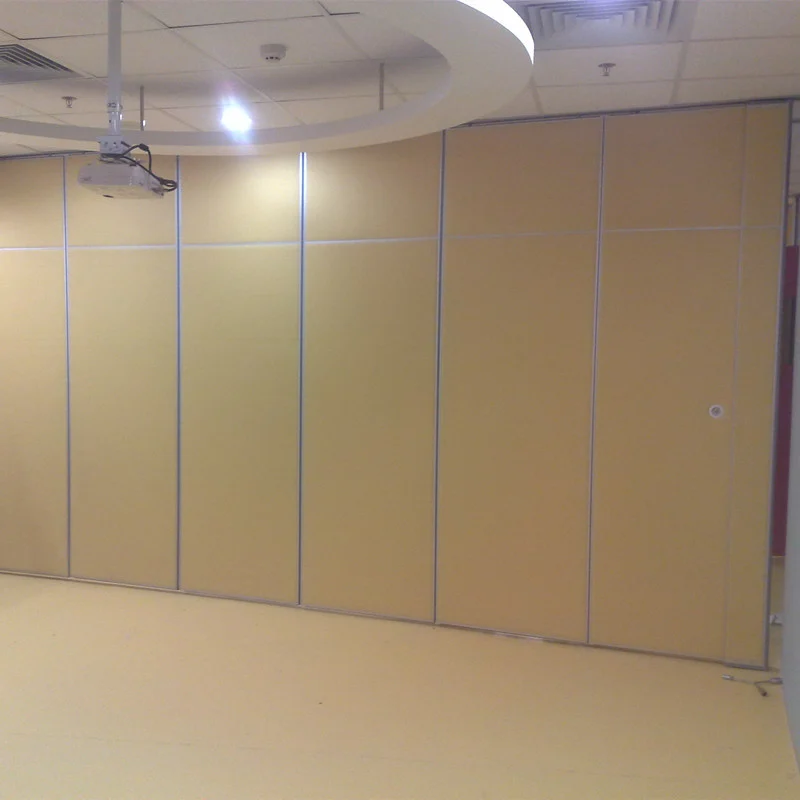
Three patterns appear repeatedly. First, a stack position is moved in a room layout but the ceiling zone above it is not updated. The exact route, junction arrangement, continuous overhead path and parking position must be confirmed from the coordinated project drawings.
A ledger will not prevent these changes. It will make them visible, dated and traceable, which is usually enough to stop a discipline from building to a decision that no longer exists.
FAQ: Assumption Provenance and Supersession
What is an assumption provenance and supersession ledger?
It is a register that records where each design assumption came from, which revision it belongs to, and whether it is still current or has been replaced. It supports coordination rather than replacing drawings or engineering review.
Why do movable partition projects need one?
Track, stack and ceiling decisions are shared across disciplines. When one discipline revises an assumption, others may continue working from the earlier version unless supersession is recorded explicitly.
Does a confirmed ledger row mean the acoustic performance is verified?
No. Confirmed means the design team accepted the assumption for the current revision. The exact overhead route and support arrangement must be confirmed by the responsible project team from coordinated drawings.
How often should the ledger be reviewed?
At each coordination checkpoint and before any issue for construction. The review should confirm that no downstream drawing still references a superseded or withdrawn row.
Can the ledger cover pass doors and finishes?
Yes, as interface assumptions. Pass-door requirements and project documentation can be discussed with the supplier, and finish options include laminate, melamine, fabric, leather, glass and other approved surfaces.
What should the ledger never be used for?
Those require matching evidence and project-specific review.
Conclusion: Trace the Decision, Not Just the Drawing
A coordinated movable partition design depends on every discipline working from the same current assumption. The ledger makes that possible by recording origin, revision and supersession in one place, and by forcing withdrawn decisions to be removed rather than quietly inherited.
Start with the three assumption families, keep the status model simple, and confirm support, acoustic and dimensional requirements for each project. To discuss your layout, route and documentation, contact the EBUNGE team, review the movable wall systems, or browse the project resources.