
Quick answer: movable partition track envelope vertical tolerance stack-up register
Review focus: movable partition track envelope vertical tolerance stack-up register.
On many projects, the ceiling grid is set before the partition track is finalised. The movable partition track envelope vertical tolerance stack-up register is a simple coordination tool: a shared table that records how slab deviation, ceiling datum and track fixing tolerances accumulate vertically. It does not replace engineering review. It gives both trades one agreed reference before either commits to installation.
This article explains what to record, who should review it, and where project-specific confirmation is required. It applies to offices, hotels, schools, conference rooms and renovation projects where flexible space division is planned. Named room types are examples only.
Why a Vertical Tolerance Register Matters for Top-Hung Partitions
Project review term: movable partition track envelope vertical tolerance stack-up register.
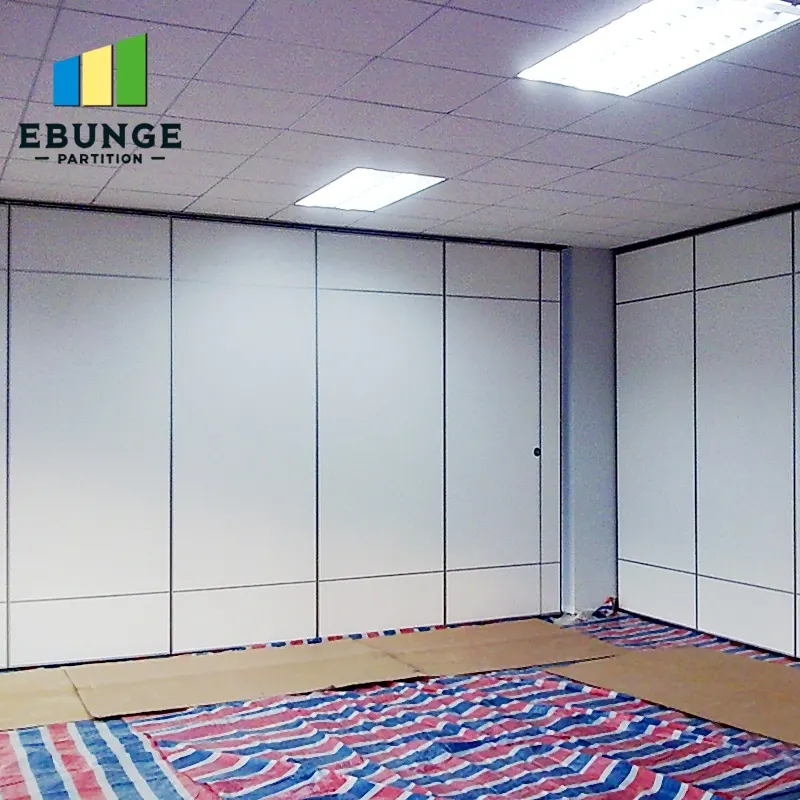
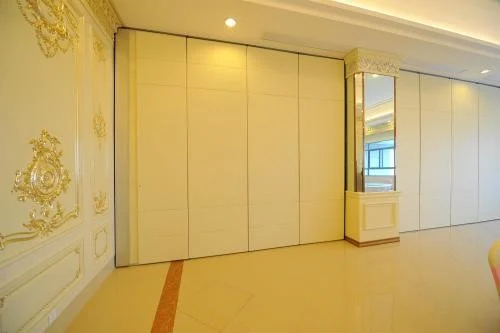
EBUNGE movable partition panels are individually movable, suspended from a top track, and cross the opening without a floor track. They park at a planned stacking position. The suitability of each route and parking arrangement depends on the approved layout, circulation, ceiling interfaces and operating sequence.
If the ceiling datum and the track fixing zone are set independently, the two trades can arrive at the same location with incompatible assumptions. A register makes those assumptions visible. It records the vertical allowances each trade is working to, so the design team can confirm whether a shared fixing zone exists.
What the Register Should Contain
Coordination scope: movable partition track envelope vertical tolerance stack-up register.
The register is a live document, not a one-off note. It should be updated as the ceiling design and partition layout develop. The following fields are commonly useful.
- Slab deviation allowance: the vertical variation expected across the track route, based on project survey information.
- Ceiling grid datum: the finished ceiling level and the tolerance band around it.
- Track fixing zone: the vertical band within which the track support can be fixed.
- Interface responsibility: which trade holds each dimension and who confirms it.
- Review status: open, agreed or requiring project-specific confirmation.
Do not fill these fields with assumed values. Each entry should reference the project drawing or survey that supports it. Where information is missing, mark it as an open item rather than estimating.
How to Build the Stack-Up Step by Step
Checklist focus: movable partition track envelope vertical tolerance stack-up register.
A stack-up is a sequence of vertical allowances, not a single measurement. The following process helps teams keep the logic visible.
- Record the ceiling grid datum and its tolerance band.
- Identify the vertical zone available for track fixing between the two.
- Compare the available zone with the track support requirements for the proposed layout.
- Flag any conflict where the ceiling datum and track fixing zone cannot both be satisfied.
- Issue the register for review by the ceiling trade, partition trade and design team.
- Update the register after each coordination meeting and reissue the current version.
It creates a shared record so that project-specific support and dimensional requirements can be confirmed by the responsible parties.
Reconciling Slab Deviation, Ceiling Datum and Track Fixing
Slab deviation is rarely uniform. A track route may cross areas where the slab is higher or lower than the nominal level. The ceiling grid may also follow its own tolerance band. The track fixing zone sits between them. The register should show these three bands together so overlaps and gaps are visible.
Where a gap appears, the team has options to discuss: adjusting the ceiling datum locally, revising the track route, or introducing a project-specific support detail. None of these should be decided by the partition supplier alone.
Straight, Turning and Stacking Routes
Straight, turning and stacking routes are reviewed from the layout. Each route may have different vertical conditions. The exact route, junction arrangement, continuous overhead path and parking position must be confirmed from the coordinated project drawings. A stacking position may sit under a different slab zone. The register should list each route separately rather than treating the whole track as one condition.
Evidence Boundaries and What the Register Cannot Confirm
The register is a coordination record. Any acoustic requirement must be confirmed against the project specification and the proposed partition configuration.
Evidence note: This article describes a coordination method. It does not provide test values, load figures, tolerance numbers or performance results. All project-specific support, acoustic and dimensional requirements must be confirmed from the project drawings and the responsible engineering disciplines.
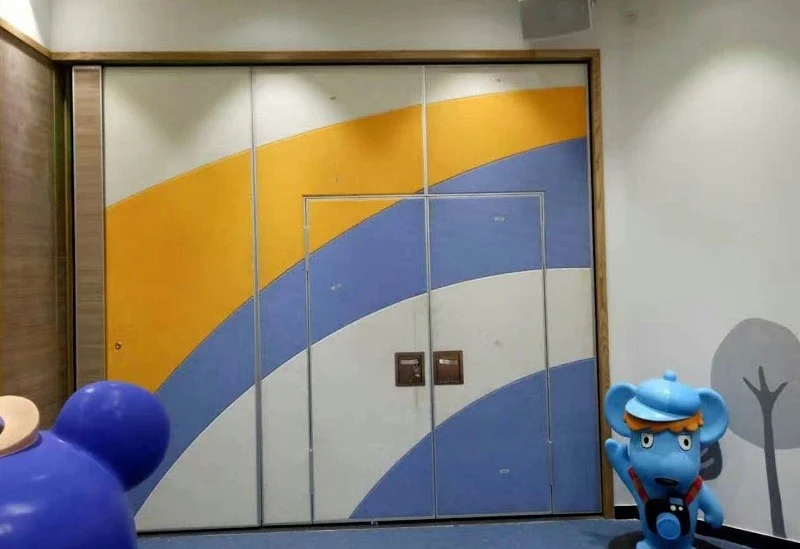
Finish options for movable partitions include laminate, melamine, fabric, leather, glass and other approved surfaces. Finish selection does not change the vertical coordination logic, but it may affect ceiling interface details. Confirm finish and interface requirements together.
Coordination Checklist Before Either Trade Commits
Use this checklist at the point where the ceiling and partition packages are about to be fixed. It is deliberately short so it can be run in a coordination meeting.
- Is the current register version the one both trades are working to?
- Are slab deviation, ceiling datum and track fixing zone recorded with their sources?
- Are straight, turning and stacking routes listed separately?
- Are open items assigned to a named discipline with a review date?
- Has the design team confirmed the shared fixing zone?
- Are pass-door requirements and project documentation discussed with the supplier?
If any item is unresolved, the safe action is to hold the fixing commitment and escalate for project-specific confirmation. This is a coordination decision, not a performance claim.
Frequently Asked Questions
What is a movable partition track envelope vertical tolerance stack-up register?
It helps ceiling and partition trades agree a shared fixing zone before installation.
Does the register confirm acoustic performance?
No. It is a dimensional coordination record. Acoustic requirements must be confirmed separately against the project specification and the proposed partition configuration.
Who should own the register?
Ownership depends on the project delivery model. Typically the design team or main contractor holds the register, with input from the ceiling trade and partition trade. Each entry should have a responsible discipline.
Can the register be used for renovation projects?
Yes, provided the existing slab and ceiling conditions are surveyed. Renovation projects often have greater vertical variation, so the register becomes more important, not less.
What happens if the ceiling datum and track fixing zone conflict?
The conflict should be escalated for project-specific review. Possible responses include adjusting the ceiling datum, revising the track route or developing a support detail. The partition supplier should not resolve this alone.
Does the register replace engineering review?
No. It supports coordination.
Conclusion and Next Steps
A movable partition track envelope vertical tolerance stack-up register gives ceiling and partition trades a shared reference for vertical coordination. It records slab deviation, ceiling datum and track fixing allowances in one place, so conflicts are visible before either trade commits.
To move forward, review the proposed layout against the current ceiling design, confirm the straight, turning and stacking routes, and record the vertical allowances with their sources. Where information is missing, mark it as open and confirm it with the responsible discipline.
For product context, see the movable walls range. For planning resources, visit the resources page. To discuss pass-door requirements, project documentation or a specific layout, contact the EBUNGE team and confirm project-specific support, acoustic and dimensional requirements.