
Quick answer: movable partition track zone ceiling
Review focus: movable partition track zone ceiling.
On many fit-out projects, the movable partition track zone ceiling service penetration permit register is the missing document that decides whether the ceiling void is coordinated or contested. Movable partition panels are individually movable, suspended from a top track, cross the opening without a floor track, and park at a planned stacking position. The track must therefore occupy a continuous overhead route. Above that route, mechanical, electrical, plumbing and fire trades also need the same ceiling void. Without a permit register, these teams discover each other only after the ceiling is closed.
This article sets out a permit-based method for logging, approving and sequencing above-ceiling service penetrations within the reserved track zone before partition track fixing begins. It is written for overseas contractors, architects, interior designers, owners, renovation companies, distributors and construction teams. Every recommendation below is bound to maintained product facts, visible evidence limits and project-specific drawing review. Confirm support, acoustic and dimensional requirements for each project.
Why the Track Zone Needs Its Own Permit Register
Project review term: movable partition track zone ceiling.
A movable partition track is not a single line item. It is a route with straight runs, turning points and a planned stacking position. The layout review must confirm that straight, turning and stacking routes are connected and supported. The exact overhead route and support arrangement must be confirmed by the responsible project team from coordinated drawings.
A permit register converts informal coordination into a controlled sequence. Each proposed penetration inside the reserved track zone is logged, reviewed and either approved, relocated or rejected before track fixing. The suitability of each route and parking arrangement depends on the approved layout, circulation, ceiling interfaces and operating sequence. It simply makes the review visible and auditable.
What the register is not
It is not a performance certificate. It does not confirm acoustic values, fire ratings, load capacity or code compliance. Those remain project-specific and require matching evidence from the responsible design professionals.
Defining the Reserved Track Zone on the Ceiling Plan
Coordination scope: movable partition track zone ceiling.
The first step is a clear plan overlay. Mark the partition track route, including straight, turning and stacking routes, on the reflected ceiling plan. Then define a reserved track zone around that route. The zone width is a project decision, but it must be wide enough to protect the track, its support and any required clearance.
This overlay should be issued to all above-ceiling trades before rough-in begins. It becomes the geographic boundary for the permit register. Any service penetration inside the zone requires a permit entry.
Information to show on the overlay
- Track route with straight, turning and stacking segments.
- Reserved track zone boundary.
- The exact route, junction arrangement, continuous overhead path and parking position must be confirmed from the coordinated project drawings.
- Existing or planned service routes crossing the zone.
- Access panels or maintenance openings, if any, coordinated with the ceiling design.

A Permit Register Workflow for Above-Ceiling Trades
Checklist focus: movable partition track zone ceiling.
Each step has an owner and a hold point. The goal is to approve or relocate every penetration before track fixing starts.
- Log the request. The trade proposing a penetration submits its location, service type, size and route.
- Check the zone. The coordinator confirms whether the request falls inside the reserved track zone.
- Review the route. The partition layout is checked to confirm the penetration does not interrupt a straight, turning or stacking route.
- Assess support and clearance. The responsible engineer reviews support and clearance implications. This is project-specific.
- Decide. The request is approved, approved with relocation, or rejected.
- Record and issue. The decision is logged and issued to all affected trades.
- Close before track fixing. No open permit inside the zone should remain when track fixing begins.
Hold point before track fixing
The track fixing hold point is the moment the register proves its value. If any penetration inside the zone is unresolved, track fixing should wait or the penetration should be relocated. This sequencing decision protects both the ceiling rough-in and the partition installation.
Evidence Boundaries for the Register
Review focus: movable partition track zone ceiling.
A permit register is a coordination tool, not an evidence substitute. It cannot confirm that a penetration detail will meet a code requirement. It cannot replace shop drawing review or site inspection.
The actual performance of a movable partition depends on the full assembly, the ceiling interface, the seals and the project-specific installation. Confirm acoustic requirements with the responsible acoustic consultant.
What to verify before approval
| Check | Why it matters | Evidence needed |
|---|---|---|
| Route continuity | Panels must travel along a connected overhead route | Layout drawing showing straight, turning and stacking routes |
| Support coordination | Track support must be reviewed with the structure | Project-specific structural review |
| Service clearance | Penetrations must not obstruct the track or its support | Coordinated ceiling plan and section |
| Acoustic interface | Ceiling interface can affect the acoustic assembly | Acoustic consultant review where required |
| Fire stopping | Penetrations may require fire-rated detailing | Fire engineer review where required |

This table is a coordination checklist, not a compliance statement. Each row must be confirmed against the project’s own drawings and specifications.
Sequencing Ceiling Rough-In Before Partition Track Fixing
Project review term: movable partition track zone ceiling.
Sequencing is the core purpose of the register. Above-ceiling rough-in trades should complete their approved penetrations and inspections before the partition track is fixed. This order reduces the risk of rework and protects the track route.
In practice, some services may need to remain accessible. The register should record any approved access strategy. It should also record any penetration that was relocated outside the zone. The partition installer can then proceed with a known, protected route.
Coordination with finishes and pass doors
Confirmed finish options include laminate, melamine, fabric, leather, glass and other approved surfaces. Pass-door requirements and project documentation can be discussed with the supplier. These items should be coordinated with the ceiling interface and the permit register, because a pass door may affect the track route or the stacking position.
Common Coordination Failures the Register Prevents
Coordination scope: movable partition track zone ceiling.
Most failures are predictable. A sprinkler branch is installed inside the track zone because no one marked the zone. A duct is routed through the planned stacking position. Each of these can be caught by a permit entry.
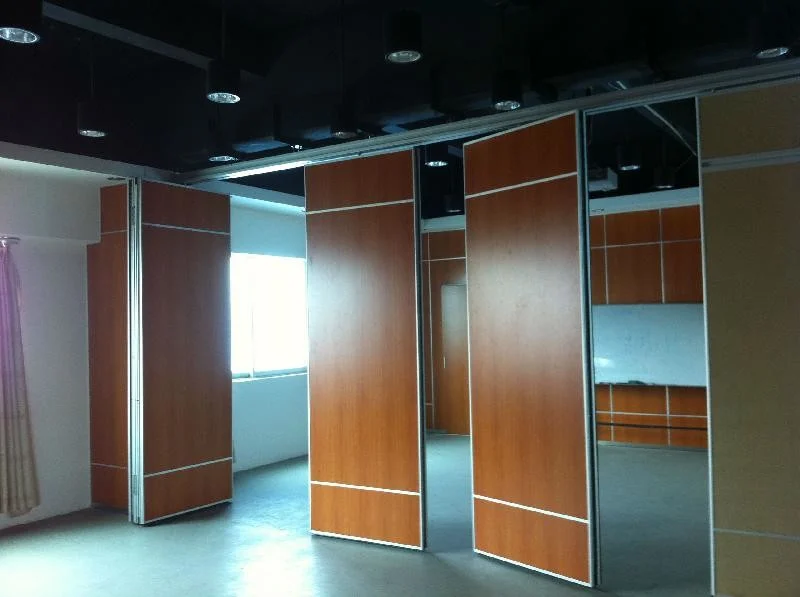
The register also creates a record. If a dispute arises, the project team can see what was requested, what was approved and what was installed. That record is useful for handover and for future renovations.
Review cadence
The register should be reviewed at regular coordination meetings. New penetrations should be logged as soon as they are proposed, not after installation. The hold point before track fixing should be a standing agenda item.
Frequently Asked Questions
What is a movable partition track zone ceiling service penetration permit register?
It is a project coordination document that logs proposed above-ceiling service penetrations inside the reserved track zone, records their review status, and confirms they are approved or relocated before partition track fixing begins.
Who should own the permit register?
The general contractor or a designated ceiling interface coordinator usually owns it. The partition supplier, MEP trades and design professionals contribute information. Ownership should be confirmed in the project’s coordination plan.
Does the register guarantee acoustic performance?
No. It is a sequencing and coordination tool. Confirm acoustic requirements with the responsible consultant.
Can a penetration be approved inside the track zone?
Only after project-specific review. The review must confirm the penetration does not obstruct the track route, its support or the stacking position. The decision should be recorded in the register.
When should track fixing start?
Track fixing should start only after all open permits inside the reserved track zone are closed. If a penetration remains unresolved, the track fixing hold point should remain active.
How does the register relate to the partition layout?
The layout defines the straight, turning and stacking routes. The register protects those routes by controlling what can be installed above the ceiling within the reserved zone.
Conclusion and Next Steps
A permit register is a simple, low-cost coordination method that prevents above-ceiling trades and partition installers from competing for the same ceiling void. It does not replace engineering review, acoustic assessment or code compliance. It makes those reviews visible and sequenced before track fixing begins.
For project-specific support, acoustic and dimensional requirements, review the maintained product information at movable walls and the planning resources at resources. To discuss pass-door requirements, finish options and project documentation, contact EBUNGE.