
Quick answer: movable partition changeover task bundling crew route optimization
Review focus: movable partition changeover task bundling crew route optimization.
In multi-room venues, changeover time is rarely lost inside a single room. It accumulates between rooms, when crews walk empty-handed, wait for access, or repeat setup steps that could have been grouped. This article presents a planning framework for movable partition changeover task bundling crew route optimization. It does not change product specifications, and it does not promise measured time savings. Instead, it helps facility operations planners structure tasks, sequence crew movement, and identify the project-specific evidence that must be confirmed before any route or grouping decision is treated as final.
Why Changeover Travel Time Deserves Its Own Planning Layer
Project review term: movable partition changeover task bundling crew route optimization.
Movable partition panels are individually movable, suspended from a top track, cross the opening without a floor track, and park at a planned stacking position. That operating model is simple to describe but demanding to schedule across many rooms. Each changeover may involve opening a partition line, closing another, and returning panels to a stacking position.
Travel time between rooms is non-productive by nature. It does not add acoustic separation, finish quality, or dimensional accuracy. It only consumes the interval between events. Treating travel as a planning layer separate from the physical product lets operations teams examine routes, access, and task order without implying that the partition system itself has changed.
What the Product Facts Do and Do Not Support
Coordination scope: movable partition changeover task bundling crew route optimization.
Confirmed product facts are deliberately narrow. Panels are top-hung, move without a continuous floor running track or floor hardware along the partition line, and park at a customized stacking position. Straight, turning, and stacking routes are reviewed from the layout. Finish options include laminate, melamine, fabric, leather, glass, and other approved surfaces.
These facts support route and access planning. Visible references can support layout discussion but do not verify hidden construction or performance.
Evidence note: every proposed movement path requires a continuous connected overhead route and project-specific support review. Do not assume panels can travel across an untracked gap, and do not treat a generic finish example as proof of performance.
A Task Bundling Framework for Multi-Room Venues
Checklist focus: movable partition changeover task bundling crew route optimization.
Task bundling means grouping changeover work by location, route, and dependency rather than by room number alone. The goal is to reduce repeated travel and repeated access requests. The framework below is a planning method, not a measured result.
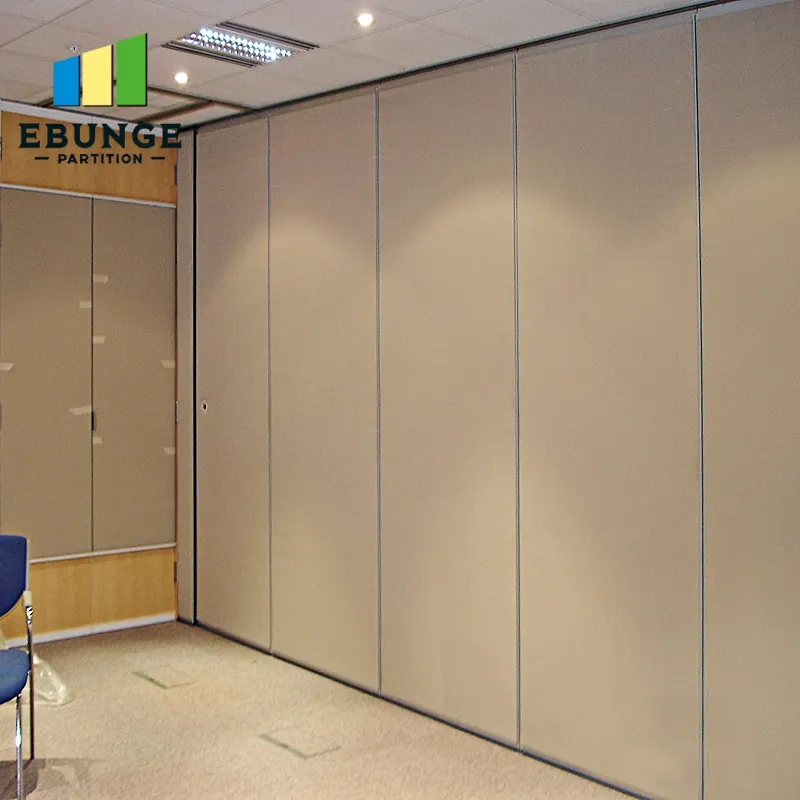
- Map the venue as a route network. Mark each partition line, each stacking position, and each connecting corridor or lobby. Identify where a continuous overhead route exists and where it must be confirmed.
- List changeover tasks by room. For each room, record what must open, what must close, and where panels must park. Note any pass-door requirements separately.
- Group tasks by shared route. The exact route, junction arrangement, continuous overhead path and parking position must be confirmed from the coordinated project drawings.
- Sequence by dependency, not convenience. A room that must be ready first should not depend on a route that is blocked by another room’s stacking position.
- Flag evidence gaps. Mark any route, support point, or dimensional condition that has not been confirmed from the layout.
- Review with the project team. Confirm support, acoustic, and dimensional requirements before the plan is issued for operations.
Crew Route Optimization Without Inventing Performance
Review focus: movable partition changeover task bundling crew route optimization.
Panel handling and the operating sequence must be confirmed for the selected layout and project conditions. A crew route is useful only when it is connected, supported, and compatible with the stacking positions shown on the layout.
Route review questions
- Does the route remain continuous from the opening to the planned stacking position?
- Are turning routes and stacking routes shown on the layout, or still assumed?
- Does any route pass through a space that must be ready earlier?
- Are pass-door requirements identified for the rooms in the bundle?
- Has project-specific support been confirmed for every overhead route segment?
Where answers are missing, the correct planning action is to mark the item as unconfirmed. A route that looks efficient on a sketch is not evidence of a supported or buildable condition.
Building the Changeover Sequence from the Layout
Project review term: movable partition changeover task bundling crew route optimization.
The layout is the primary planning document. It shows partition lines, stacking positions, and the relationship between rooms. Straight, turning, and stacking routes should be reviewed from that layout rather than from a generic assumption about how panels move.
A practical sequence usually starts with the rooms that have the earliest readiness requirement, then moves outward along shared routes. Rooms that share a stacking position should be grouped so that the parking location is used once per changeover cycle rather than revisited. This is a planning preference, not a guaranteed time outcome.
Coordination Checklist for Project Teams
Coordination scope: movable partition changeover task bundling crew route optimization.
Use this checklist before issuing any changeover plan to operations. It keeps the plan tied to confirmed information and visible evidence limits.
| Planning item | What to confirm | Evidence boundary |
|---|---|---|
| Route continuity | Continuous connected overhead route from opening to stacking position | Requires layout review and project-specific support confirmation |
| Stacking position | Customized parking location per project layout | Do not assume compact stacking without coordinated design |
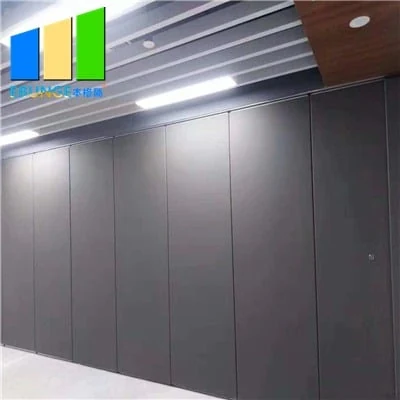
| Finish selection | Laminate, melamine, fabric, leather, glass, or other approved surface | Finish choice does not prove acoustic or structural performance |
| Pass-door needs | Discussed with the project team | Confirm requirements per room and per layout |
| Documentation | Project documentation discussed and aligned | Do not infer certification or test values from drawings |
Common Planning Mistakes to Avoid
One common mistake is treating the partition line as the only planning object. In multi-room venues, the route between rooms often matters more than the line itself. Another mistake is bundling tasks by room number rather than by shared route, which can create repeated travel to the same corridor.
It does not. Comparative, absolute, and causal statements require matching evidence. Where evidence is absent, the plan should state the exact project-specific confirmation boundary instead of implying a result.
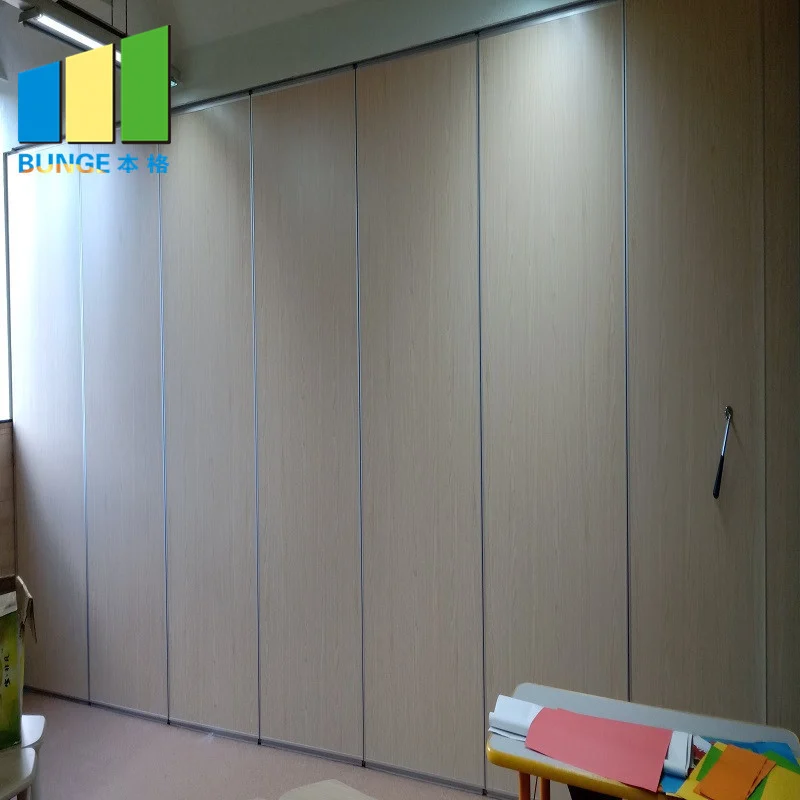
Finally, avoid treating a generic application example as a application reference. Named venues and room types in this article are examples only. Movable partitions can be considered wherever flexible spatial division, combination, or reconfiguration is required, but each project still needs its own support, acoustic, and dimensional review.
Frequently Asked Questions
What is movable partition changeover task bundling crew route optimization?
It is a facility operations planning method that groups changeover tasks by shared route and dependency, then sequences crew movement across rooms. It does not alter product specifications or promise measured time savings.
Do movable partition panels need a floor track for changeovers?
No. EBUNGE movable partition panels are top-hung and move without a continuous floor running track or floor hardware along the partition line. Routes still require a continuous connected overhead path and project-specific support review.
Can task bundling reduce travel time between rooms?
Bundling can reduce repeated travel in principle by grouping rooms on the same route. Confirm the layout, access, and support conditions before treating any sequence as final.
Which finish options are confirmed for movable partitions?
Confirmed finish options include laminate, melamine, fabric, leather, glass, and other approved surfaces. The suitability of each route and parking arrangement depends on the approved layout, circulation, ceiling interfaces and operating sequence.
How should STC or Rw be used in changeover planning?
They should not be inferred from a drawing, finish, or panel shape. Confirm acoustic requirements with the project team.
What documentation should be reviewed before issuing a changeover plan?
Review the layout for straight, turning, and stacking routes, confirm pass-door requirements, and align project documentation. Any unconfirmed route or support condition should be marked as an evidence gap.
Conclusion and Next Steps
Panels are individually movable, top-hung, and park at a planned stacking position. Routes are reviewed from the layout. Finishes are selected from approved options. Everything else, including support, acoustic, and dimensional requirements, belongs to project-specific confirmation.
Use the bundling and route framework as a coordination tool, not as a performance claim. Group tasks by shared route, sequence by dependency, and mark every unconfirmed condition clearly.
To discuss pass-door requirements, project documentation, or route review for your venue, contact the EBUNGE team. You can also review the movable wall product range and browse additional planning resources before finalizing your changeover strategy.