
Quick answer: movable partition changeover capacity ledger shift
Review focus: movable partition changeover capacity ledger shift.
Room release commitments fail when they are made against assumed labour rather than recorded output. A movable partition changeover capacity ledger shift record gives facility and operations planners a simple way to see how many reconfigurations a zone crew actually completes before anyone promises a room to the next booking. The ledger does not measure panel performance. It measures the planning discipline around top-hung panels that travel on an overhead route, cross the opening without a floor track, and park at a planned stacking position.
This article sets out a ledger structure for overseas contractors, architects, interior designers, owners, renovation teams and distributors. Every figure you enter should come from your own observed shift, not from a supplier assumption. The exact route, junction arrangement, continuous overhead path and parking position must be confirmed from the coordinated project drawings.
Why a Changeover Ledger Beats a Verbal Capacity Assumption
Project review term: movable partition changeover capacity ledger shift.
Most flexible-space schedules are built from a single question: how many times can this room change in a day? Without a ledger, the answer drifts toward optimism. A booking team hears that a partition is movable and treats the room as instantly available. Operations then borrows crew from another zone to cover the gap, and the borrowed zone falls behind.
A ledger replaces that drift with a record. Each shift, the zone supervisor logs completed changeovers, the route used, and whether the crew finished inside its own zone. Over several weeks, the pattern becomes the basis for commitments. The ledger is a planning instrument, not a performance certificate.
What the ledger is not
The suitability of each route and parking arrangement depends on the approved layout, circulation, ceiling interfaces and operating sequence. It records operational activity only. Confirm acoustic requirements against your project drawings.
Core Fields for Each Shift Entry
Coordination scope: movable partition changeover capacity ledger shift.
A useful ledger is short enough to complete during a live shift. Long forms get abandoned. Start with the fields below and add columns only when a real planning question demands them.
| Field | What to record | Why it matters |
|---|---|---|
| Date and shift | Calendar date, shift label | Builds a comparable history |
| Zone | Named area or room group | Prevents cross-zone borrowing from hiding shortfalls |
| Changeovers completed | Count finished within the shift | Demonstrated capacity, not assumed |
| Route used | Straight, turning or stacking route | Routes are reviewed from the layout |
| Parking position | Planned stacking location | Confirms panels returned to the agreed position |
| Exceptions | Blocked route, late release, access issue | Explains variance without blaming crews |
Keep one ledger per zone. If two zones share a stacking area, note the shared dependency in both ledgers so the conflict is visible before it becomes a delay.
Recording Routes and Parking Without Inventing Engineering Detail
Checklist focus: movable partition changeover capacity ledger shift.
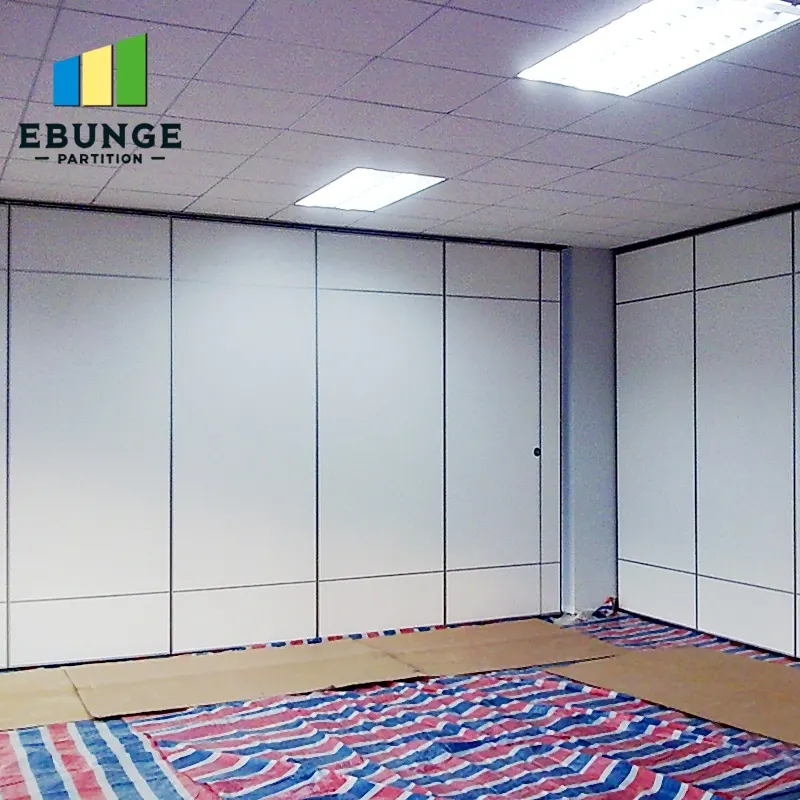
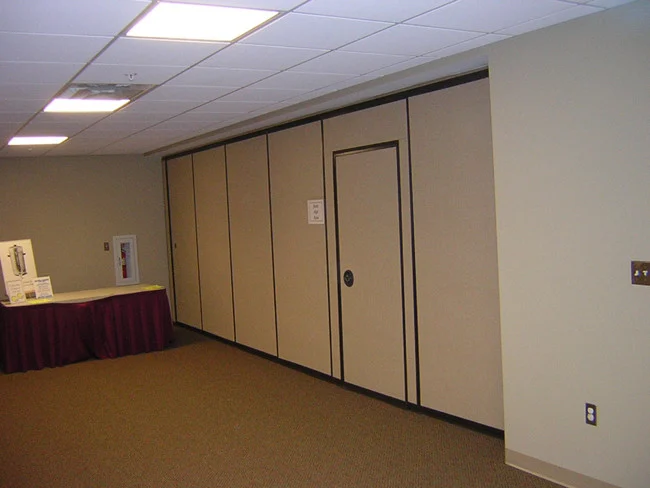
Movable partition panels are individually movable and suspended from a top track. They cross the opening without a floor track and park at a planned stacking position. Straight, turning and stacking routes are reviewed from the layout, so the ledger should name the route rather than describe mechanics.
Do not record support points, loads or fixing details unless those have been confirmed for the project. Every movement path requires a continuous connected overhead route and project-specific support review.
A simple route label set
- Straight: panels travel along one aligned overhead route.
- Turning: the route changes direction and must be reviewed from the layout.
- Stacking: panels return to the planned parking position.
- Mixed: more than one route type in the same changeover.
These labels keep entries consistent without implying engineering conclusions the ledger cannot support.
Separating Zone Capacity from Borrowed Labour
Review focus: movable partition changeover capacity ledger shift.
The central rule of this ledger is that a changeover counts toward zone capacity only when the zone crew completes it without borrowing crew from another zone. Borrowed labour may still be recorded, but in a separate column, so the underlying shortfall stays visible.
This distinction matters for Facility Operations Planning coordination. When borrowed labour is folded into the headline count, the schedule looks healthy while two zones quietly degrade.
Weekly review questions
- Did any zone exceed its own crew capacity more than once?
- Were exceptions concentrated on one route type or one parking position?
- Did borrowed labour come from the same donor zone repeatedly?
- Are room release commitments still aligned with the lowest demonstrated shift?
Using the Ledger in Booking and Release Decisions
Project review term: movable partition changeover capacity ledger shift.
Publish that baseline to booking teams so room release times reflect demonstrated capacity.
The exact overhead route and support arrangement must be confirmed by the responsible project team from coordinated drawings. Panel handling and the operating sequence must be confirmed for the selected layout and project conditions.
Evidence note
This ledger records operational activity observed by your own team. It does not establish acoustic performance, structural capacity, service life or commercial outcomes. Confirm project-specific support, acoustic and dimensional requirements with the relevant project documentation before relying on any figure.
Coordinating Finishes, Pass Doors and Documentation
Coordination scope: movable partition changeover capacity ledger shift.
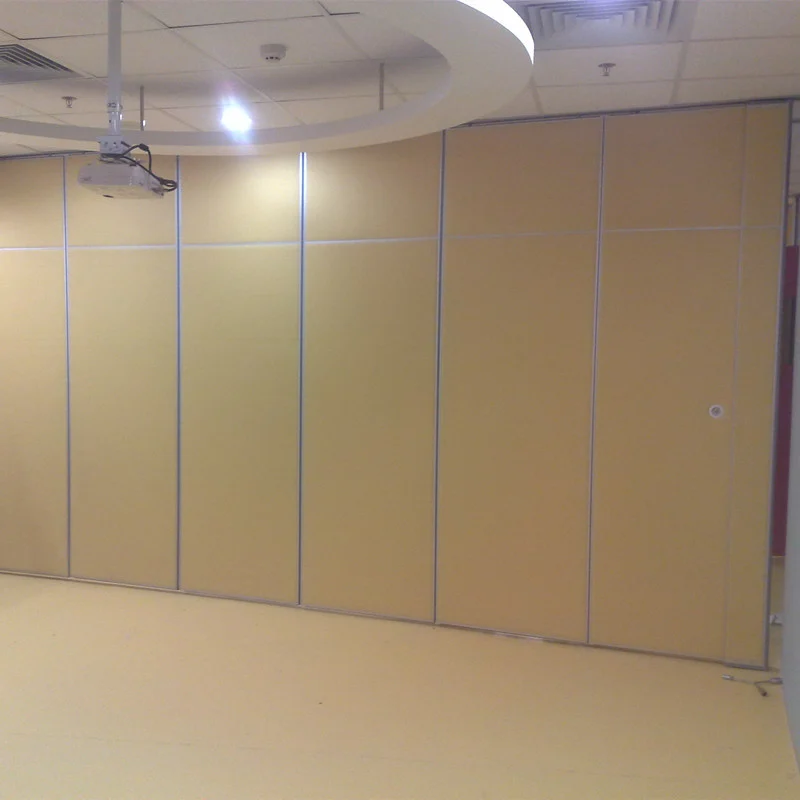
Changeover planning also touches finishes and access. Confirmed finish options include laminate, melamine, fabric, leather, glass and other approved surfaces. Record the finish only where it affects handling or protection during a changeover, and avoid inferring cleaning compatibility or durability from a finish name.
Pass-door requirements and project documentation can be discussed with the supplier so that access arrangements are reflected in the layout review. Where a pass door forms part of a route, note it in the ledger as a route feature rather than assuming it changes capacity.
Common Ledger Mistakes to Avoid
- Counting borrowed-labour changeovers as zone capacity.
- Recording only successful changeovers and omitting exceptions.
- Treating a finish or photograph as evidence of performance.
- Promising room release times before any ledger history exists.
Each mistake has the same root cause: substituting assumption for record. The ledger is only useful if it stays honest about what was observed.
FAQ: Changeover Capacity Ledger Questions
What is a movable partition changeover capacity ledger?
It is a per-shift record of how many room reconfigurations a zone crew completed using only its own assigned labour. It supports planning commitments and does not certify product performance.
How many changeovers should we plan per shift?
Plan against your own lowest repeated count for that zone. No universal figure applies, because layout, route and booking patterns differ by project.
Can we count changeovers completed with borrowed crew?
Record them separately. Counting borrowed labour as zone capacity hides the shortfall that the ledger exists to reveal.
Does the ledger prove acoustic performance?
No. Acoustic requirements are separate and project-specific.
What if a proposed route crosses an untracked gap?
Raise it for review. Every movement path requires a continuous connected overhead route and project-specific support review before it is treated as viable.
Which finishes should we record?
Record only what is confirmed for the project, such as laminate, melamine, fabric, leather, glass or another approved surface, and only where it affects handling during changeover.
Conclusion and Next Step
A changeover capacity ledger turns room release from a guess into a record. Start with one zone, log each shift honestly, separate borrowed labour, and let the lowest repeated count guide commitments. Review the movable wall systems and the wider planning resources before finalising your ledger fields.
When your layout, route and documentation are ready, contact the EBUNGE team to discuss pass-door requirements, project documentation and the information needed for a project-specific review.