
Quick answer: movable partition changeover demand calendar room release lead time buffer
Review focus: movable partition changeover demand calendar room release lead time buffer.
Multi-room venues rarely fail because a wall cannot move. They fail because the room was promised before the room was released. A movable partition changeover demand calendar room release lead time buffer turns that risk into a visible planning object: a shared calendar of changeover demand, plus a defined buffer between the last booked use and the next confirmed setup. This article offers an evidence-bounded framework for contractors, architects, designers, owners and renovation teams. It does not replace project-specific support, acoustic and dimensional confirmation.
Why Changeover Demand Deserves Its Own Calendar
Project review term: movable partition changeover demand calendar room release lead time buffer.
In a multi-room venue, the same opening may be a single hall in the morning, two training rooms at midday and four meeting rooms in the evening. Each transition consumes coordination time: clearing the previous layout, moving panels along their planned route, parking them at the stacking position, and confirming the next room is ready for use.
A changeover demand calendar records when each room combination is required, not merely when it is booked. That distinction matters because two bookings can be compatible on paper yet impossible to sequence if the release of one room depends on the setup of another. The calendar makes those dependencies visible early, while drawings can still be reviewed.
What the Calendar Should Capture
Coordination scope: movable partition changeover demand calendar room release lead time buffer.
Keep the calendar deliberately simple. It should be readable by operations staff, not only by the project team. The goal is to expose demand peaks and route conflicts before they become service failures.
- Room combination required: which panels divide or combine which spaces.
- Required ready time: when the room must be usable, not when the changeover starts.
- Previous use and release time: when the prior booking actually vacates the space.
- Route and parking position: the planned movement path and where panels rest.
- Pass-door needs: whether access through the partition line is required during the event.
- Finish and condition notes: any visible surface expectations agreed for that room.
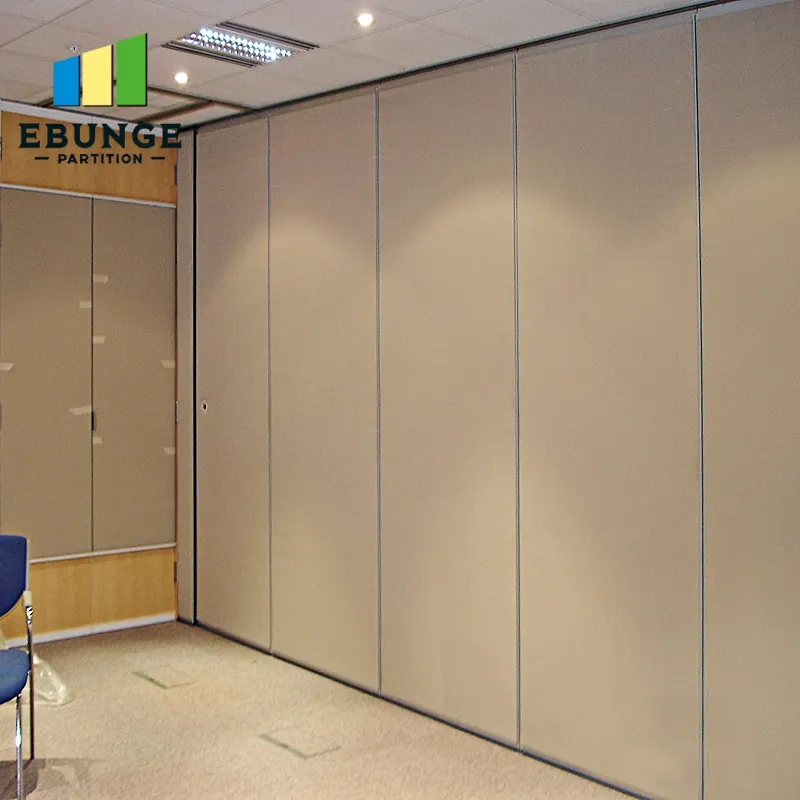
Because EBUNGE panels are individually movable and suspended from a top track, they cross the opening without a floor track. The exact route, junction arrangement, continuous overhead path and parking position must be confirmed from the coordinated project drawings. Those items require drawing review.
Building the Room Release Lead-Time Buffer
Checklist focus: movable partition changeover demand calendar room release lead time buffer.
The buffer is the protected interval between the time a room is released by its previous use and the time it must be ready for the next. It is not padding. It is the space in which real-world variation is absorbed: a late-running session, a furniture reset, a route that is temporarily obstructed, or a panel that needs repositioning.
Define the buffer per room combination, not as one blanket number. A combination that requires a long movement route and a distant stacking position may need a different buffer from a simple two-room split. Record the agreed buffer in the calendar and treat it as a commitment, not a suggestion.
A Numbered Process for Setting Buffers
- List every recurring room combination the venue expects to sell.
- For each combination, mark the straight, turning and stacking routes on the layout.
- Identify where routes cross public circulation, service corridors or other rooms.
- Assign a release time and a ready time for each transition.
- Set a buffer that reflects route complexity and operational sequencing, then confirm it with the project team.
- Review the calendar after opening and adjust buffers only with evidence from actual operations.
Route Review: Straight, Turning and Stacking
Review focus: movable partition changeover demand calendar room release lead time buffer.
Routes are reviewed from the layout, not assumed from a catalogue image. The suitability of each route and parking arrangement depends on the approved layout, circulation, ceiling interfaces and operating sequence. A stacking route ends at a planned parking position, which is customized to the customer layout and project requirements.
Compact stacking may be possible when the coordinated design permits it, but it should never be inferred from a photograph or a generic drawing. Confirm the parking position, the route to it, and the support conditions above it with the project team.
Finishes, Seals and Acoustic Concepts

Project review term: movable partition changeover demand calendar room release lead time buffer.
Confirmed finish options include laminate, melamine, fabric, leather, glass and other approved surfaces. Those are separate project-specific questions.
Seals and acoustic concepts can be explained generically. Acoustic requirements should be confirmed for the specific project, including the surrounding construction and the way panels meet adjacent surfaces.
Coordination With Other Trades and Documentation
The changeover calendar is most useful when it is linked to the construction and handover programme. Pass-door requirements and project documentation can be discussed with the supplier so that access needs are reflected in the layout review.
Keep a single controlled version of the calendar and the reviewed layout. When a room combination changes, update both. This prevents the common failure where operations plan against one layout while the site is built to another.
Evidence Note: What a Calendar Cannot Prove
A changeover calendar is a planning tool. It does not prove acoustic performance, structural capacity, fire performance, durability, maintenance outcomes or commercial results. Those require matching project-specific evidence and confirmation.
FAQ: Changeover Planning Questions
What is a movable partition changeover demand calendar?
It is a shared schedule of when each room combination is required, when the previous use releases the space, and when the room must be ready. It exposes sequencing conflicts before they affect service.
How long should a room release lead-time buffer be?
There is no universal figure. The buffer depends on route complexity, stacking position, furniture reset and operational sequencing. Set it per room combination and confirm it with the project team.
Do movable partitions need a floor track?
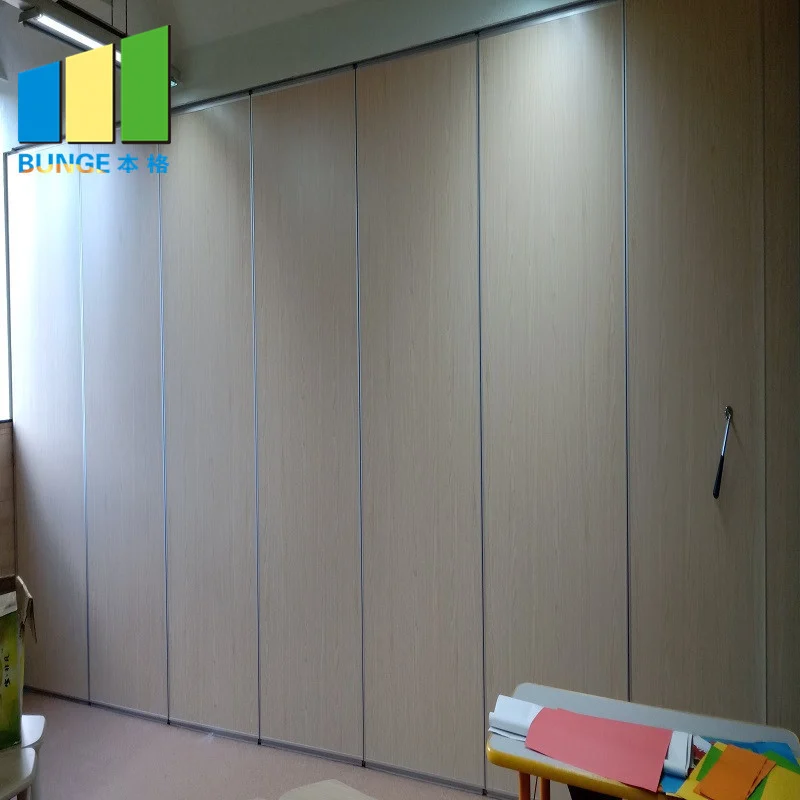
EBUNGE movable partition panels are top-hung and move without a continuous floor running track or floor hardware along the partition line.
Can panels be parked in a compact stacking position?
Parking style is customized to the customer layout and project requirements, and compact stacking may be supported when the coordinated design permits it. Confirm the stacking position and route from the layout.
Which finishes are available?
Confirmed finish options include laminate, melamine, fabric, leather, glass and other approved surfaces.
Can pass doors be included?
Pass-door requirements can be discussed as part of the project documentation and layout review. Confirm the specific arrangement with the project team.
Conclusion and Next Step
A changeover demand calendar and a room release lead-time buffer give multi-room venues a practical way to plan flexible space. Start with the room combinations you expect to sell, mark the routes and stacking positions on the layout, and protect a buffer between release and readiness. Keep every performance, support and dimensional question tied to project-specific confirmation.
To review your layout, routes, finishes or pass-door requirements, contact the EBUNGE team. You can also explore movable wall products and the resources library before your next planning session.