
Quick answer: movable partition wall
Review focus: movable partition wall.
Facility teams inherit whatever the project team releases. A movable partition wall closeout record completeness scoring rubric helps you decide, record by record, whether the handover package is complete enough to hand over. This article provides a scoring method for overseas B2B project teams. It does not assert any project outcome, acoustic result or approval status. Every score depends on evidence you can see and confirm in the project file.
The rubric below is deliberately conservative. It treats missing evidence as a reason to hold a record, not as a reason to assume performance. Use it alongside your own contract requirements and the project-specific drawings reviewed for the partition layout.
Why a Completeness Score Beats a Simple Checklist
Project review term: movable partition wall.
A checklist tells you whether a document exists. A score tells you whether the document is usable by the people who will operate and maintain the space. Facility teams need records that match the installed configuration, the approved layout and the agreed handover scope.
Scoring also exposes gaps early. If a record scores low, you can request clarification before final release rather than after the facility team has accepted the package. The score is a decision aid, not a certification.
What the score can and cannot prove
The score can show whether a record is present, legible, version-controlled and linked to the correct project reference. The suitability of each route and parking arrangement depends on the approved layout, circulation, ceiling interfaces and operating sequence. Those topics require separate project-specific confirmation.
Define the Release Unit Before You Score
Coordination scope: movable partition wall.
Score each record as a separate release unit. A release unit is the smallest document or drawing set that a facility team would use independently. For example, a panel layout drawing, a parking arrangement drawing and a pass-door schedule may each be a release unit.
Grouping unrelated records into one score hides weak items. Keep the units small enough that a low score points to a specific gap.
Records commonly included in a movable partition handover
- Approved layout drawings showing straight, turning and stacking routes.
- Panel and finish schedule matching the confirmed finish options.
- Parking position drawing for the planned stacking area.
- Pass-door location and swing information, where applicable.
- Operation and maintenance notes limited to confirmed product facts.
- Contact and escalation information for post-handover questions.
This list is a starting point. Confirm the final scope with the project team before scoring.
The Five-Dimension Scoring Rubric
Checklist focus: movable partition wall.

Score each release unit from 0 to 4 on five dimensions. A score of 0 means the dimension is absent or unusable. A score of 4 means the dimension is fully evidenced and traceable. The maximum is 20 points per release unit.
| Dimension | What to check | Score 0-4 |
|---|---|---|
| Presence | Is the record included in the handover package? | 0 = missing, 4 = present |
| Traceability | Does it reference the correct project, revision and drawing number? | 0 = no reference, 4 = fully traceable |
| Consistency | Does it match the approved layout and finish schedule? | 0 = conflicting, 4 = consistent |
| Usability | Can a facility team read and apply it without extra explanation? | 0 = unclear, 4 = self-contained |
| Evidence boundary | Does it avoid unsupported performance or outcome claims? | 0 = overclaims, 4 = bounded |
Apply the same scoring scale to every release unit. Record the reason for each score in one short note.
Interpreting the Total Score
Review focus: movable partition wall.
Use the total to sort records into release decisions. The thresholds below are a working guide, not a contractual standard. Adjust them to your project’s risk profile and contract terms.
Suggested release bands
- 16-20: Release to the facility team, subject to final project sign-off.
- 11-15: Release with a written clarification note listing the gaps.
- 6-10: Hold and request missing evidence before release.
- 0-5: Do not release; the record is not usable as a handover document.
A high total does not replace professional review. It only shows that the record is complete against the dimensions you scored.
Evidence Notes for Acoustic and Dimensional Records
Acoustic records often cause confusion.
Do not release an acoustic record that implies a guaranteed result. Instead, check that the record states the tested configuration, the test reference and the project-specific conditions that must be confirmed. If those details are absent, score the evidence boundary low.
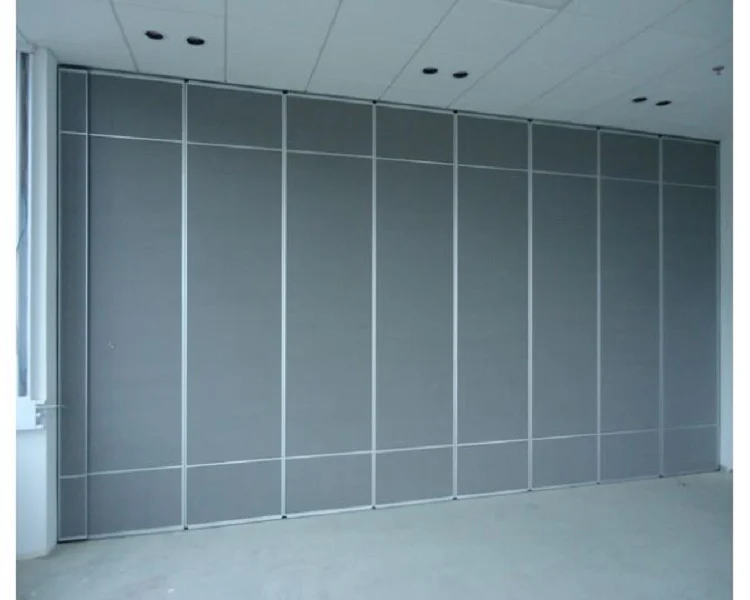
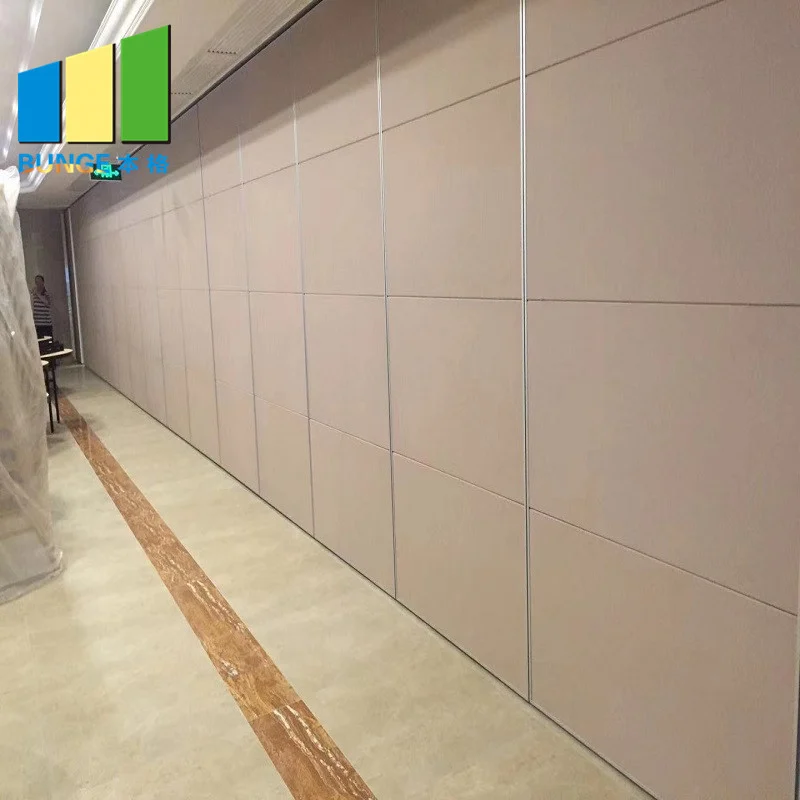
Dimensional records need the same care. Confirm that the drawing shows the continuous overhead route required for the top-hung panels. Panels are individually movable and suspended from a top track. They cross the opening without a floor track and park at a planned stacking position. Any proposed movement path requires a continuous connected overhead route and project-specific support review.
Common Scoring Mistakes to Avoid
Teams often score a record high because it looks professional. Formatting is not completeness. A well-designed drawing that omits the parking position still fails the consistency dimension.
Another mistake is scoring a whole package as one unit. This hides the weakest record and makes release decisions harder. Keep units separate and score each one.
A third mistake is treating a finish sample as evidence of performance. Laminate, melamine, fabric, leather, glass and other approved surfaces describe appearance and finish selection.
Release Decision Workflow
- List every release unit in the handover package.
- Score each unit on the five dimensions.
- Write one evidence note per unit explaining the score.
- Sort units into the four release bands.
- Request missing evidence for held units.
- Re-score after new evidence arrives.
- Release only units that meet your agreed threshold.
Keep the scored rubric with the handover package. It shows the facility team why each record was released or held.
Frequently Asked Questions
What is a movable partition wall closeout record completeness scoring rubric?
It is a structured method for scoring each handover record against defined dimensions such as presence, traceability, consistency, usability and evidence boundary. The score helps you decide whether a record is complete enough to release to a facility team.
Does a high score prove acoustic performance?
No. The score only reflects document completeness.
Which records should be scored separately?
Score each record that a facility team would use independently. Layout drawings, parking drawings, finish schedules and pass-door information are common examples. Confirm the final list with your project team.
Can I release a record with a mid-range score?
You can release it with a written clarification note that lists the gaps. The decision depends on your contract requirements and the risk profile of the project. Confirm the release threshold with the responsible project authority.
How does the rubric handle pass-door requirements?
Pass-door requirements and project documentation can be discussed with the project team. Score the pass-door record on the same five dimensions and confirm the final configuration against the approved drawings.
What should I do if a record overclaims performance?
Score the evidence boundary low and request a corrected version. Do not release a record that implies a guaranteed outcome without matching project-specific evidence.
Conclusion and Next Step
A movable partition wall closeout record completeness scoring rubric gives project teams a repeatable way to judge handover documents before release. Score each record separately, keep evidence notes, and hold anything that lacks traceability or overclaims performance. The rubric supports decisions; it does not replace project-specific review.
To discuss pass-door requirements, project documentation or the layout review process for your next movable partition project, contact the EBUNGE team. You can also review the movable wall product range and the project resources before finalising your handover scope.