
Quick answer: movable partition renovation temporary separation
Review focus: movable partition renovation temporary separation.
Staged upgrades in occupied buildings rarely fail because of the panels themselves. They fail because nobody wrote down when a zone would temporarily lose separation. A movable partition renovation temporary separation downtime window register is a simple planning instrument: one row per occupied zone, one column per phase, and a clear note of when that zone has no operable partition in place. It does not replace drawings, acoustic design or site instructions. It makes the sequence visible before work starts.
What the Register Is and What It Is Not
Project review term: movable partition renovation temporary separation.
The register is a coordination document. It records the planned period during which an occupied zone is without its usual dividing element, and it names who needs to know. The suitability of each route and parking arrangement depends on the approved layout, circulation, ceiling interfaces and operating sequence. Those remain separate deliverables.
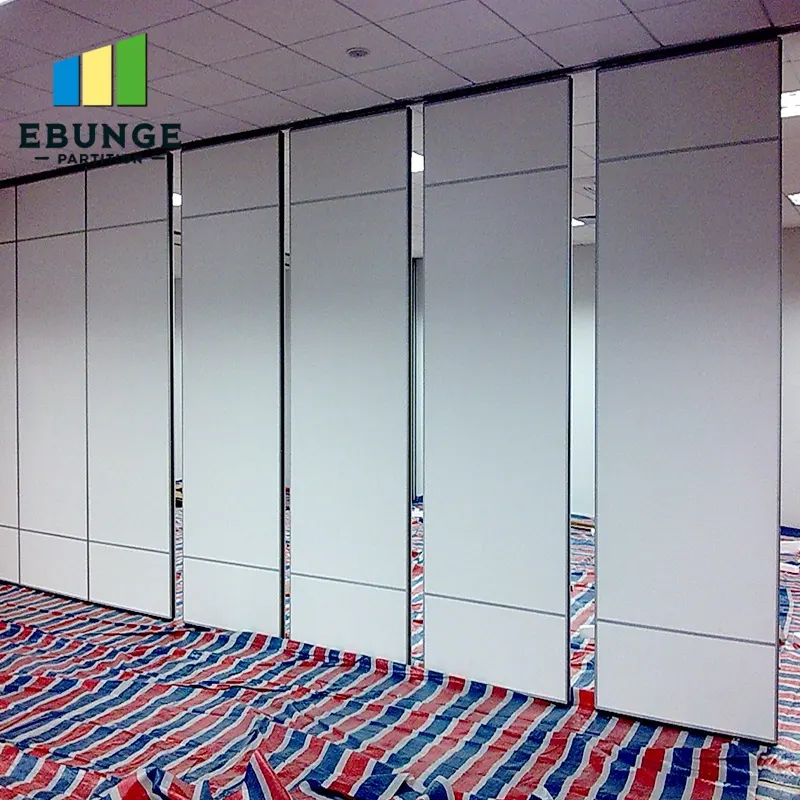
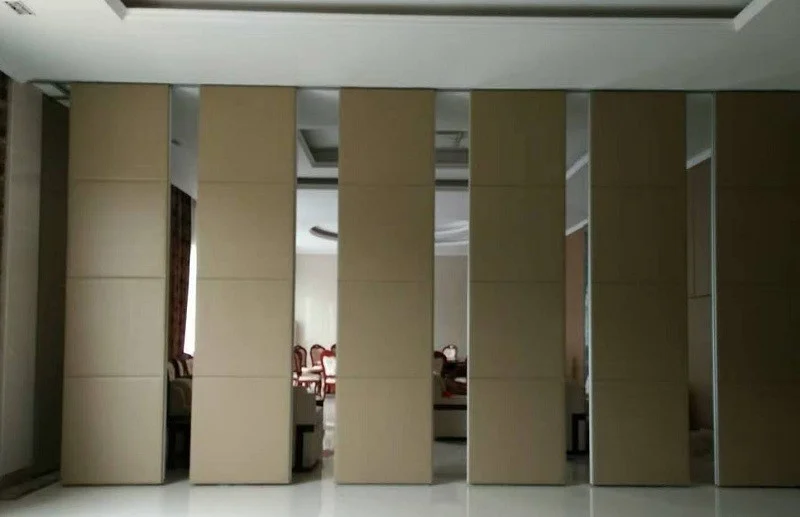
Movable partition panels are individually movable, suspended from a top track, cross the opening without a floor track, and park at a planned stacking position. That operating model shapes the register: when panels are parked away from the opening, the zone is open. When they are returned, separation is restored. The register tracks that cycle.
Why Occupied Buildings Need a Downtime Window Register
Coordination scope: movable partition renovation temporary separation.
In an occupied building, the people on the other side of a partition are the schedule. A school, hotel, office or clinic may keep operating while one zone is upgraded. If the temporary loss of separation is not scheduled, the disruption is discovered by users rather than managed by the project team.
The register converts an abstract phasing plan into a communication tool. It answers three questions for each zone: when does separation stop, how long is the window, and who is affected. It also forces the team to check whether the parking position and movement route remain usable during each phase.
Information to Collect Before Writing the Register
Checklist focus: movable partition renovation temporary separation.
Start with the layout. Straight, turning and stacking routes are reviewed from the layout, so the register cannot be written from a room list alone. The team needs the current partition line, the planned opening, the parking position and any adjacent work that could block the route.
Then collect occupancy information. Which zones are in use during each phase? Which users have fixed schedules that cannot move? Which areas need a temporary alternative arrangement, even if that arrangement is only a notice and a revised room booking rule?
Minimum Inputs for a Workable Register
- Zone name, current use and occupancy pattern.
- Phase number and planned start and finish dates.
- Partition line affected and the planned parking position.
- Movement route review status from the layout.
- Named contact for each occupied zone.
- Communication method and notice period.
- Confirmation status for support, acoustic and dimensional requirements.
Building the Register: A Step-by-Step Process
Review focus: movable partition renovation temporary separation.
- Divide the building into occupied zones that match how people actually use it, not only how it appears on the drawing.
- Map each phase to the zones that lose separation during that phase.
- Record the planned downtime window for each zone, including the day separation stops and the day it is expected to be restored.
- Check the parking position and movement route against the layout for each phase.
- Identify who must be notified and how much notice they need.
- Mark every item that still requires project-specific confirmation, such as support, acoustic and dimensional requirements.
- Review the register at each phase gate and update it when the sequence changes.
How to Schedule and Communicate Each Downtime Window
Scheduling is not only a construction activity. A downtime window should be placed where the affected users can absorb it. In some buildings that means a weekend or a holiday period. In others it means moving a meeting series or relocating a class for a short period. The register should show the chosen window and the reason it was chosen.
Communication should be specific. A general notice that work is happening is less useful than a zone-level note that says which days separation is unavailable and what users should do. The register gives the project team a single source for those messages.
Compact Comparison: Register Entry vs. Drawing Note
| Item | Register entry | Drawing note |
|---|---|---|
| Purpose | Schedules and communicates downtime | Defines physical layout and route |
| Owner | Project coordinator | Design team |
| Updates | Each phase gate | At design revisions |
| Evidence limit | Planning only | Subject to project-specific review |
Evidence Boundaries and Project-Specific Confirmation
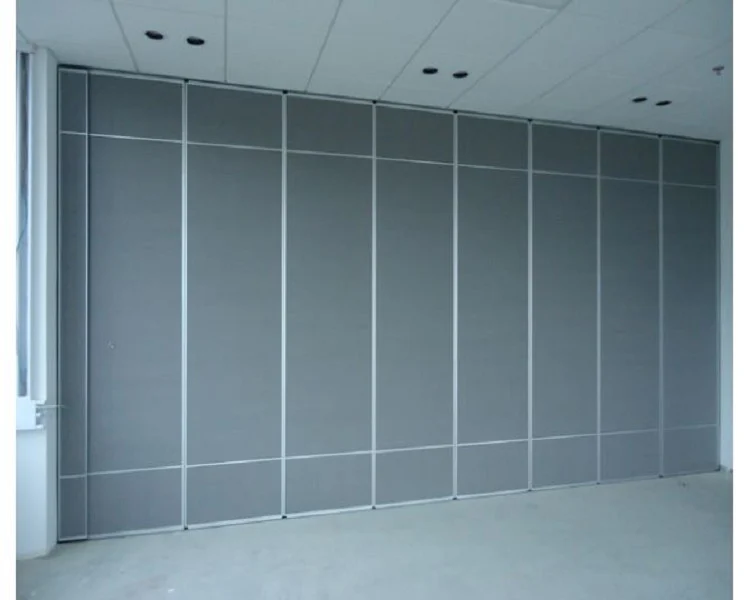
Finish options for movable partitions include laminate, melamine, fabric, leather, glass and other approved surfaces. The register should not infer performance from a finish sample or a photograph.
Any acoustic requirement must be confirmed for the specific project, together with support and dimensional requirements.
Evidence note: the register records planned downtime windows. It does not certify acoustic separation, structural support or dimensional fit. Those items require project-specific review and matching documentation.
Common Coordination Mistakes to Avoid
One common mistake is treating the parking position as a fixed assumption. Parking style is customized to the customer layout and project requirements, and it may support compact stacking when the coordinated design permits it. If the layout changes, the register must be checked again.
Another mistake is leaving the register with one person. The document is most useful when the owner, contractor and affected user representatives can all see the same phase dates. Pass-door requirements and project documentation can be discussed with the supplier so that the register reflects the actual configuration.
Frequently Asked Questions
What is a movable partition renovation temporary separation downtime window register?
It is a planning table that lists each occupied zone, the phase in which it temporarily loses separation, the planned downtime window and the people who must be notified.
Does the register prove acoustic performance?
No. It records when separation is unavailable. Acoustic requirements must be confirmed for the specific project with matching documentation.
Can movable partitions be used without a floor track?
EBUNGE movable partition panels are top-hung and move without a continuous floor running track or floor hardware along the partition line. The exact route, junction arrangement, continuous overhead path and parking position must be confirmed from the coordinated project drawings.
How often should the register be updated?
Review it at each phase gate and whenever the sequence, layout or occupancy changes. An outdated register is worse than no register because it creates false confidence.
Who should own the register?
A project coordinator or renovation manager is the usual owner, with input from the design team, contractor and affected user representatives.
What should be confirmed before construction?
Support, acoustic and dimensional requirements should be confirmed for the specific project. Finish options and pass-door requirements can be discussed with the supplier, but they do not replace engineering review.
Conclusion and Next Step
A downtime window register turns a staged upgrade from a series of surprises into a managed sequence. It keeps the focus on occupied zones, planned windows and clear communication. It also keeps every performance claim in its proper place: project-specific confirmation, not assumption.
To discuss how movable partition planning fits your renovation phasing, review the movable wall systems, explore the planning resources, or contact the team with your layout and phase questions.