
Quick answer: track zone penetration permit register
Review focus: track zone penetration permit register.
A movable partition track zone penetration permit register is a project control document. It logs every ceiling service that crosses, enters or runs parallel to the overhead zone reserved for a movable partition track. The register exists because ceiling rough-in trades and partition track fixing compete for the same ceiling interface. The exact route, junction arrangement, continuous overhead path and parking position must be confirmed from the coordinated project drawings. This article explains how to structure the register, sequence the trades and keep every decision tied to project-specific drawings and confirmed product facts.
Why the Track Zone Needs a Permit Register
Project review term: track zone penetration permit register.
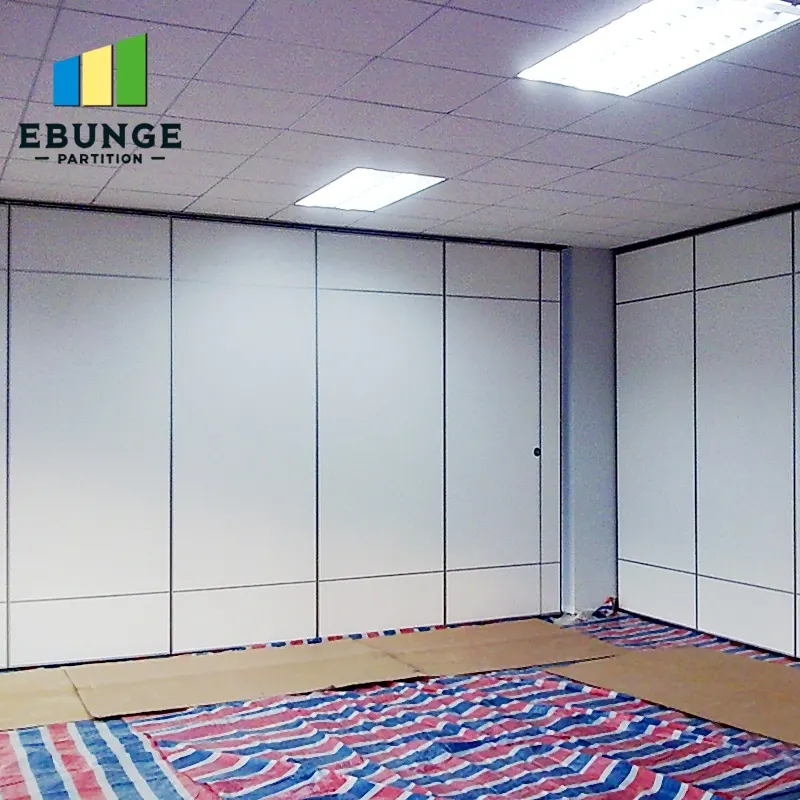
Movable partition panels are individually movable and suspended from a top track. They cross the opening without a floor track and park at a planned stacking position. That simple movement principle depends on a continuous overhead route. If a ceiling service penetrates the track zone after the route is set, the service may interrupt the path or force a redesign of the support arrangement.
A permit register gives the project team a single place to record each proposed penetration, its trade owner, its status and the evidence needed before release. The suitability of each route and parking arrangement depends on the approved layout, circulation, ceiling interfaces and operating sequence. It is a coordination tool that prevents informal ceiling changes from becoming partition installation conflicts.
What the Register Controls
The register controls access to the track zone, not the entire ceiling. It should define the zone width and depth from the approved partition layout, list every service that crosses it, and state who may release the zone for track fixing. The zone boundary must come from project-specific drawings, not from a generic assumption.
Information to Capture Before Any Release
Coordination scope: track zone penetration permit register.
Each permit line should carry enough information for the partition designer, ceiling trade and site supervisor to make a coordinated decision. Missing information is a reason to hold the permit, not to proceed on verbal assurance.
- Partition layout reference and track route drawing number.
- Service type, trade owner and proposed penetration location.
- Relationship to the straight, turning or stacking route.
- Support or framing proposed by the service trade.
- Required clearance from the track and panel movement path.
- Evidence status: drawing, request for information or approved submittal.
- Release signature and date, with any conditions noted.
This list is a starting point. Project-specific support, acoustic and dimensional requirements must be confirmed by the responsible design professionals before any penetration is accepted.
Sequencing Ceiling Rough-In Trades
Checklist focus: track zone penetration permit register.
The practical sequence is straightforward: define the track zone, collect penetration requests, review them against the partition layout, release or reject each request, then fix the track. The difficulty is not the sequence itself but the discipline to keep it.
- Issue the track zone drawing to all ceiling trades before rough-in begins.
- Require each trade to submit a penetration permit request for any service entering the zone.
- Review requests against the straight, turning and stacking routes.
- Record the decision, conditions and evidence reference in the register.
- Release the zone only when all active permits are closed or conditioned.
- Proceed to track fixing under the approved layout and support review.
On renovation projects, existing ceiling services may not appear on current drawings. A survey or opening-up period may be needed before the register can be considered complete. The project team should confirm how existing conditions will be verified.
Reviewing Straight, Turning and Stacking Routes
Review focus: track zone penetration permit register.
The partition route is not only the visible opening. Panels travel from the opening to a planned stacking position. A stacking route ends where panels park. Each route has its own overhead requirements, and a penetration that is harmless on a straight run may conflict with a turning or stacking area.
| Route element | Coordination question | Evidence needed |
|---|---|---|
| Straight run | Does the service cross the continuous overhead path? | Approved layout and service drawing |
| Turning route | Does the service interfere with the change of direction? | Coordinated plan and section |
| Stacking position | Does the service obstruct the planned parking area? | Stacking layout and support review |
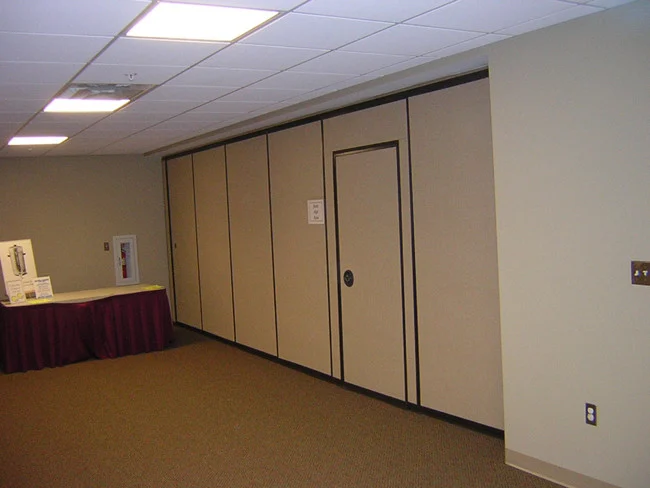
This table is a review aid, not a design solution. The project team must confirm the actual route geometry and support requirements from the approved drawings.
Evidence Boundaries and Acoustic Concepts
A ceiling penetration can affect the acoustic behaviour of a partition system, but the extent depends on the assembly, the seal detail and the project-specific design. The exact overhead route and support arrangement must be confirmed by the responsible project team from coordinated drawings.
Evidence note: Do not infer structural capacity, acoustic performance, fire performance or service life from a finish sample, a photograph or a generic drawing. Confirm project-specific support, acoustic and dimensional requirements with the responsible design professionals.
Finish options for movable partitions include laminate, melamine, fabric, leather, glass and other approved surfaces. Those questions belong to the project specification and the relevant evidence package.
Common Coordination Failures to Avoid
Most track zone conflicts come from late changes rather than from the partition system itself. A cable tray added after track fixing, a duct rerouted without updating the register, or a lighting support installed inside the stacking area can all force rework.
Another common failure is treating the register as a formality. If permits are signed without reviewing the route drawing, the register loses its value. The project team should agree who has authority to release the zone and what evidence must be attached before release.
Pass Doors and Documentation
Pass-door requirements and project documentation can be discussed with EBUNGE during planning. Pass doors may affect the track layout and the ceiling interface, so they should be included in the register review rather than added later.
Frequently Asked Questions
What is a movable partition track zone penetration permit register?
It is a project log for ceiling services that enter or cross the overhead zone reserved for a movable partition track. It records the service, trade owner, evidence and release status before track fixing begins.
Who should maintain the register?
The project team should assign a single coordinator, often the general contractor or ceiling package manager, with input from the partition designer and each service trade. The responsible design professionals must confirm support and acoustic requirements.
Can a penetration be approved without a drawing?
No. A verbal or informal approval creates risk. Each permit should reference an approved drawing, submittal or request for information response before release.
Does the register guarantee acoustic performance?
No. The register is a coordination tool.
What happens if a service is installed after track fixing?
The project team should assess the conflict against the approved route and support review. Late changes may require rework or a revised coordination decision. The register should be updated to reflect the final condition.
How does EBUNGE support project coordination?
EBUNGE can discuss pass-door requirements, project documentation and the maintained product facts for movable partition systems.
Conclusion and Next Steps
A track zone penetration permit register gives ceiling rough-in trades and partition installers a shared sequence. It protects the continuous overhead route, keeps stacking positions clear and creates a record of who released each penetration and on what evidence. The register does not replace engineering judgement, but it makes coordination visible before track fixing begins.
To review your project requirements, visit the movable walls product page, explore the resources library or contact EBUNGE to discuss documentation and project-specific confirmation.