
Quick project answer
Review focus: tender priced schedule omission detection.
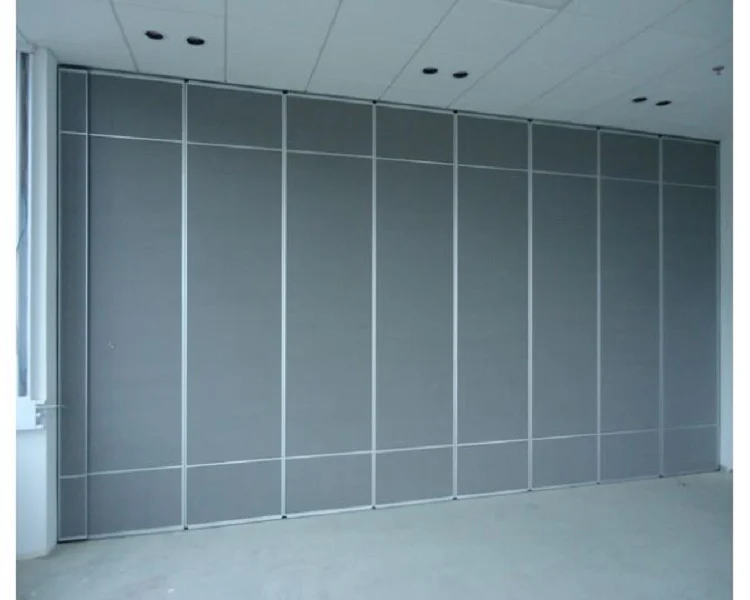
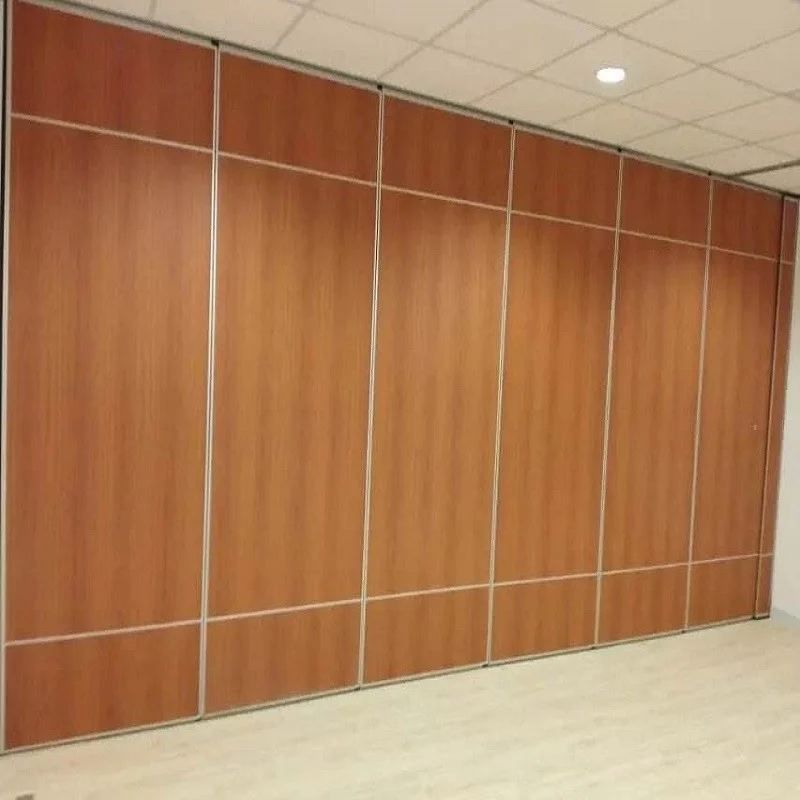
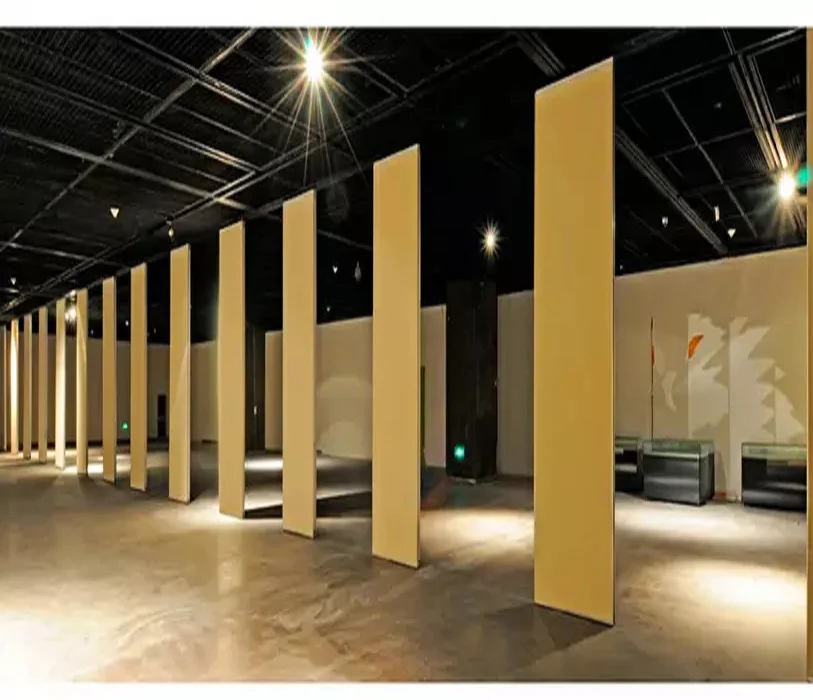
Movable partition wall tender priced schedule omission detection is the discipline of comparing what the specification and drawings require against what the priced schedule actually pays for. The goal is not to find the cheapest row, but to surface unpriced interface work before award. A top-hung movable partition crosses an opening without a floor track and parks at a planned stacking position, so its cost sits across several trades. When those interfaces are missing from the priced rows, the omission usually appears later as a variation. The suitability of each route and parking arrangement depends on the approved layout, circulation, ceiling interfaces and operating sequence.
Why omissions cluster at partition interfaces
Project review term: tender priced schedule omission detection.
A movable partition package is rarely self-contained. The panels are individually movable and suspended from a top track, which means the overhead route, the opening, the parking zone and the adjacent finishes all interact. A priced schedule that lists only panels and track can look complete while leaving interface work unpriced.
Reviewers should treat the schedule as a map of responsibility, not just a price list. Each row should connect to a scope clause, a drawing condition or a stated exclusion. Where that connection is missing, the row is a candidate for omission detection.
Cross-check method: scope clauses against priced rows
Coordination scope: tender priced schedule omission detection.
Start with the scope clauses and work outward to the priced rows. This direction matters because clauses describe intent, while rows describe what someone has agreed to price. The gap between them is where omissions live.
Step 1: Extract every scope clause that touches the partition
List clauses covering the partition itself, the opening, the overhead structure, the parking position, finishes, and any pass-door requirement. Do not filter yet. The purpose is a complete clause inventory before matching.
Step 2: Map each clause to one or more priced rows
Create a simple two-column working table. Left side: clause reference. Right side: priced row reference or the word ‘unmapped’. Unmapped clauses are the primary output of this exercise.
Step 3: Interrogate unmapped clauses with the design team
Some unmapped clauses may be covered elsewhere in the tender. Others may be genuine omissions. The reviewer’s job is to ask, not to assume. Confirm project-specific support, acoustic and dimensional requirements with the responsible designer before drawing conclusions.
Interface areas that frequently appear unpriced
Checklist focus: tender priced schedule omission detection.
Certain interface areas recur across tenders because they sit between trades. The list below is a prompt for review, not a claim about any specific project.
- Overhead support and the continuous connected route required for panel movement.
- Opening preparation and the relationship between the partition line and adjacent structure.
- Parking zone geometry and whether the planned stacking position is coordinated with other services.
- Finish transitions where laminate, melamine, fabric, leather, glass or other approved surfaces meet surrounding walls.
- Pass-door requirements and their interaction with the panel layout.
- Documentation, samples and approval submissions that the scope clause may require.
Each item above should be traceable to a priced row or explicitly excluded. An explicit exclusion is acceptable; a silent gap is not.
Evidence note: what a priced row can and cannot prove
Review focus: tender priced schedule omission detection.
A priced row confirms that a line item exists in the tender. Those matters require project-specific drawings, specifications and confirmation from the responsible parties.
This distinction protects reviewers from treating a price as evidence of scope.
Acoustic and seal concepts in tender review
In tender review, the relevant question is whether the specification states a requirement, whether the priced row references it, and whether the interface conditions needed to pursue it are described.
Seals and acoustic concepts can be explained generically, but the reviewer should not infer a specific seal arrangement or performance outcome from a drawing alone. Where acoustic intent matters, confirm project-specific requirements with the design team and ensure the tender documents are consistent.
A compact comparison for reviewers
| Review signal | What it may indicate | Suggested action |
|---|---|---|
| Scope clause with no priced row | Possible unpriced interface work | Request clarification before award |
| Priced row with no scope clause | Possible duplicate or undefined item | Confirm what the row covers |
| Partition line shown without overhead route | Movement path may be incomplete | Ask for coordinated layout review |
| Finish named but transition not shown | Interface finish may be unpriced | Confirm responsibility and extent |
| Pass-door mentioned only in drawings | Scope may be split across documents | Align clause and priced row |
Use this table as a working aid. It does not replace project-specific review, and it does not assert that any particular omission exists.
Documentation and coordination before award
Omission detection depends on documents that are current and consistent. Drawings, specifications and priced schedules should be reviewed as a set. Where they disagree, the disagreement itself is a finding worth recording.
Reviewers may also ask bidders to state assumptions and exclusions in writing. This makes the boundary of each price visible and reduces the chance that interface work is discovered after award. For product context, see the movable walls product page and the resources section.
FAQ: tender priced schedule omission detection
What is movable partition wall tender priced schedule omission detection?
It is a review process that compares scope clauses and drawings against priced rows to identify work that has not been priced, especially interface work between trades.
Does a missing priced row always mean an omission?
No. The work may be covered elsewhere in the tender or explicitly excluded. The reviewer’s role is to surface the gap and request clarification.
Why do movable partition interfaces cause omissions?
Because the partition interacts with overhead structure, openings, parking zones and adjacent finishes. These interfaces can fall between trade packages.
Can a priced row confirm acoustic performance?
No. A priced row confirms a line item exists.
What should reviewers confirm before award?
Confirm project-specific support, acoustic and dimensional requirements, and ensure scope clauses, drawings and priced rows align. Where they do not, record the discrepancy.
How does parking position affect the review?
Parking is customized to the layout and project requirements. Reviewers should check that the planned stacking position is coordinated and that its interface work is priced or excluded.
Conclusion: make omissions visible before award
Omission detection is not about finding fault. It is about making responsibility visible while there is still time to clarify it. By cross-checking scope clauses against priced rows, reviewers can surface unpriced interface work and reduce the risk of post-award variations.
Keep the review evidence-bounded. Confirm project-specific support, acoustic and dimensional requirements with the responsible design team, and treat every priced row as a statement of scope rather than proof of performance. For project-specific questions, contact EBUNGE to discuss documentation and pass-door requirements.