
Quick answer: movable partition wall document transmittal
Review focus: movable partition wall document transmittal.
Before a facility accepts a movable partition installation, someone must be able to answer a simple question: who holds each closeout record right now? A movable partition wall document transmittal receipt custody chain ledger gives project teams a single place to log what was sent, who acknowledged receipt, and where each record currently sits. It is a coordination tool, not a substitute for contract documents or project-specific engineering review.
This framework suits overseas contractors, architects, interior designers, owners, renovation companies, distributors and construction teams. It works for conference rooms, training suites, ballrooms and other flexible spaces, but the named room type is only an example. Confirm all project-specific support, acoustic and dimensional requirements with the responsible parties.
Why a Custody Chain Matters Before Facility Acceptance
Project review term: movable partition wall document transmittal.
Closeout records move between many hands: design team, contractor, installer, owner representative and facility manager. Without a custody chain, a document can appear to be delivered while no one can locate the current copy. The ledger records the handoff sequence rather than assuming delivery equals possession.
For movable partitions, the records may include approved layouts, finish selections, pass-door requirements and coordination notes. Because panels are individually movable, suspended from a top track and cross the opening without a floor track, the layout review should confirm straight, turning and stacking routes. Those reviews generate documents that need tracked custody.
What the ledger is not
It is not a certification, a warranty register or proof of performance. It does not replace inspection, testing or contractual acceptance procedures. The suitability of each route and parking arrangement depends on the approved layout, circulation, ceiling interfaces and operating sequence.
Core Fields for a Document Transmittal Receipt Ledger
Coordination scope: movable partition wall document transmittal.
A useful ledger is simple enough to maintain under site pressure. Each row should identify the record, the sender, the recipient, the transmittal date, the acknowledgment status and the current holder. Add a revision field so superseded copies do not circulate unnoticed.

| Field | Purpose | Evidence note |
|---|---|---|
| Record ID and title | Unique reference for each closeout document | Use the project’s own numbering convention |
| Revision | Distinguishes current from superseded copies | Confirm revision control rules with the design team |
| Sender and recipient | Names the parties in the handoff | Record roles, not personal opinions |
| Transmittal date | Establishes when the record left the sender | Use the project’s agreed calendar |
| Acknowledgment | Confirms the recipient received the record | Receipt is not approval |
| Current holder | Answers who holds the record now | Update at every transfer |
Keep the table format consistent across packages.
Capturing Receipt Acknowledgments Without Ambiguity
Checklist focus: movable partition wall document transmittal.
An acknowledgment should state what was received, which revision, and when. A vague reply such as “noted” does not establish custody. Where the contract allows electronic acknowledgment, retain the message with the ledger entry.
If a recipient disputes the contents, log the dispute rather than deleting the row. The custody chain should show the record’s real path, including queries and resubmissions. This protects all parties during final acceptance discussions.
Handling partial and split transmittals
Large packages are often split. Log each part separately so a missing item cannot hide behind a delivered package. When a record is transmitted to multiple recipients, create separate acknowledgment entries for each recipient.
Maintaining the Chain Through Installation and Closeout
Review focus: movable partition wall document transmittal.
Custody changes accelerate during installation. Layout confirmations, finish approvals and pass-door coordination may move between site and office teams. The ledger should be updated at each transfer, not reconstructed at the end.
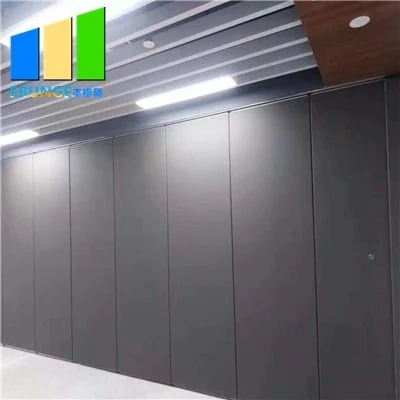
Because parking style is customized to the customer layout and project requirements, stacking arrangements may change during coordination. When they do, the related drawings and notes need new transmittal entries. Confirm project-specific support and route requirements before treating any layout as final.
A simple numbered process
- Register each closeout record with a unique ID and revision.
- Log the transmittal when the record leaves the sender.
- Record the acknowledgment and the date it was received.
- Update the current holder at every subsequent transfer.
- Review open acknowledgments before each handover meeting.
- Archive the completed ledger with the project closeout set.
This process is deliberately administrative. It does not require new performance claims or technical assumptions about the partition system.
Coordinating the Ledger With Layout and Finish Reviews
Layout review is a natural checkpoint for document custody. Straight, turning and stacking routes are reviewed from the layout, and each review round can generate revised drawings. The ledger should link those revisions to their transmittals.
Finish options include laminate, melamine, fabric, leather, glass and other approved surfaces. Finish approvals are project-specific and should be tracked like any other closeout record. Visible references can support layout discussion but do not verify hidden construction or performance.
Evidence boundaries to respect
Confirm acoustic requirements with qualified project specialists.
Common Failure Points in Custody Tracking
Most broken chains come from informal handoffs: a drawing emailed directly to a site engineer, a finish sample passed across a table, or a revised layout shared without a transmittal. Each informal handoff creates a gap that is difficult to reconstruct later.
Another failure point is treating acknowledgment as approval. Receipt confirms delivery; it does not confirm acceptance. Keep those statuses separate in the ledger so facility acceptance decisions rest on the correct records.
Decision checklist before facility acceptance
- Is every closeout record listed with a current holder?
- Does each transmittal have a matching acknowledgment?
- Are superseded revisions clearly marked?
- Are pass-door and layout coordination records included?
- Has the owner representative confirmed receipt of the final set?
- Are project-specific support, acoustic and dimensional confirmations documented?
Use this checklist as a review aid, not as a substitute for contractual acceptance requirements.
Frequently Asked Questions
Who should own the custody chain ledger?
Typically the contractor or a nominated document controller maintains it, with the owner representative receiving regular status updates. The correct owner depends on the project’s contractual structure.
Does an acknowledgment mean the document is approved?
No. Acknowledgment confirms receipt of a specific revision. Approval is a separate status that should be recorded distinctly in the ledger.
How should revised drawings be handled?
Issue a new transmittal for each revision, mark the previous revision as superseded, and update the current holder. Avoid overwriting earlier entries.
Can the ledger cover pass-door coordination?
Yes. Pass-door requirements and related project documentation can be discussed and tracked as closeout records. Confirm the specific requirements with the responsible design and installation parties.
What if a recipient does not respond?
Log the outstanding acknowledgment, escalate through the agreed project communication route, and keep the record open until a response is received or the contract provides another remedy.
Is the ledger required for facility acceptance?
Requirements vary by contract and jurisdiction. Treat the ledger as a coordination aid and confirm the formal acceptance documentation with the project owner and contract administrator.
Conclusion and Next Steps
A movable partition wall document transmittal receipt custody chain ledger helps project teams answer who holds each closeout record before facility acceptance. Keep entries factual, update custody at every transfer, and separate receipt from approval. Confirm all project-specific support, acoustic and dimensional requirements with the responsible parties.
To discuss documentation coordination for your next flexible-space project, contact the EBUNGE team. You can also review movable wall products and browse project resources for further planning context.