
Quick answer: ceiling differential movement allowance review
Review focus: ceiling differential movement allowance review.
The suitability of each route and parking arrangement depends on the approved layout, circulation, ceiling interfaces and operating sequence. The movable partition track ceiling differential movement allowance review is the process of deciding, in drawings and in writing, which element accommodates movement and which element remains fixed. It is a coordination exercise, not a product selection exercise, and it should be closed before track fixing begins.
Why the Track-to-Ceiling Interface Deserves Its Own Review
Project review term: ceiling differential movement allowance review.
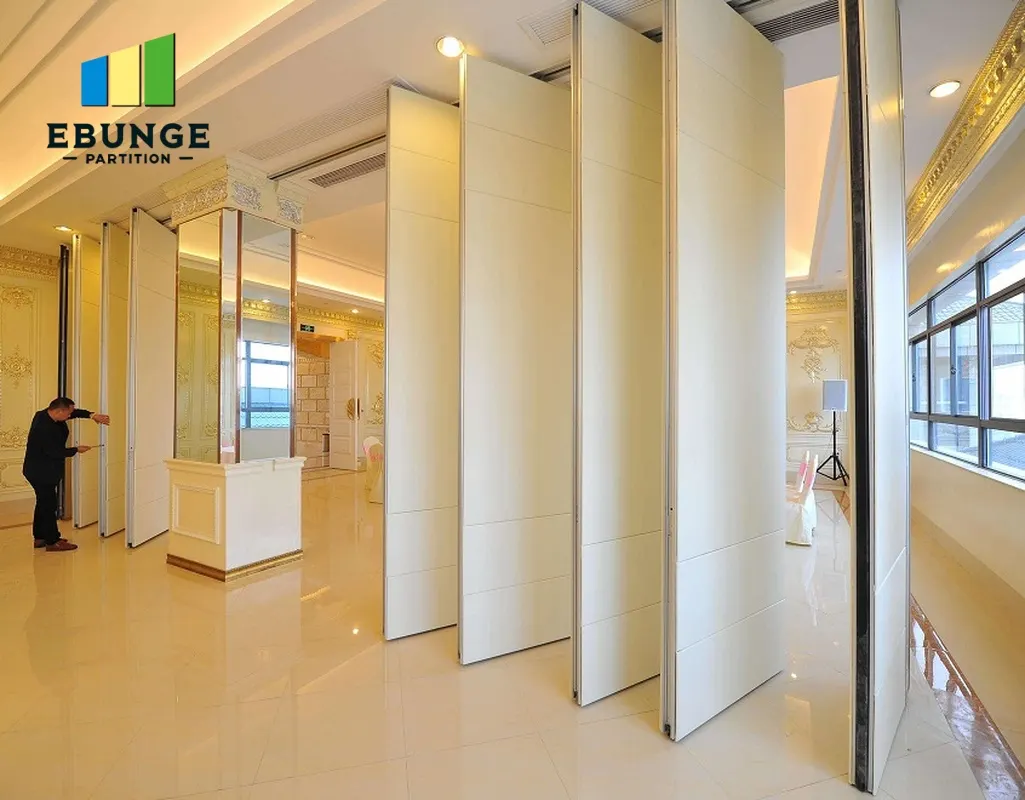
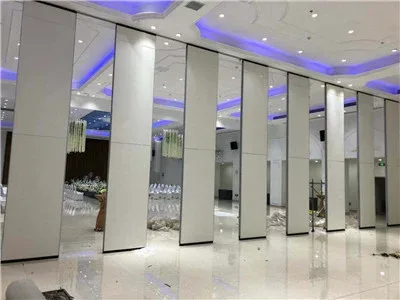
EBUNGE movable partition panels are individually movable, suspended from a top track, cross the opening without a floor track, and park at a planned stacking position. That arrangement keeps the floor clear, but it also means the track is a continuous overhead element whose position matters along the whole route.
The ceiling zone above that route is rarely a single, simple plane. Each layer can behave differently under load, temperature change, or normal building movement. The review exists to stop those differences from being resolved informally on site.
What the Review Must Establish Before Track Fixing
Coordination scope: ceiling differential movement allowance review.
A useful review produces four agreed statements. First, the continuous connected overhead route for the panels, including straight, turning and stacking routes reviewed from the layout. Second, the element that receives the track fixing and the element that is allowed to move independently. Third, the interface detail that keeps the two from fighting each other. Fourth, the party responsible for each confirmation.
None of these statements can be inferred from a finish sample or a photograph.
A Four-Step Coordination Sequence
- Map the route. Mark the straight, turning and stacking paths on the layout and confirm that every proposed path has a continuous connected overhead route.
- Identify the support layer. The exact overhead route and support arrangement must be confirmed by the responsible project team from coordinated drawings.
- Assign movement. Decide which element accommodates differential movement and which remains fixed, then draw the interface detail.
- Record the boundary. Note what remains open, who confirms it, and when the confirmation must arrive relative to track fixing.
Who Owns Which Decision
Checklist focus: ceiling differential movement allowance review.
Differential movement reviews fail most often because ownership is assumed rather than written down. The table below is a coordination aid, not a substitute for project-specific engineering review.
| Decision | Typical lead | What must be confirmed |
|---|---|---|
| Route geometry | Architect or interior designer | Straight, turning and stacking paths shown on layout |
| Support condition | Structural or ceiling trade | Which element receives the track and how movement is handled |
| Interface detail | Ceiling and partition trades | Which element moves, which stays fixed, and the drawn junction |
| Finish and pass-door intent | Design team with supplier input | Confirmed finish direction and pass-door requirements |
Evidence Boundaries That Keep the Review Honest
Review focus: ceiling differential movement allowance review.
Some questions cannot be answered from a catalogue page.
Seals, joints and perimeter conditions can influence how an assembly behaves, but their contribution depends on the actual build-up and installation.
Evidence note: a visible finish, drawing or photograph shows appearance and intent. It does not prove acoustic performance, structural capacity, load behaviour or a application reference outcome.
Documentation to Bring to the Coordination Meeting
Project review term: ceiling differential movement allowance review.
Panel handling and the operating sequence must be confirmed for the selected layout and project conditions. Project documentation can be discussed with the supplier so that the track and panel scope is understood alongside the ceiling scope.
If a document is missing, record it as an open item rather than filling the gap with an assumption. An open item with an owner is safer than a closed item with no evidence.
Quick Pre-Fixing Checklist
- Route drawn and continuous overhead support shown for every path.
- Movement responsibility agreed in writing between ceiling and partition trades.
- Interface detail issued and reviewed by both trades.
- Finish direction and pass-door requirements recorded.
- Open items listed with owners and dates.
Common Coordination Gaps and How to Close Them
One recurring gap is treating the ceiling as a single uniform surface when it changes construction along the route. Another is agreeing the track position before the ceiling zone has been reviewed. A third is leaving the movement allowance to be resolved by the installer on the day of fixing.
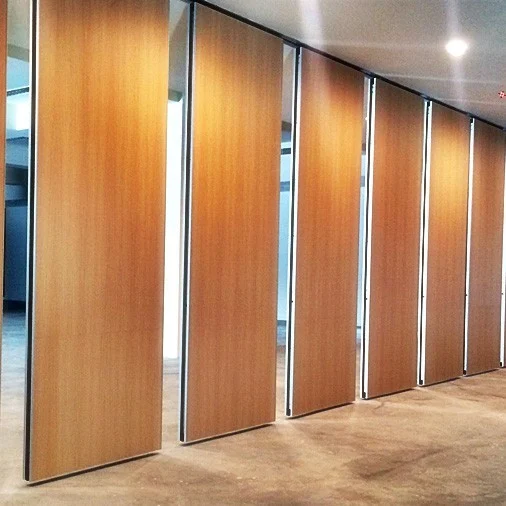
Each gap closes the same way: name the condition, draw the interface, assign the decision, and confirm it against project-specific requirements. This is also where finish choices should be settled. Confirmed finish options include laminate, melamine, fabric, leather, glass and other approved surfaces, and the selected finish should be recorded alongside the interface detail so later changes do not reopen the coordination.
Frequently Asked Questions
What is a track-to-ceiling differential movement allowance?
It is the planned allowance that lets the ceiling zone and the track support behave differently without forcing one to follow the other. The review decides which element accommodates that movement and which remains fixed.
Can this review be completed from a product datasheet alone?
No. It depends on the project layout, the ceiling construction and the support condition. Product information supports the discussion, but the allowance itself is a project-specific coordination decision.
Do movable partition panels need a floor track?
EBUNGE movable partition panels are top-hung and cross the opening without a floor track, parking at a planned stacking position. The overhead route still requires continuous connected support, which is reviewed from the layout.
When should the review happen in the programme?
Before track fixing begins, and ideally before the ceiling zone is closed. Late changes to either the ceiling or the route can reopen decisions that were already agreed.
How are acoustic requirements handled in this review?
Acoustic requirements should be confirmed for the specific project assembly rather than assumed from a general description.
What if the structural information is not yet available?
Record it as an open item with an owner and a date. Proceeding with track fixing before the support condition is confirmed leaves the movement allowance unresolved.
Conclusion: Agree the Interface Before the Track Goes Up
The value of this review is not a single number or a single detail. It is a shared, written understanding of which element moves, which stays fixed, and who confirms what. Teams that settle that understanding early avoid discovering it during installation, when options are narrower.
Confirm project-specific support, acoustic and dimensional requirements with the project team, and keep the interface detail aligned with the final layout. To review your ceiling interface drawings or discuss pass-door requirements and project documentation, contact the EBUNGE team. You can also review the movable wall range and the project resources before the coordination meeting.