
Quick answer: interface assumption confirmation cadence
Review focus: interface assumption confirmation cadence.
An architect coordination interface assumption confirmation cadence movable partition framework gives design teams a repeatable way to close open items before drawings leave the office. Movable partitions are top-hung: panels are individually movable, suspended from a top track, cross the opening without a floor track, and park at a planned stacking position. Because the visible result depends on overhead and parking conditions, assumptions about those conditions must be confirmed, not inherited.
The suitability of each route and parking arrangement depends on the approved layout, circulation, ceiling interfaces and operating sequence. Each issue cycle ends with either a confirmed assumption or a hold-point. The aim is not to slow the programme, but to stop unresolved assumptions from travelling silently into tender, fabrication or site installation.
Why Interface Assumptions Drift Between Disciplines
Project review term: interface assumption confirmation cadence.
Each discipline may assume another has resolved the interface. A ceiling void may be drawn as available without confirming the support condition above it. A stacking pocket may appear on a plan without confirming that the parking route is continuous and connected.
Drift is rarely caused by a single error. It accumulates when assumptions are not labelled, owners are not named, and drawing issues proceed without a check that previous assumptions still hold. A cadence fixes this by making assumption status visible at every issue.
What Counts as an Interface Assumption
An interface assumption is any design decision that depends on another party’s information. Examples include the assumed continuity of the overhead route, the assumed availability of a parking zone, and the assumed ceiling condition along the partition line. These are not performance claims; they are coordination states that must be confirmed or flagged.
The Confirmation Cadence Before Each Drawing Issue
Coordination scope: interface assumption confirmation cadence.
The cadence runs in four steps and repeats at every design issue. It is deliberately short so it can be applied consistently rather than only on major milestones.
- Collect open assumptions. List every track, stack and ceiling assumption currently carried in the drawings, including those inherited from earlier issues.
- Assign an owner and a confirmation route. Each assumption needs a named discipline responsible for confirming it and a defined evidence route, such as a coordinated drawing, a survey or a written response.
- Confirm, revise or hold. If the assumption is confirmed, record it. If it changes, revise the affected drawings. If it remains open, raise a hold-point.
- Issue with a status register. Drawings are issued with a short register showing confirmed assumptions, revised assumptions and open hold-points.
Hold-Point Triggers
A hold-point should be triggered when an assumption affects the track route, the stacking position or the support condition and remains unconfirmed. Other triggers include a change in room layout that alters the movement path, a change in ceiling strategy, and any proposal to cross a gap that is not part of a continuous connected overhead route.
Track Route Confirmation
Checklist focus: interface assumption confirmation cadence.
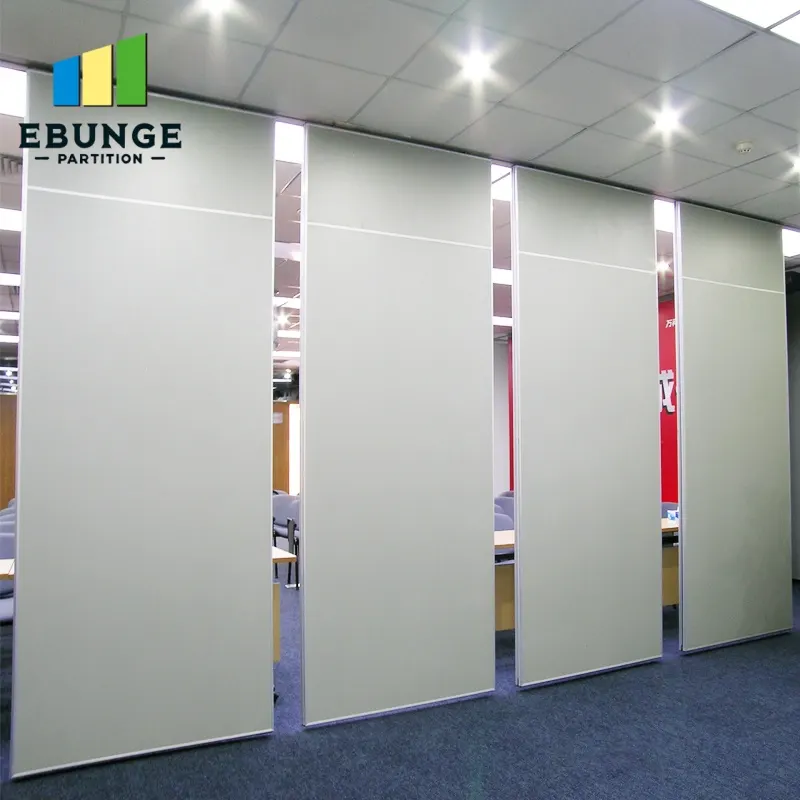
The track route must be reviewed as a continuous connected overhead path. Straight, turning and stacking routes are reviewed from the layout, and every proposed movement path requires project-specific support review.
At each issue, the architect and specialist supplier should compare the drawn route against the current room layout. If the layout has changed, the route must be re-reviewed rather than assumed to remain valid.
Questions to Resolve on the Route
- Is the overhead route continuous and connected for every proposed panel movement?
- Has the support condition along the route been confirmed by the responsible discipline?
- Does the current layout still match the route shown on the drawing?
- Are turning or stacking movements represented in the reviewed layout?
Stacking Position and Parking Coordination
Review focus: interface assumption confirmation cadence.
Parking style is customized to the customer layout and project requirements and may support compact stacking when the coordinated design permits it. The stacking position is therefore a design decision, not a default. It affects adjacent finishes, door positions, services and circulation, and it should be confirmed before the drawing issue that fixes the room layout.
Where a stacking pocket is proposed, the design team should confirm that the parking zone is available in the current layout and that the route to it remains connected. If the stacking position is unresolved, the layout drawing should carry a hold-point rather than showing a provisional pocket as final.
Stack Interface Checklist
| Interface item | Confirmation needed | Status at issue |
|---|---|---|
| Parking zone location | Agreed position in current layout | Confirmed / open |
| Route to parking | Continuous connected overhead path | Confirmed / open |
| Adjacent finishes | Coordination with surrounding construction | Confirmed / open |
| Services and openings | No unresolved clash with parking zone | Confirmed / open |
Ceiling and Support Interface Review
Project review term: interface assumption confirmation cadence.
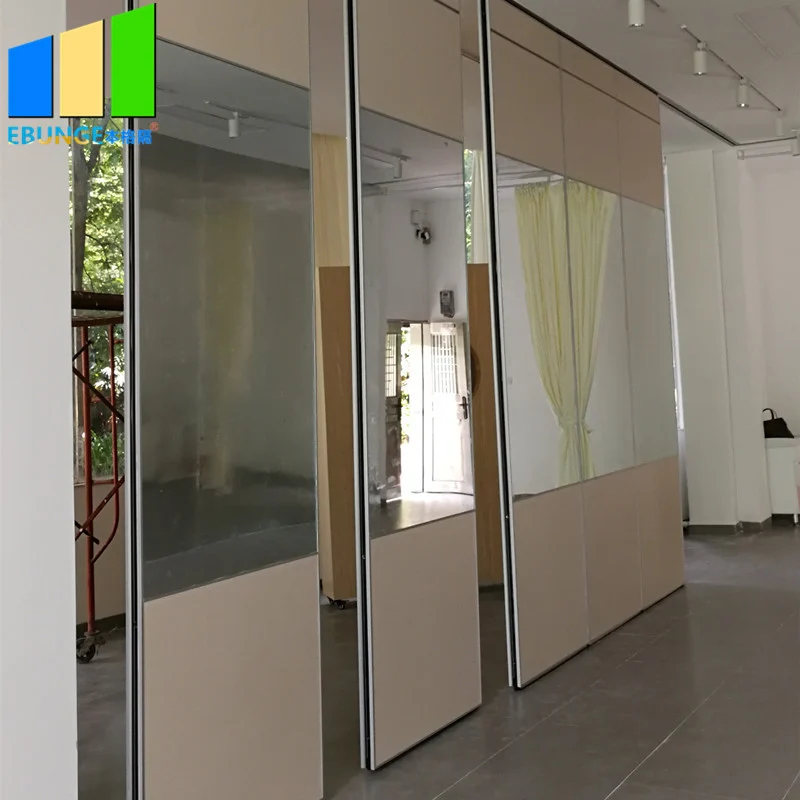
The ceiling interface is where many assumptions become visible late. The design team should confirm the ceiling condition along the track route and at the stacking position, and identify who is responsible for the support condition above the finished ceiling line. This is a coordination question, not a performance statement.
Where the ceiling strategy changes, the track route and support assumptions should be re-reviewed. A revised ceiling drawing does not automatically confirm the partition interface; it creates a new assumption that must be checked against the current route and parking plan.
Evidence Note
This article describes a coordination cadence only. It does not confirm acoustic, structural, fire, durability or dimensional performance for any project. STC and Rw are rating concepts used in project specifications; they are not a direct count of decibels and should be confirmed against project-specific requirements. Finish options include laminate, melamine, fabric, leather, glass and other approved surfaces, but finish selection does not by itself confirm cleaning compatibility, structural capacity or acoustic performance.
Drawing Issue Hold-Point Framework
Coordination scope: interface assumption confirmation cadence.
A hold-point is a controlled pause, not a rejection. It signals that a drawing issue should not proceed as coordinated until a named assumption is confirmed. The framework below can be applied to any issue cycle.
- Register. Record the open assumption, its owner and its effect on track, stack or ceiling.
- Assess. Decide whether the assumption blocks the current issue or can be carried with a visible note.
- Hold or release. If it blocks coordination, hold the affected drawing. If not, release with the assumption clearly labelled.
- Close. When confirmation arrives, update the register and revise the drawing if needed.
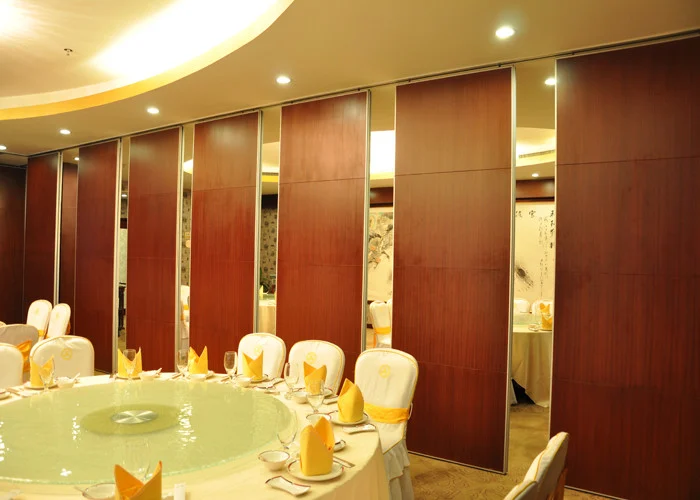
Pass-door requirements and project documentation can be discussed with the specialist supplier as part of this cadence. The important discipline is that every open item has an owner and a status before the next issue.
Frequently Asked Questions
What is an interface assumption confirmation cadence?
It is a repeatable design-phase routine for checking track, stacking and ceiling assumptions before each drawing issue, so unresolved items are flagged rather than carried forward silently.
Who should own the confirmation of track and support assumptions?
Ownership depends on project structure. The cadence requires a named discipline for each assumption and a defined evidence route, so responsibility is visible rather than implied.
When should a hold-point be raised?
A hold-point should be raised when an unconfirmed assumption affects the track route, stacking position or support condition, or when a layout change alters the movement path.
Can movable partitions cross a gap without a floor track?
Panels are top-hung and cross the opening without a floor track, but every proposed movement path requires a continuous connected overhead route and project-specific support review. A gap that is not part of that route should not be assumed to be crossable.
Does finish selection confirm acoustic performance?
No.
How should the cadence be recorded?
Provide the current layout, opening dimensions, ceiling information, intended room use, and relevant project drawings for review. The exact overhead route and support arrangement must be confirmed by the responsible project team from coordinated drawings.
Conclusion and Next Steps
A confirmation cadence turns interface assumptions into visible, owned items. By reviewing track route, stacking position and ceiling support before each drawing issue, design teams reduce the risk of unresolved assumptions reaching tender or site. The framework is deliberately simple so it can be maintained across issues.
The exact overhead route and support arrangement must be confirmed by the responsible project team from coordinated drawings. To discuss pass-door requirements, project documentation or the coordination cadence for a specific layout, contact the EBUNGE team. You can also review the movable wall product range and the project resources for further planning context.