
Quick answer: tender evaluation score reconciliation audit
Review focus: tender evaluation score reconciliation audit.
A movable partition wall tender evaluation score reconciliation audit trail is the record that shows how a review panel moved from divergent individual scores to a single defensible recommendation. It is not a summary of who won. It is the evidence that the panel applied the stated criteria consistently, documented every adjustment, and preserved any unresolved dissent before the award recommendation was signed. For overseas contractors, architects, owners and renovation teams, this record protects the decision when a losing bidder asks why the outcome changed after moderation.
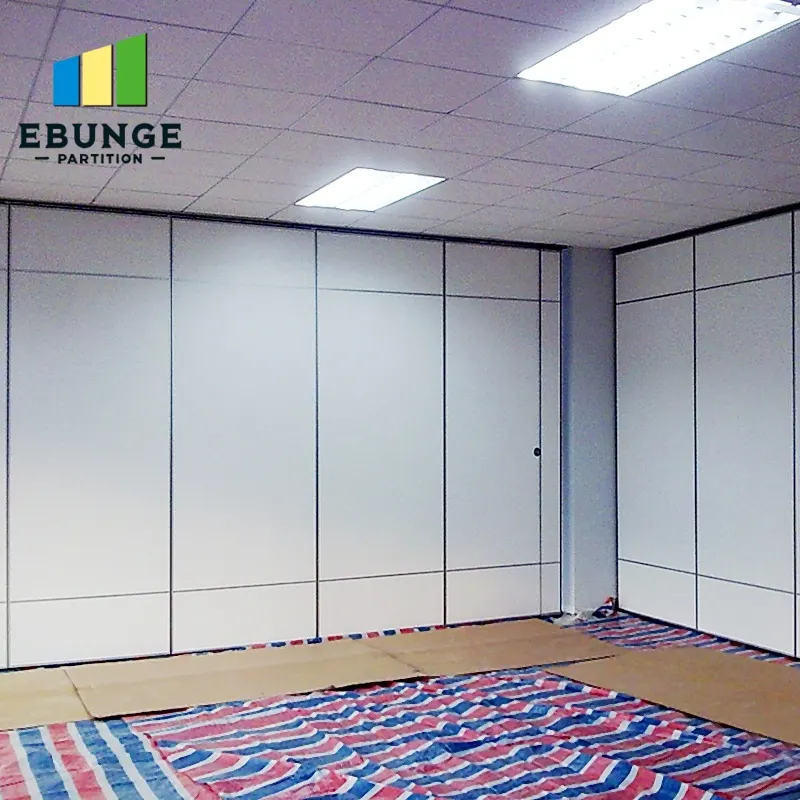
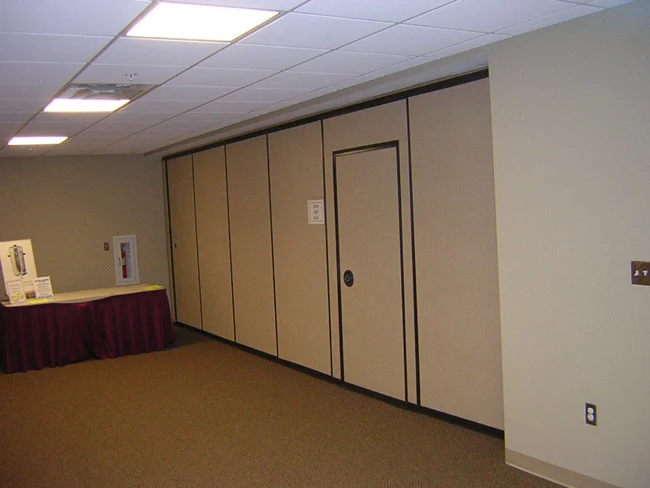
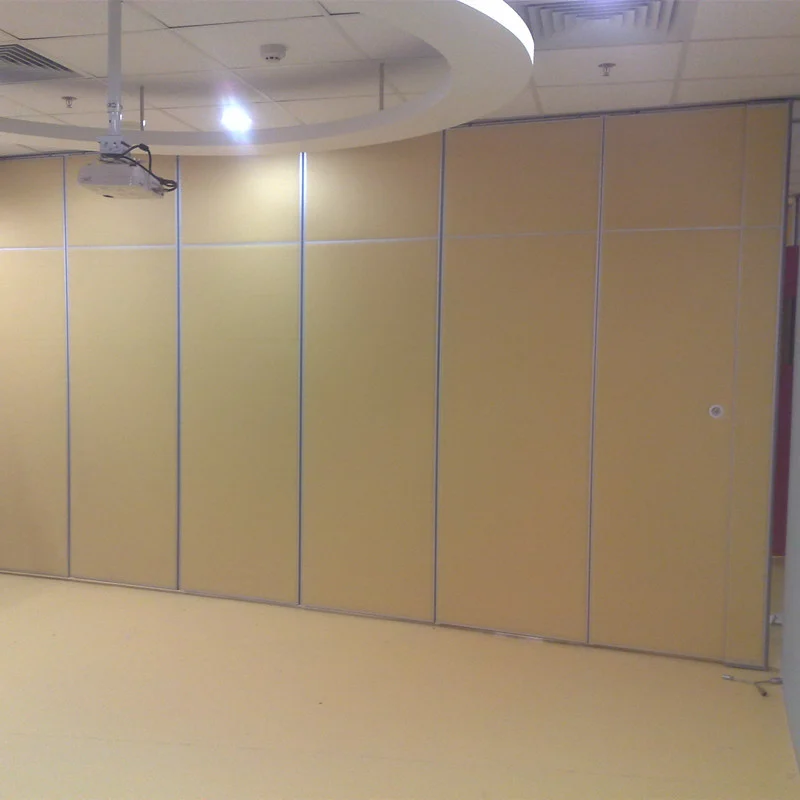
The framework below stays inside confirmed product facts: panels are individually movable, suspended from a top track, cross the opening without a floor track, and park at a planned stacking position. Straight, turning and stacking routes are reviewed from the layout. Finish options include laminate, melamine, fabric, leather, glass and other approved surfaces. Pass-door requirements and project documentation can be discussed. Everything else must be confirmed against the specific project.
Why Divergent Scores Need a Written Reconciliation Record
Project review term: tender evaluation score reconciliation audit.
Evaluators read the same tender differently. One may weight route complexity heavily; another may focus on finish durability questions that the submission leaves open. When scores diverge, the panel usually adjusts them in a moderation meeting. Without a written trail, that adjustment looks arbitrary.
The audit trail converts a private discussion into a reviewable sequence: original score, reason for divergence, evidence consulted, adjustment made, and the final position. It also separates genuine disagreement from simple scoring error. That distinction matters when the recommendation is challenged internally or by a bidder.
What the trail is not
It is not a second evaluation. It does not replace the tender criteria, the scoring matrix or the technical review. It records how those tools were applied when the numbers did not agree.
Step-by-Step Reconciliation Process
Coordination scope: tender evaluation score reconciliation audit.
Use a fixed sequence so every package is handled the same way. The steps below assume the panel has already completed individual scoring.
- Freeze the original scores. Capture each evaluator’s score and written comment before any discussion. Timestamp the record.
- Identify divergence thresholds. Define in advance what counts as a material gap between evaluators, rather than debating it after the fact.
- Classify the cause. Mark each gap as evidence-based, interpretation-based, or error-based.
- Re-examine the evidence. Return to the tender submission, drawings and clarifications. Do not introduce new criteria.
- Record the adjustment. State the revised score, the reason, and which evaluator changed position.
- Preserve unresolved dissent. If agreement is not reached, record both positions and the rationale for proceeding.
- Link to the recommendation. Show how the reconciled scores feed the final ranking.
Keeping the process evidence-bounded
At every step, the panel should ask whether the point under discussion is supported by the submission or by an assumption. If it is an assumption, it belongs in the clarification log, not in the score.
Evidence Note: What the Audit Trail May and May Not Claim
Checklist focus: tender evaluation score reconciliation audit.
Evidence note. The audit trail may record that a bidder’s proposed layout shows a straight, turning or stacking route, and that the panel reviewed it against the project drawings. The exact route, junction arrangement, continuous overhead path and parking position must be confirmed from the coordinated project drawings. The suitability of each route and parking arrangement depends on the approved layout, circulation, ceiling interfaces and operating sequence.
This boundary keeps the reconciliation record honest. Reviewers often want to resolve a score gap by asserting a performance outcome. The safer route is to record the open question and route it to the correct confirmation step.
Documenting Adjustments Without Rewriting History
Review focus: tender evaluation score reconciliation audit.
An adjustment entry should show the before and after position, not just the final number. A reader should be able to see which evaluator moved, what evidence caused the move, and whether the move was upward or downward.
| Entry field | What to record | Common pitfall |
|---|---|---|
| Original score | Each evaluator’s score and comment | Recording only the average |
| Divergence cause | Evidence, interpretation or error | Labelling all gaps as judgement |
| Evidence consulted | Submission page, drawing or clarification reference | Citing memory or verbal advice |
| Adjustment | Revised score and reason | Changing the score without a reason |
| Dissent | Unresolved position and rationale | Deleting minority views |
Handling repeated divergence
If the same criterion causes divergence across several packages, the issue is usually in the criterion wording, not the evaluators. Flag it for the next tender cycle rather than forcing agreement.
Unresolved Dissent and the Award Recommendation
Project review term: tender evaluation score reconciliation audit.
Not every gap closes. When a panel cannot agree, the recommendation should state that the dissent exists, summarise both positions, and explain why the majority view is being put forward. This is stronger than a false consensus.
Unresolved dissent should also identify what would resolve it. Often the answer is a project-specific confirmation: support review, acoustic requirement, dimensional check or pass-door coordination. Recording that dependency prevents the recommendation from implying a certainty the evidence does not support.
When to pause the recommendation
Pause if the divergence concerns a criterion that could change the ranking, or if the evidence needed to resolve it has not yet been requested.
Reviewer Checklist Before Sign-Off
- Original scores captured and timestamped before moderation.
- Divergence threshold applied consistently across all bidders.
- Each adjustment linked to a specific piece of evidence.
- Unresolved dissent recorded with both positions.
- Open technical questions routed to project-specific confirmation.
- Final ranking traceable to the reconciled scores.
This checklist is deliberately narrow. It does not ask the reviewer to judge the product; it asks the reviewer to show how the judgement was reached.
Frequently Asked Questions
What is a movable partition wall tender evaluation score reconciliation audit trail?
It is the written record of how a panel moved from divergent individual evaluator scores to a final recommendation, including the reasons for each adjustment and any unresolved dissent.
Does the audit trail need to include every evaluator’s original score?
Yes. Without the original scores, a reader cannot see what changed or why. The trail should show the before and after position for each affected criterion.
How should unresolved dissent be recorded?
Record both positions, the evidence each relied on, and the reason the recommendation proceeds. If the dissent depends on a project-specific confirmation, state that dependency explicitly.
Can the audit trail confirm acoustic or structural performance?
No. It may record that a requirement was raised and routed for confirmation.
What product facts can the reviewer safely reference?
That panels are individually movable, top-hung, cross the opening without a floor track, and park at a planned stacking position. Straight, turning and stacking routes are reviewed from the layout. Finish options include laminate, melamine, fabric, leather, glass and other approved surfaces.
When should the award recommendation be paused?
Pause when the divergence affects a criterion that could change the ranking, or when the evidence needed to resolve it has not yet been requested from the bidder or the project team.
Conclusion and Next Step
A defensible award recommendation is built on a traceable reconciliation record, not on a tidy final score. By freezing original scores, classifying divergence, documenting adjustments and preserving dissent, procurement reviewers can show that the outcome followed the criteria and the evidence.
Keep every technical claim inside the confirmed product boundary. Where a question concerns support, acoustics, dimensions or pass-door coordination, route it to project-specific confirmation rather than resolving it inside the score. For product context, review the movable wall systems and the planning resources. To discuss pass-door requirements and project documentation, contact the EBUNGE team.