
Quick answer: changeover capacity handover dossier
Review focus: changeover capacity handover dossier.
A movable partition changeover capacity handover dossier is the document that carries construction-stage operating assumptions into steady-state room scheduling. The suitability of each route and parking arrangement depends on the approved layout, circulation, ceiling interfaces and operating sequence. Visible references can support layout discussion but do not verify hidden construction or performance. It records what was assumed, what was confirmed, and what still requires project-specific review.
Why Changeover Assumptions Get Lost Between Stages
Project review term: changeover capacity handover dossier.
During construction, the partition layout is reviewed against drawings, routes, and stacking positions. Once the room opens, the people booking it rarely see those drawings. They see a wall that moves and assume it can move in any pattern the schedule demands.
That gap is the core operations risk. A movable partition changeover capacity handover dossier closes it by making the original planning logic visible to the people who schedule rooms daily.
What the Dossier Should Contain
The dossier is a record, not a sales document. It should describe the configuration as planned and separate confirmed facts from assumptions that still need verification.
Configuration record
Record the panel arrangement, the top track route, the parking or stacking position, and whether the layout includes straight, turning, or stacking movements. These are reviewed from the layout, not inferred from a photograph.
Route and support notes
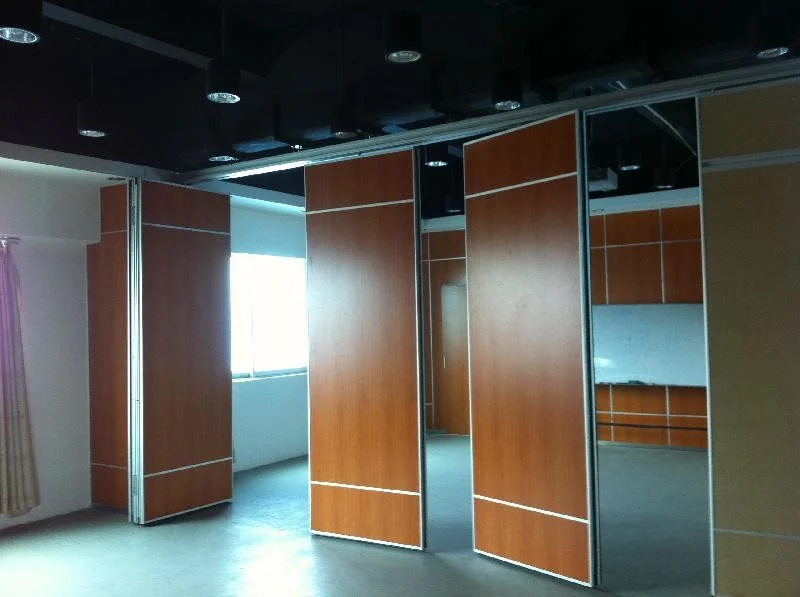
Panels are suspended from a top track and cross the opening without a floor track. Every proposed movement path requires a continuous connected overhead route and project-specific support review. The dossier should state which routes were reviewed and which remain open questions.
Finish and pass-door references
Confirmed finish options include laminate, melamine, fabric, leather, glass, and other approved surfaces. Pass-door requirements can be discussed with the project team.

Separating Confirmed Facts from Inherited Assumptions
Use a simple evidence note in the dossier. For each operating assumption, state whether it is confirmed by project documentation, still under review, or outside the scope of the partition supply.
Evidence note: A visible finish, drawing, or photograph does not by itself confirm acoustic performance, structural capacity, cleaning compatibility, or a application reference outcome. Confirm project-specific support, acoustic, and dimensional requirements before scheduling depends on them.
This boundary protects both the operations team and the project team. It prevents a scheduling decision from being treated as a performance claim.
A Handover Checklist for Operations Planners
The following checklist helps structure the dossier before it is issued to scheduling staff.
- Configuration summary: panel arrangement, top track route, and parking position.
- Movement routes reviewed: straight, turning, and stacking paths as shown on the layout.
- The exact route, junction arrangement, continuous overhead path and parking position must be confirmed from the coordinated project drawings.
- Finish schedule: approved surfaces and any pass-door decisions.
- Open items: assumptions that steady-state scheduling must not treat as confirmed.
- Review contacts: who to ask when a proposed room combination falls outside the documented layout.
How to Transfer Assumptions into Room Scheduling
Once the dossier is assembled, the operations team can translate it into scheduling rules. These rules should be written in plain language and kept with the room booking system.
Define permitted combinations
State which room combinations were reviewed in the layout. If a scheduler proposes a combination that was not reviewed, the dossier should direct them to confirm support, acoustic, and dimensional requirements before committing the room.
Document parking expectations
Parking style is customized to the customer layout and project requirements and may support compact stacking when the coordinated design permits it. The dossier should record the planned stacking position and note that it depends on the coordinated design.

Set a review trigger
Identify what changes would require a new review, such as a new room combination, a changed stacking position, or a revised finish schedule.
Common Coordination Gaps to Avoid
Most handover failures come from treating construction-stage assumptions as steady-state facts. Avoid these gaps:
- Assuming every drawn route was fully reviewed for support and dimensional requirements.
- Letting scheduling staff infer changeover capacity from the number of panels alone.
- Failing to record which pass-door requirements were discussed and which remain open.
- Leaving the dossier with the construction team instead of the operations team.
Each gap can be closed by a short written note in the dossier. The goal is traceability, not volume.
Frequently Asked Questions
What is a movable partition changeover capacity handover dossier?
It is a project record that documents the operating assumptions behind a movable partition configuration, so steady-state room scheduling rests on documented rather than inherited assumptions.
Does the dossier prove acoustic performance?
No. It records what was assumed and what was confirmed.
Which movement routes should be documented?
Straight, turning, and stacking routes are reviewed from the layout. Every proposed movement path requires a continuous connected overhead route and project-specific support review.
Can the dossier include finish and pass-door information?
Yes. Confirmed finish options include laminate, melamine, fabric, leather, glass, and other approved surfaces. Pass-door requirements can be discussed and recorded as part of the project documentation.
Who should own the dossier after handover?
The operations or facility planning team should own it, because they translate the recorded assumptions into room scheduling rules and review triggers.
What should happen when a new room combination is requested?
The dossier should direct the scheduler to confirm project-specific support, acoustic, and dimensional requirements before the combination is treated as available.
Conclusion and Next Steps
A movable partition changeover capacity handover dossier is a practical tool for facility operations planning. It simply makes the construction-stage assumptions visible to the people who schedule rooms every day.
Start by reviewing the approved layout, the top track route, and the parking position. Record what was confirmed and what remains open. Then give the dossier to the operations team and set a review trigger for future changes.
To discuss project documentation, pass-door requirements, or configuration review for your layout, contact the EBUNGE team. You can also review the movable wall product range and browse additional planning resources before assembling your dossier.