
Quick answer: tender evaluation score reconciliation
Review focus: tender evaluation score reconciliation.
Movable partition wall tender evaluation score reconciliation is the step where individual evaluator scores become one defensible recommendation. It is not a vote and not an average. It is a documented process that shows how each score was reviewed, where evidence was thin, and why the final position was reached. For overseas contractors, architects, owners and renovation teams, this discipline protects the award decision long after the tender closes.
This framework assumes evaluators have already scored against the published criteria. It focuses on what happens next: reconciling differences, recording adjustments, capturing dissent, and confirming that every technical claim in the recommendation is supported by maintained product facts or project-specific review.
Why Divergent Scores Are Expected, Not Exceptional
Project review term: tender evaluation score reconciliation.
Evaluators read the same submission through different lenses. A contractor may weigh installation coordination and route feasibility. An architect may weigh finish consistency and interface with surrounding construction. An owner may weigh long-term operational flexibility. None of these perspectives is wrong, but they produce different scores.
The reconciliation stage should not force artificial agreement. Its purpose is to expose the reason for each difference and test whether that reason rests on evidence. Where evidence is missing, the correct outcome is a stated confirmation boundary, not a guessed score.
Separate evidence gaps from judgement differences
Some score gaps come from missing documents. Others come from evaluators weighting the same evidence differently. These require different responses. A missing drawing is a clarification request. The exact overhead route and support arrangement must be confirmed by the responsible project team from coordinated drawings.
A Numbered Reconciliation Process
Coordination scope: tender evaluation score reconciliation.
- Freeze the score sheets. Confirm all evaluators scored against the same criteria version before any discussion begins.
- Map the spread. Identify criteria where the highest and lowest scores differ, and note the size of each gap.
- Ask for the reason, not the score. Each evaluator states what evidence drove their number.
- Classify the gap. Label it as missing evidence, interpretation difference, weighting difference, or error.
- Resolve or record. Correct errors, request missing evidence, or record the difference with rationale.
- Re-score only affected criteria. Avoid reopening the whole evaluation unless the criteria themselves were flawed.
- Document the final position. State the reconciled score, the adjustment made, and who agreed or dissented.
This sequence keeps the discussion anchored to evidence. It also prevents the common failure where the loudest voice in the room becomes the reconciliation method.
Documenting Score Adjustments Without Rewriting History
Checklist focus: tender evaluation score reconciliation.
An adjustment is not a correction of the past. It is a recorded change with a stated cause. The audit trail should show the original score, the adjusted score, the reason, and the date. Anyone reading the file later should be able to reconstruct the decision without asking the original evaluators.
What a defensible adjustment note contains
- The criterion and the original evaluator scores.
- The evidence reviewed during reconciliation.
- The specific reason the score changed or stayed.
- Any confirmation boundary that remains open.
- The name or role of the person authorising the adjustment.
Where a technical point cannot be resolved from the submission, the note should say so plainly. For example, if a bidder’s proposed movement route is unclear, the note should record that the route requires project-specific drawing review rather than assuming it works.
Capturing Dissent as a Controlled Record
Review focus: tender evaluation score reconciliation.
Dissent is not obstruction. It is evidence that the evaluation was genuinely tested. A procurement reviewer should make it easy for an evaluator to record disagreement without blocking the process.
A dissent note should identify the criterion, the evaluator’s position, the evidence they relied on, and what would change their view. This turns disagreement into a traceable input rather than an unresolved objection. It also protects the evaluator and the organisation if the award is later questioned.
Distinguish dissent from unresolved evidence gaps
Dissent is a reasoned difference of judgement. An evidence gap is a missing fact. The suitability of each route and parking arrangement depends on the approved layout, circulation, ceiling interfaces and operating sequence. A gap may be closed by a clarification. A dissent may remain on file even after the recommendation is approved.
Testing Technical Claims Before They Enter the Recommendation
Project review term: tender evaluation score reconciliation.
Movable partition submissions often contain statements that sound technical but lack project-specific support. The reconciliation stage is the last practical point to catch these before they become part of the award rationale.
Evidence note: A finish sample, a photograph or a layout sketch does not by itself confirm acoustic performance, structural capacity, cleaning compatibility or a application reference. Those points require matching project evidence or a stated confirmation boundary.
Where acoustic terms appear, treat them conceptually. Project-specific acoustic requirements should be confirmed against the actual configuration and surrounding construction.
Product facts that can be relied on
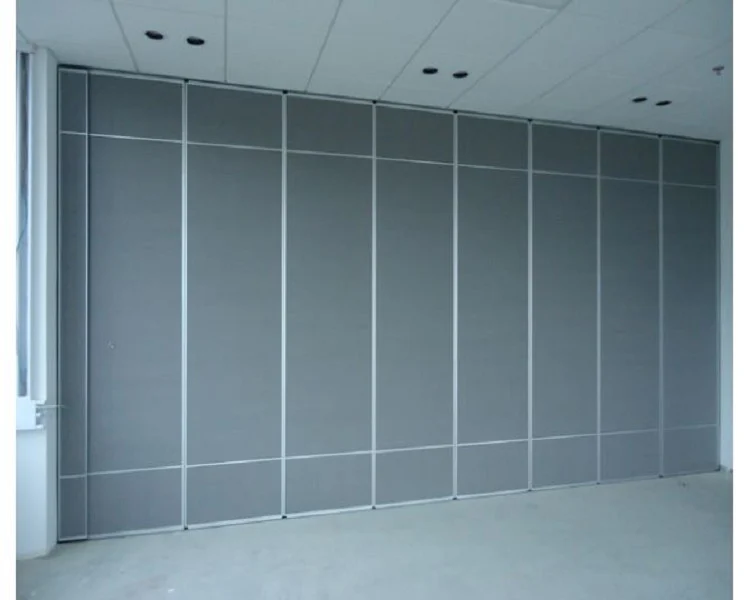
EBUNGE movable partition panels are individually movable, suspended from a top track, cross the opening without a floor track, and park at a planned stacking position. Straight, turning and stacking routes are reviewed from the layout. Confirmed finish options include laminate, melamine, fabric, leather, glass and other approved surfaces. Pass-door requirements and project documentation can be discussed. The exact route, junction arrangement, continuous overhead path and parking position must be confirmed from the coordinated project drawings.

Preparing the Award Recommendation File
The recommendation should read as a single coherent argument, not a pile of score sheets. It should state the criteria, the reconciled scores, the adjustments made, any dissent, and the confirmation boundaries that remain open.
| File element | Purpose | Common weakness |
|---|---|---|
| Criteria version record | Shows all evaluators scored the same thing | Undated or superseded criteria |
| Score reconciliation log | Explains every change from original scores | Adjustments without stated reasons |
| Dissent register | Preserves reasoned disagreement | Dissent recorded as a complaint |
| Confirmation boundary list | Flags points needing project review | Open points hidden in technical text |

Before the file is signed, check that every technical statement traces back to a maintained product fact, a submitted document, or an explicit project-specific confirmation requirement. If a statement cannot be traced, remove it or mark it as unconfirmed.
Frequently Asked Questions
What is movable partition wall tender evaluation score reconciliation?
It is the structured process of reviewing divergent evaluator scores, resolving or recording differences, and producing one documented recommendation with a clear rationale and audit trail.
Should reconciliation aim for unanimous scores?
No. Unanimity is not the goal. The goal is a defensible position where every adjustment and every remaining difference is explained and traceable.
How should missing technical evidence be handled?
Record it as a confirmation boundary. Do not fill the gap with an assumption. State what must be confirmed against project-specific drawings or documentation before the point can be relied on.
Can an evaluator dissent after the recommendation is drafted?
Yes, and the dissent should be logged with its criterion, reasoning and evidence. A recorded dissent does not invalidate the recommendation; it strengthens the record of how the decision was tested.
Where do acoustic ratings fit into score reconciliation?
Any acoustic requirement should be confirmed against the application reference configuration rather than inferred from a single figure.
What makes an award recommendation defensible?
A consistent criteria version, a reconciliation log with reasons, a separate dissent register, and a visible list of confirmation boundaries. Together these show how the decision was reached and what remains open.
Conclusion and Next Step
Score reconciliation is where a movable partition wall tender either becomes a traceable decision or an unresolved argument. By freezing criteria, mapping the spread, documenting adjustments, capturing dissent and listing confirmation boundaries, procurement reviewers can recommend an award with confidence about the process, even where technical points still require project-specific review.
If your team is preparing a movable partition wall package and needs to align tender documentation with maintained product facts, review the movable wall systems and the supporting project resources, then contact EBUNGE to discuss pass-door requirements, layout routes and project documentation before your evaluation closes.