
Quick answer: track fixing crew skill mix
Review focus: track fixing crew skill mix.
Movable partition track fixing crew skill mix balancing is a planning discipline, not a single trade skill. On multi-zone sites, the risk is rarely one weak installer; it is an unbalanced crew where one specialist carries every critical track-fixing decision while others wait or improvise. This framework helps overseas contractors distribute competence and rotate tasks across zones while keeping every recommendation tied to maintained product facts, visible evidence limits and project-specific drawing review.
Start With the Confirmed Product and Route Facts
Project review term: track fixing crew skill mix.
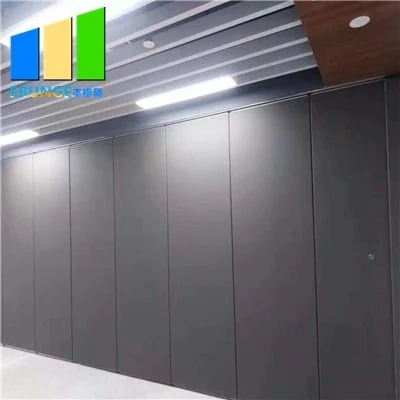
EBUNGE movable partition panels are individually movable, suspended from a top track, cross the opening without a floor track, and park at a planned stacking position. Straight, turning and stacking routes are reviewed from the layout. That means track fixing is not a standalone activity; it sits inside a route logic that must be read from the drawings before any crew is assigned.
Confirm the overhead route is continuous and supported for the project. Do not infer support points, loads or fixing details from a photograph, a finish sample or a generic drawing. Those items require project-specific review. The crew plan should follow the confirmed route, not the other way around.
Define Zone Types Before Assigning People
Coordination scope: track fixing crew skill mix.
The suitability of each route and parking arrangement depends on the approved layout, circulation, ceiling interfaces and operating sequence. The exact route, junction arrangement, continuous overhead path and parking position must be confirmed from the coordinated project drawings. Classify zones first, then decide how much supervision each zone needs.
Zone classification checklist
- Straight route with a clear overhead line and a defined parking position.
- Stacking zone where panels park and where adjacent trades may also work.
- Interface zone where the partition meets other construction or finishes.
- Restricted-access zone where sequencing with other trades is tight.
This classification is a planning tool, not a performance claim. It helps you decide where a specialist should start and where a developing installer can safely build experience under review.
Balance the Crew Skill Mix Across Zones
Checklist focus: track fixing crew skill mix.

A balanced mix usually combines route-reading ability, fixing coordination and finish awareness. The goal is not to make every person identical; it is to avoid a single point of failure. If one person holds all route knowledge, any absence or reassignment stalls multiple zones.
Skill-mix balancing principles
- Pair at least one route-confident installer with each active zone.
- Keep a floating coordinator who can move between zones as questions arise.
- Rotate task ownership so knowledge spreads rather than concentrates.
- Match finish-sensitive work to installers briefed on the approved surface.
- Reserve the most complex turning or stacking work for reviewed drawings.
Confirmed finish options include laminate, melamine, fabric, leather, glass and other approved surfaces. Keep finish decisions separate from track-fixing decisions in your crew briefings.
Rotate Tasks Without Losing Quality or Pace
Review focus: track fixing crew skill mix.
Task rotation fails when it is treated as a schedule exercise. It works when each rotation has a handover: what was confirmed, what remains open, and which drawing governs the next step. Rotate people between zones at natural boundaries, such as after a route section is reviewed, not in the middle of an unresolved question.
Pace consistency comes from predictable handovers, not from rushing. If a zone is waiting on a project-specific confirmation, move the crew to a zone where the route is already reviewed.
Use a Compact Zone-to-Crew Planning Table
The table below is a planning aid. Visible references can support layout discussion but do not verify hidden construction or performance.
| Zone type | Primary coordination need | Rotation trigger |
|---|---|---|
| Straight route | Overhead line and parking position | Route section reviewed |
| Turning route | Direction change per layout | Turn geometry confirmed |
| Stacking zone | Parking position and access | Stacking area cleared |
| Interface zone | Sequencing with other trades | Interface agreed |
Keep Evidence Boundaries Visible to the Crew
Every crew briefing should separate confirmed facts from items awaiting project-specific confirmation. This prevents installers from treating a drawing assumption as an approved detail. It also protects the project from unsupported claims about acoustics, structure or durability.
Evidence note: STC and Rw are rating concepts used to describe acoustic performance. They are not a direct count of decibels, and no rating should be promised without project-specific confirmation. Seals and acoustic concepts may be discussed generically, but panel cores, seal materials and test values must come from matching evidence.
Pass-door requirements and project documentation can be discussed with the EBUNGE team. Use the movable wall product overview and the project resources to prepare questions before the crew is mobilised.
Coordinate Across Trades and Zones
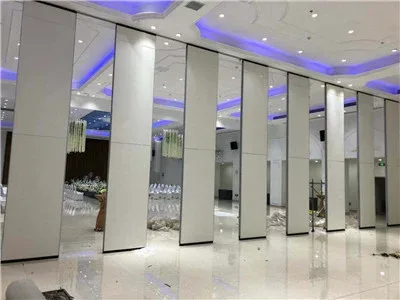
Track fixing rarely happens in isolation. Other trades may need access to the same overhead area or the same floor zone. A zone-to-crew plan should include a simple coordination rhythm: who checks the route, who confirms the parking position, and who signs off that a zone is ready for the next rotation.
Do not infer support, acoustic or dimensional requirements from a generic example. Named venues and room types are examples only; movable partitions can be considered wherever flexible spatial division, combination or reconfiguration is required. Each project still needs its own review.
Frequently Asked Questions
What is movable partition track fixing crew skill mix balancing?
It is the planning practice of distributing route-reading, fixing coordination and finish awareness across a crew so that no single specialist becomes a bottleneck across multiple zones.
Do movable partitions need a floor track?
EBUNGE movable partition panels are top-hung and move without a continuous floor running track or floor hardware along the partition line. The overhead route must still be continuous and supported for the project.
How should tasks be rotated between zones?
Rotate at natural boundaries, such as after a route section is reviewed or a stacking area is cleared. Each rotation should include a handover of confirmed items and open questions.
Can one specialist cover every zone?
Relying on one specialist creates a single point of failure. A balanced mix with a floating coordinator keeps quality and pace more consistent when questions arise.
What finish options can be discussed?
Confirmed finish options include laminate, melamine, fabric, leather, glass and other approved surfaces.
What must be confirmed before installation planning?
Confirm project-specific support, acoustic and dimensional requirements, the continuous overhead route, the parking position and any pass-door requirements. Use the drawings as the governing reference.
Conclusion and Next Step
A balanced crew plan starts with confirmed route facts, clear zone classification and disciplined task rotation. Keep evidence boundaries visible, avoid unsupported performance claims, and review every project-specific requirement before work begins. To discuss your layout, pass-door needs and documentation, contact the EBUNGE team.