
Quick answer: tender evaluation committee quorum
Review focus: tender evaluation committee quorum.
The movable partition wall tender evaluation committee quorum voting record is the document that protects an award recommendation from later challenge. When a committee recommends a supplier for a top-hung, floor-track-free partition package, the recommendation must rest on a contemporaneous record of who attended, what was scored, who dissented, and why any score changed after discussion. Reconstructed memory is not a defence. This framework helps procurement reviewers build that record before the award recommendation is signed.
Why Quorum and Voting Records Matter for Partition Packages
Project review term: tender evaluation committee quorum.
Movable partition packages combine layout-dependent routing, finish selection, and project-specific support review. A committee that evaluates these packages without a formal quorum record creates an audit gap. The gap is not about the product; it is about the decision process. If a bidder challenges the outcome, the first question is often whether the committee was properly constituted and whether every voting member’s position was captured at the time.
A defensible record shows the committee reached its recommendation through a defined process. The suitability of each route and parking arrangement depends on the approved layout, circulation, ceiling interfaces and operating sequence. It needs to show that the evaluation followed the stated criteria and that any deviation was documented.
Pre-Meeting Setup: Defining Quorum and Voting Rules
Coordination scope: tender evaluation committee quorum.
Before the first scoring session, the committee should confirm its own operating rules. These rules are project-specific and should be agreed with the procurement authority, not assumed from a generic template.
Quorum threshold
Record the minimum number of voting members required for the committee to transact business. State whether alternates count toward quorum and whether abstentions reduce the effective voting base.
Voting method
Decide whether decisions are by simple majority, consensus, or weighted score. Record how ties are resolved. If a chair has a casting vote, state it explicitly.
Conflict declarations
Each member should declare any relationship with a bidder before scoring begins. The declaration belongs in the record, not in a separate file.
Capturing Individual Voting Positions and Dissent
Checklist focus: tender evaluation committee quorum.
A summary that says “the committee agreed” is not a voting record. The record should show each voting member’s position on the recommendation, even when the outcome is unanimous. Where a member dissents, the record should capture the basis of that dissent in the member’s own words or a fair summary.
Dissent is not a defect. An undocumented dissent is. If a member abstains, the record should state whether the abstention was due to a declared conflict, insufficient information, or another stated reason. The committee should also record whether the abstention affected the quorum calculation.
Documenting Score Adjustments After Discussion
Review focus: tender evaluation committee quorum.
Score adjustments are common after committee discussion. The risk is that adjustments are made without a trace. A defensible record shows the original score, the adjusted score, the reason for the change, and the member or members who requested it.
Original and adjusted scores
Keep both figures visible. Do not overwrite the original score. If the committee uses a scoring sheet, retain the marked-up version or a clean summary that shows the change.
Reason for adjustment
State whether the adjustment followed a clarification from the bidder, a correction of a factual error, or a committee consensus on weighting. Avoid vague reasons such as “committee discretion” without further detail.
Timing
Record when the adjustment occurred relative to the close of scoring. Adjustments made after the committee has formally closed scoring should be treated as a separate decision with its own record.
Evidence Boundaries for Partition-Specific Criteria
Project review term: tender evaluation committee quorum.
Partition evaluation often touches on acoustic separation, finish durability, and movement routes. These are project-specific and should not be inferred from a generic product description.
The committee should record what evidence the bidder provided and what remains subject to project-specific confirmation.
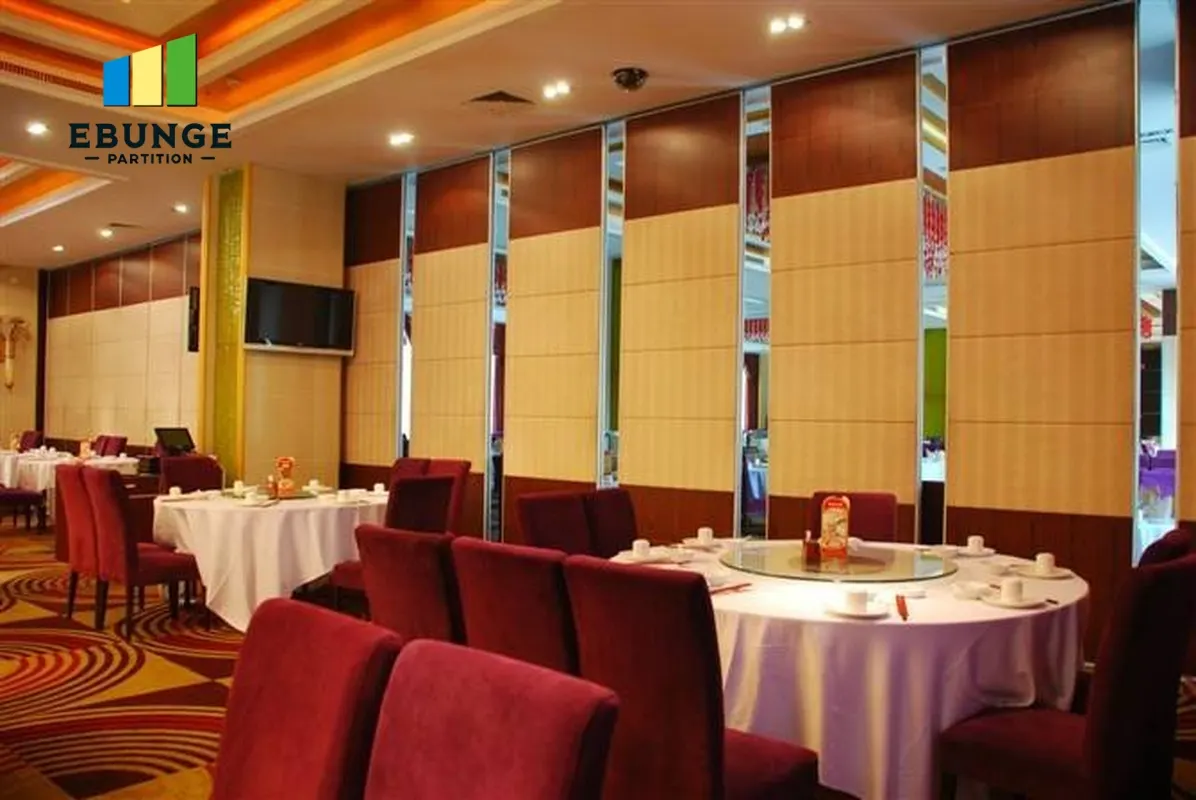
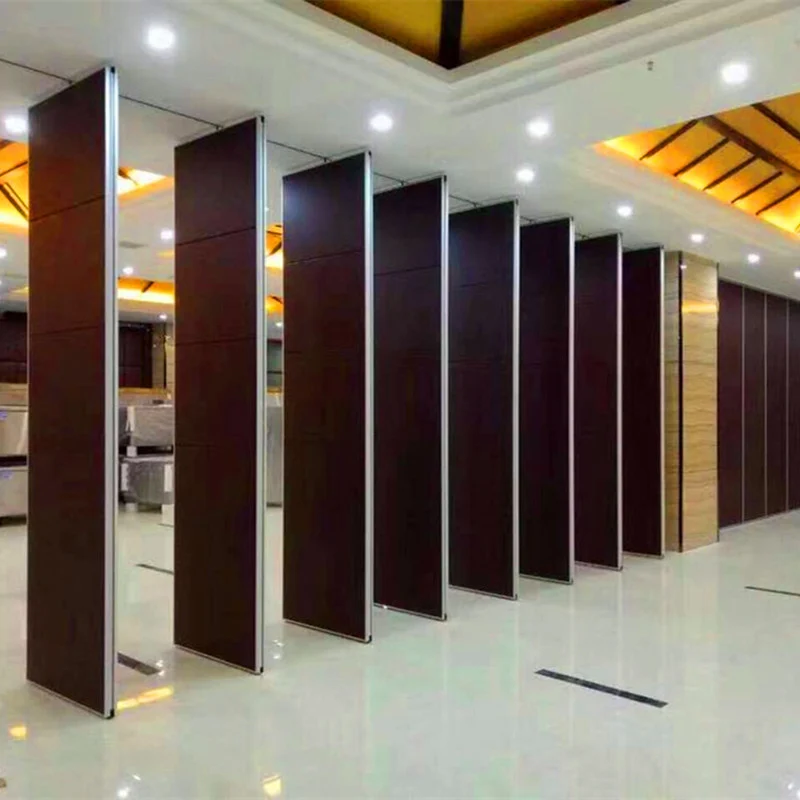
For movement, the confirmed product facts are that panels are individually movable, suspended from a top track, cross the opening without a floor track, and park at a planned stacking position. Straight, turning, and stacking routes are reviewed from the layout. The committee should not assume a route works until the layout has been reviewed.
Decision Checklist for the Award Recommendation File
- Quorum threshold and attendance record signed by the chair.
- Conflict declarations for every voting member.
- Individual voting positions, including dissent and abstentions.
- Original and adjusted scores with reasons for each change.
- Bidder clarifications and committee responses.
- Project-specific confirmation items still open at the time of recommendation.
- Date, time, and location of each scoring session.
Common Documentation Gaps and How to Close Them
One common gap is a voting record that lists only the final recommendation. Another is a score adjustment noted in a separate email but not in the committee file. A third is an abstention that is recorded without a reason, leaving the quorum calculation unclear.
Close these gaps by treating the voting record as a single controlled document. If a correction is needed after the meeting, use a dated addendum rather than editing the original. The addendum should state what changed and why.
Comparison Table: Weak Versus Defensible Voting Records
| Record element | Weak practice | Defensible practice |
|---|---|---|
| Attendance and quorum | Names listed without quorum threshold | Quorum threshold stated and attendance signed by the chair |
| Voting positions | Only the final recommendation recorded | Each voting member’s position captured, including dissent |
| Abstentions | Abstention noted without reason | Reason stated and effect on quorum recorded |
| Score adjustments | Original score overwritten | Original and adjusted scores both visible with reasons |
| Partition criteria | Acoustic and route claims accepted as generic | Bidder evidence recorded; open items flagged for project-specific confirmation |
FAQ: Quorum and Voting Record Questions
What should a movable partition wall tender evaluation committee quorum voting record contain?
It should contain the quorum threshold, attendance, conflict declarations, individual voting positions, abstentions with reasons, original and adjusted scores, and the basis for any score change.
How should abstentions be treated in the quorum calculation?
Treat abstentions according to the committee’s own operating rules. Record whether the abstention counts toward quorum and whether it reduces the voting base.
Can score adjustments be made after the committee closes scoring?
They can, but they should be documented as a separate decision with a dated addendum. The original scores should remain visible.
What partition-specific evidence should the committee record?
Record the bidder’s submitted evidence for acoustic ratings, finish options, and movement routes. Note what remains subject to project-specific confirmation, including support and dimensional requirements.
How should the committee handle a bidder challenge to the voting record?
Respond with the contemporaneous record, including attendance, voting positions, and score adjustments. If the record is incomplete, acknowledge the gap and state what can be confirmed.
Where can reviewers find more guidance on partition procurement?
Review the movable wall product context and the resources page for planning considerations. For project-specific questions, contact the team.
Conclusion: Build the Record Before the Recommendation
The award recommendation is only as strong as the record behind it. For movable partition wall packages, that record should show quorum, individual voting positions, abstentions, and any score adjustments with reasons. It should also separate confirmed product facts from project-specific items that still require confirmation, such as support, acoustic, and dimensional requirements.
Procurement reviewers who build this record before the recommendation reduce the risk of audit findings and bidder challenges. The goal is not to eliminate dissent but to document it clearly.
To discuss project documentation or pass-door requirements for a movable partition package, contact EBUNGE.