
Quick answer: drawing traceability matrix
Review focus: drawing traceability matrix.
An architect coordination assumption drawing traceability matrix movable partition teams can actually maintain is a simple register that links each design assumption to the issued drawing that carries it. Movable wall panels are individually movable, suspended from a top track, cross the opening without a floor track, and park at a planned stacking position. Each of those behaviours depends on decisions made early and then carried forward. When an assumption changes but the drawing does not, the gap usually appears at tender or on site. This article sets out a design-phase method for keeping assumptions and sheets aligned.
Why Assumptions Drift Away From Issued Drawings
Project review term: drawing traceability matrix.
Movable partition design is unusually exposed to silent change. A track route may be adjusted for a ceiling zone, a stacking position may move to protect a door swing, or a finish may be swapped after a client meeting. Any of these can invalidate a detail that was correct when it was issued.
The problem is rarely a missing drawing. It is a drawing that still looks authoritative while reflecting an earlier assumption. A traceability matrix does not replace drawings; it records which assumption each sheet is currently expressing, and who confirmed it.
What the Matrix Should Track
Coordination scope: drawing traceability matrix.
Keep the register narrow enough to maintain. Broad categories are more useful than long technical fields, because the goal is visibility rather than engineering calculation.
- Track route: straight, turning or other reviewed path, and the sheet showing it.
- Stack position: planned parking location and the drawing that reserves it.
- Ceiling interface: the zone the top track occupies and the ceiling drawing that reflects it.
- Opening and pass-door intent: whether a pass-door requirement is being discussed and where it appears.
- Finish direction: laminate, melamine, fabric, leather, glass or another approved surface, with the sheet that shows it.
- Status: assumed, confirmed by the project team, superseded, or still open.
Each row should name one assumption, one responsible party, one drawing number and one revision. If a row cannot name a drawing, the assumption is unreflected and needs attention before tender.
A Six-Step Coordination Workflow
Checklist focus: drawing traceability matrix.
The sequence below is deliberately simple. It works for a single room or a multi-room flexible-space package, and it can be run alongside normal drawing issue cycles.
- List every movable partition assumption currently held by the design team.
- Assign each assumption to the drawing that should carry it.
- Mark each row as reflected, unreflected or superseded.
- Issue the unreflected and superseded rows to the relevant discipline for resolution.
- Update the matrix whenever a drawing revision is issued.
- Freeze the matrix at tender and record open items separately.
Step three is the one teams skip. Without an explicit status, a matrix becomes a description of intentions rather than a check on drawings.
Track, Stack and Ceiling Assumptions in Detail
Review focus: drawing traceability matrix.
Track route and support review
Straight, turning and stacking routes are reviewed from the layout. The exact route, junction arrangement, continuous overhead path and parking position must be confirmed from the coordinated project drawings. The matrix should show which sheet expresses the current route and whether that route has been reviewed against the ceiling zone it crosses.
Stacking position and adjacent elements
Parking style is customized to the layout and project requirements, and may support compact stacking when the coordinated design permits it. The matrix should record the reserved stacking footprint and any adjacent element, such as a door, glazing or service outlet, that the position depends on.
Ceiling interface and finish direction
The top track occupies ceiling space, so the ceiling drawing and the partition drawing must agree. Confirm finish availability and dimensional implications with the supplier for the specific project.
Evidence Note: What the Matrix Can and Cannot Prove
Project review term: drawing traceability matrix.
This matrix is a coordination record, not a performance document. It shows which assumption a drawing reflects; it does not establish acoustic, fire, structural or dimensional performance. STC and Rw are rating systems used to describe sound reduction in project documentation, and they should be read as part of a project-specific acoustic strategy rather than as a simple count of decibels. Any acoustic, support or dimensional requirement must be confirmed for the application reference.
Treat the matrix as a question generator. It tells you where to ask, not what the answer will be.
Reviewing the Matrix Before Tender
Run a short review with the disciplines that own the affected sheets. The aim is to confirm that every assumption has a home and that no superseded assumption is still being drawn.
| Check | Question to ask | Action if unresolved |
|---|---|---|
| Track route | Does the current sheet show the reviewed route? | Reissue or annotate before tender |
| Stack position | Is the reserved footprint still clear? | Confirm with layout owner |
| Ceiling interface | Do ceiling and partition sheets agree? | Coordinate both disciplines |
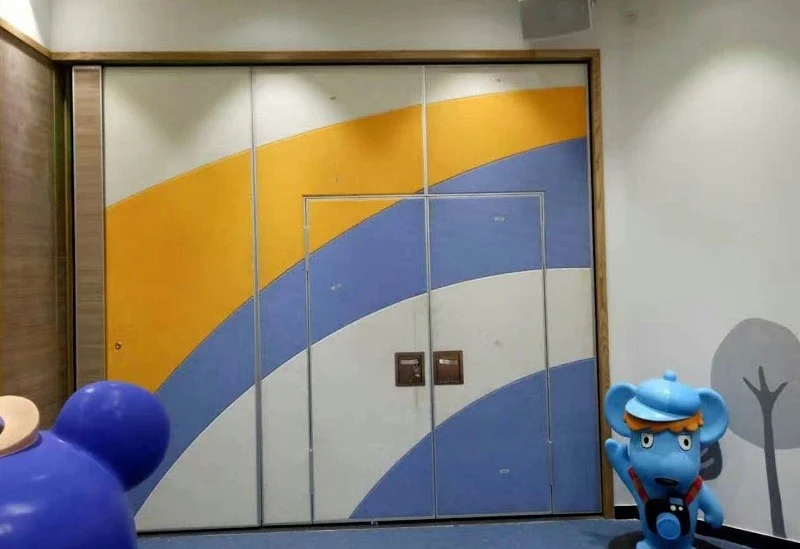
| Pass-door intent | Is the requirement documented? | Discuss with supplier |
| Finish direction | Is the finish still current? | Confirm availability and dimensions |
Record the outcome of each review in the matrix rather than in meeting notes alone. A register that lives beside the drawing set is far more likely to be updated than one stored elsewhere.
Common Failure Patterns to Watch
Three patterns recur. First, a matrix that tracks too many fields becomes unmaintainable and is abandoned. Second, a matrix that tracks assumptions but not drawing revisions cannot detect superseded information. The suitability of each route and parking arrangement depends on the approved layout, circulation, ceiling interfaces and operating sequence.
Keep the register short, tie every row to a revision, and review it with the people who own the adjacent drawings. For broader planning context, see the EBUNGE resources and the movable partition wall product page.
FAQ
Who should own the traceability matrix?
Usually the architect or lead designer, because the matrix spans multiple disciplines. The specialist supplier contributes track, stack and interface information, but the register should sit with the party controlling drawing issue.
How often should the matrix be updated?
At every drawing revision that touches the partition, ceiling or adjacent layout. Updating only at milestones allows superseded assumptions to survive several issues.
Can the matrix confirm acoustic performance?
No. It records coordination status only. Acoustic requirements must be confirmed for the specific project through the appropriate project documentation and review process.
What if a track route crosses a ceiling transition?
Record it as an open item and request project-specific support review. Do not assume the route is acceptable because it appears on a layout drawing.
Does a pass-door requirement change the matrix?
It adds a row. Pass-door requirements and project documentation can be discussed with the supplier, and the outcome should be reflected in the relevant sheet.
Is the matrix useful on renovation projects?
Yes.
Conclusion
A traceability matrix keeps movable partition assumptions visible from concept to tender. It does not replace drawings, calculations or project-specific confirmation, but it exposes the gap between what the team believes and what the issued sheets actually show. Start with track, stack and ceiling rows, tie each to a drawing revision, and review before tender.
To discuss pass-door requirements, finish direction or project documentation for your layout, contact EBUNGE and share your current drawing set.