
Quick answer: assumption log handover
Review focus: assumption log handover.
An architect coordination assumption log handover movable partition process is the discipline of writing down what the design team believes about the partition before anyone prices, fabricates or installs it. Movable walls are top-hung: panels are individually movable, suspended from a top track, cross the opening without a floor track, and park at a planned stacking position. That single fact drives most coordination risk, because the overhead route, the parking zone and the surrounding structure all sit outside the wall supplier’s direct control.
Why Assumptions Become the Main Coordination Risk
Project review term: assumption log handover.
On a fixed wall, the drawing is the product. On a movable wall, the drawing is a proposal about movement. Straight, turning and stacking routes must be reviewed from the layout, and every proposed path needs a continuous connected overhead route with project-specific support review. When that review is informal, each discipline carries a different mental model into construction.
An assumption log does not replace engineering. It exposes the questions that engineering must answer, and it gives the owner, architect, contractor and supplier one shared list to close out before sign-off.
The Assumption Log: Structure and Ownership
Coordination scope: assumption log handover.
Treat the log as a live register, not a meeting note. Each line should name the assumption, the discipline that owns it, the drawing or document that will confirm it, and the date it must close. Keep it short enough to be read at every coordination meeting.
Core fields to maintain
- Assumption ID and date — so revisions can be traced.
- Statement — written as a testable sentence, not a preference.
- The suitability of each route and parking arrangement depends on the approved layout, circulation, ceiling interfaces and operating sequence.
- Evidence required — drawing, schedule, survey or written confirmation.
- Status — open, confirmed, changed or rejected.
- Linked drawing reference — the sheet that will carry the final decision.
Do not record performance conclusions in the log. Record the question and the evidence that will answer it. If a statement cannot be tied to a drawing or a written confirmation, it is not ready to close.
Design-Phase Handover Sequence
Checklist focus: assumption log handover.
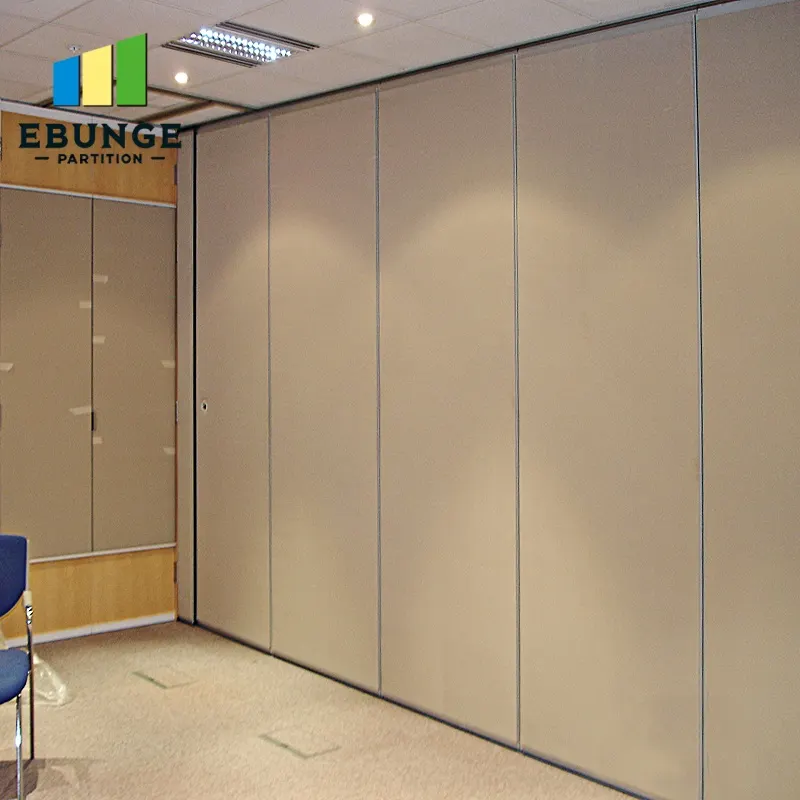
- Freeze the room-use brief. Confirm which spaces must combine, divide or reconfigure, and how often the layout is expected to change.
- Draw the movement routes. Mark straight, turning and stacking routes on the plan, including the parking position.
- Review the overhead route.
- Confirm finish direction. Record the intended finish family — laminate, melamine, fabric, leather, glass or another approved surface — and note that final selection requires project confirmation.
- Identify pass-door needs. Note where a pass-door requirement exists so it can be discussed with the supplier.
- Issue the assumption log with the drawing set. The log travels with the drawings, not separately.
Steps two and three are where most late changes originate.
Discipline Sign-Off Register
Review focus: assumption log handover.
A sign-off register records who has reviewed which assumption and at what revision. It is not a performance guarantee; it is a record that the coordination question was seen by the right discipline.
| Discipline | Typical review scope | Evidence to attach |
|---|---|---|
| Architect | Layout, routes, parking position, finish direction | Marked-up plan and finish schedule |
| Structural | Overhead route and support questions | Written review note or drawing comment |
| MEP | Services conflicts along the route and parking zone | Coordinated services drawing |
| Contractor | Buildability, sequence and interface with adjacent works | Method statement or RFI response |
| Supplier | Product configuration, finish options, pass-door discussion | Written confirmation against the issued layout |
| Owner | Operational intent and acceptance of confirmed assumptions | Signed acceptance of the closed log |

Keep the register at the same revision as the drawing set. A sign-off against a superseded layout is worse than no sign-off, because it creates false confidence.
Evidence Boundaries: What the Log Must Not Claim
Project review term: assumption log handover.
Visible references can support layout discussion but do not verify hidden construction or performance. Where acoustic separation matters, the requirement must be confirmed for the specific project, assembly and test context.
Evidence note: a visible finish, a layout sketch or a supplier catalogue image does not demonstrate acoustic performance, structural capacity, cleaning compatibility or a application reference. Those statements require matching project-specific evidence.
The same boundary applies to support, dimensions and movement. The exact route, junction arrangement, continuous overhead path and parking position must be confirmed from the coordinated project drawings. Where the design intent is unclear, keep the assumption open rather than closing it with a convenient answer.
Running the Log Through Construction
At each coordination meeting, review only the open items and any item affected by a design change. Close items with evidence, not with silence. When a change affects the movement route, the parking position or the finish direction, reopen the linked assumptions and reissue the register.
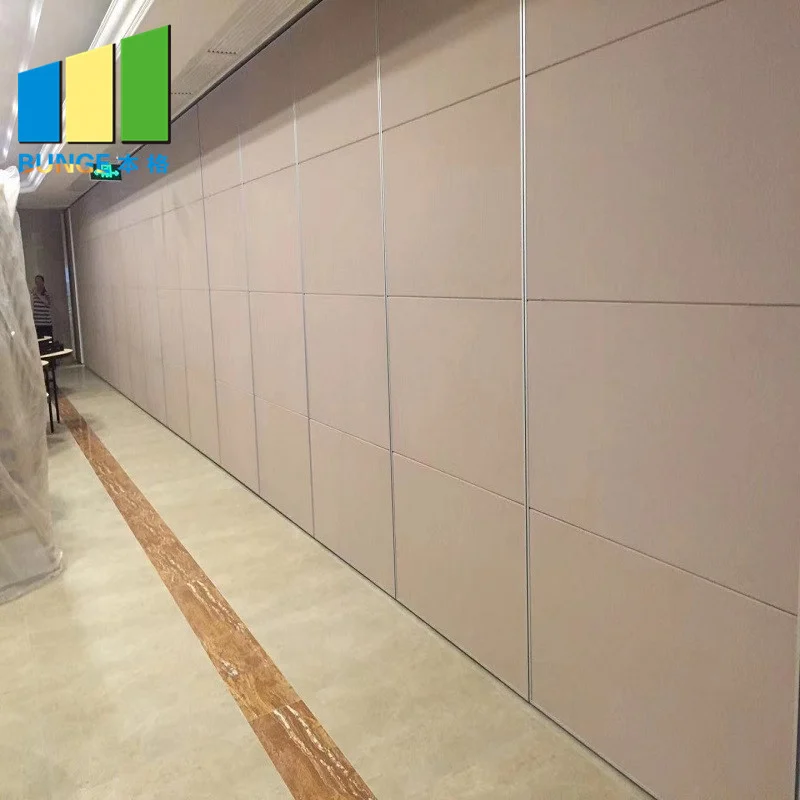
For teams comparing options, the movable wall product overview provides maintained product context, while the project resources support planning conversations. Neither replaces drawing review for a specific project.
Frequently Asked Questions
What is an architect coordination assumption log for movable partitions?
It is a live register of the design assumptions that affect a movable partition, each with an owner, required evidence and status. It travels with the drawing set so that open questions are visible to every discipline.
Who should own the assumption log?
Ownership usually sits with the architect or lead designer, because the log follows the layout.
When should the handover to procurement happen?
After the movement routes, parking position and finish direction are documented, and after support questions have been raised with the relevant discipline. Early handover with open assumptions is acceptable if the log is issued at the same time.
Can the log include acoustic targets?
It can record that an acoustic requirement exists and that confirmation is required. It should not record a rating value unless that value is supported by project-specific evidence for the actual assembly and test context.
How often should the register be updated?
At every coordination meeting and whenever a design change affects the layout, route, parking position or finish direction. Reissue it at the same revision as the drawings.
What happens if an assumption stays open at sign-off?
It should be carried forward as an explicit open item with a named owner and a date, rather than closed informally. Open items are a normal part of coordination; hidden ones are the risk.
Conclusion and Next Step
A disciplined assumption log, a clear handover sequence and a discipline sign-off register give overseas project teams a shared, evidence-bounded basis for movable partition coordination. Confirm project-specific support, acoustic and dimensional requirements with the relevant disciplines before finalising any layout.
To discuss pass-door requirements, finish options or project documentation, contact the EBUNGE team with your layout and open assumptions.