
Quick answer: track anchor setting
Review focus: track anchor setting.
On a movable wall project, the most common alignment problem is not the panel itself. The suitability of each route and parking arrangement depends on the approved layout, circulation, ceiling interfaces and operating sequence. A movable partition track anchor setting-out datum chain is the single controlled reference path that connects them. When that chain is broken, each trade sets out correctly against its own drawings and the track still lands in the wrong place.
This framework is written for overseas contractors, architects, interior designers, owners and renovation teams who need a verifiable sequence rather than a promise. It explains what to coordinate, what to record, and where project-specific confirmation is required. EBUNGE movable partition panels are individually movable, suspended from a top track, cross the opening without a floor track, and park at a planned stacking position. Straight, turning and stacking routes are reviewed from the layout. Everything else depends on your drawings.
Why Three Setting-Out Systems Drift Apart
Project review term: track anchor setting.
Ceiling setting-out is controlled by the ceiling contractor, often from a different origin and with its own tolerance logic. Partition track setting-out is controlled by the wall specialist, who needs a continuous overhead route that matches the opening and the parking zone.
Each system can be internally correct. The purpose of a datum chain is to make those interfaces explicit before installation begins.
Defining the Datum Chain in Project Terms
Coordination scope: track anchor setting.
A datum chain is a documented sequence of references, not a single mark on the floor. It should state where the chain starts, how it transfers, and who verifies each transfer. For a movable partition, the chain must end at the track anchor positions and at the limits of the parking zone.
Primary, secondary and local datums
The primary datum is the project control reference. The secondary datum transfers that reference to the relevant floor or zone. Local datums then locate the ceiling grid and the partition track origin. Each transfer should be recorded with the date, the responsible party and the verification method.
What the chain must control
- Opening width and the relationship to adjacent finishes.
- Parking zone extent and the route into it.
- Ceiling penetration and access provisions.
A Step-by-Step Coordination Sequence
Checklist focus: track anchor setting.
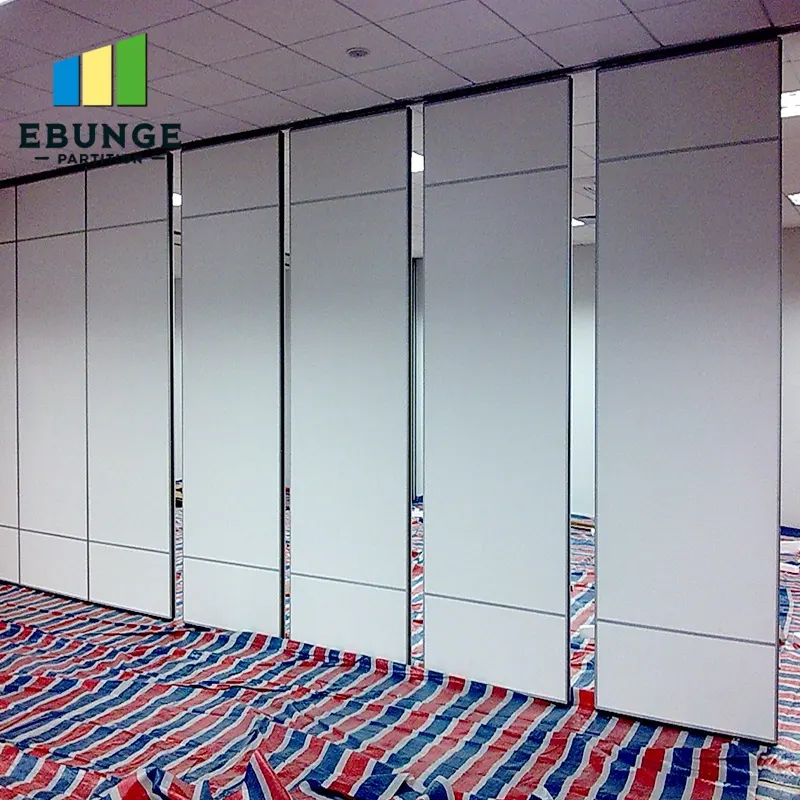
The sequence below is a planning order, not an installation method. It assumes the layout has already been reviewed for straight, turning and stacking routes. Confirm all support, acoustic and dimensional requirements with the responsible engineers before proceeding.
- Agree the primary datum and record it on a coordinated drawing.
- Transfer the datum to each affected floor or zone and verify the transfer.
- Set out the partition track origin from the same verified datum.
- Compare track centreline, anchor positions and ceiling module lines.
- Resolve clashes on paper before any fixing position is marked.
- Issue a signed coordination record for the installation team.
Interface Checks Before Fixing Positions Are Marked
Review focus: track anchor setting.
Most rework is cheaper to prevent than to correct. The checks below are deliberately limited to coordination items that can be verified from drawings and site measurement.
| Interface | What to verify | Evidence to record |
|---|---|---|
| Structural grid to track origin | Track centreline against available support members | Coordinated setting-out drawing |
| Ceiling grid to track line | Module alignment and penetration zones | Reflected ceiling plan markup |
| Track origin to opening | Opening width and adjacent finish lines | Dimensioned elevation |
| Track to parking zone | Route continuity and stacking extent | Layout review note |
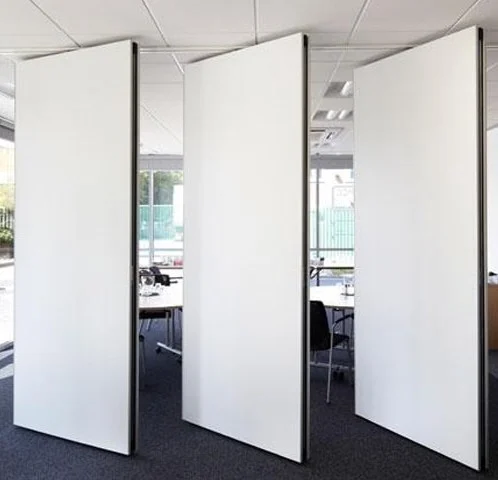
Where a check cannot be closed, record it as an open item rather than assuming a tolerance. The movable wall product page describes the top-hung, floor-track-free configuration that makes these overhead coordination checks necessary.
Documentation That Keeps the Chain Continuous
A datum chain survives only if it is written down. The coordination record should identify the datum origin, each transfer, the verification date, and the person who accepted it. It should also show the relationship between the track anchor positions and the ceiling grid, because that is where independent trade conventions most often diverge.
Pass-door requirements and project documentation can be discussed with the supplier so that the setting-out record reflects the actual layout. Finish choices such as laminate, melamine, fabric, leather, glass and other approved surfaces affect the visible interface, but they do not replace dimensional coordination.
Evidence note
This framework does not establish structural capacity, acoustic performance, fire performance or dimensional limits. Those items require project-specific review and matching evidence. STC and Rw are rating concepts used in acoustic specification; they are not a simple count of decibels and should not be treated as a direct arithmetic scale.
Common Coordination Failures and How to Avoid Them
Three failures recur across projects. Second, the track origin is set out from the finished floor or a partition line rather than from the verified overhead datum. Third, the parking zone is treated as a site decision instead of a layout decision.
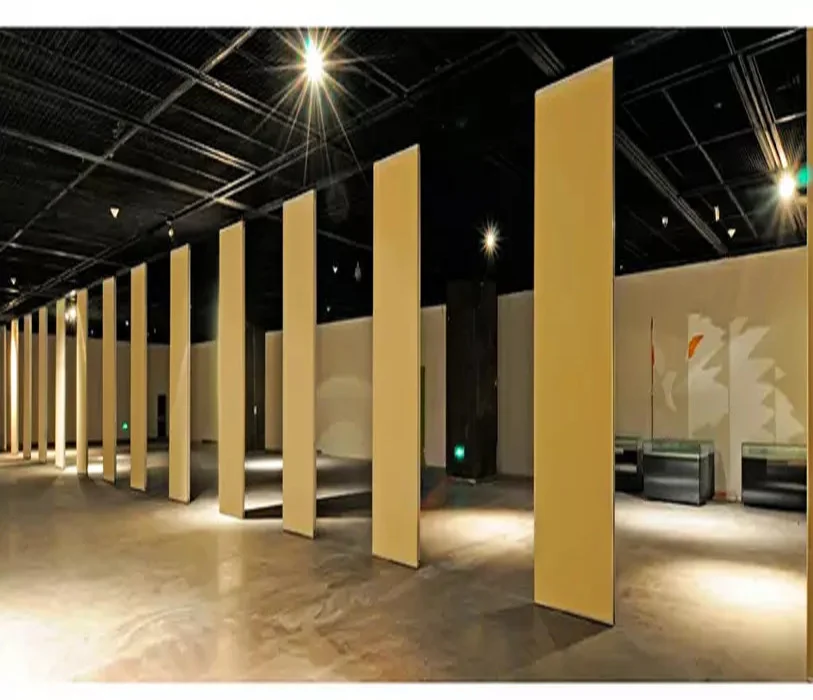
Each failure has the same remedy: one chain, one record, one verification sequence. Where the layout includes turns or a compact stacking arrangement, the route must be reviewed as a continuous connected overhead path. The exact route, junction arrangement, continuous overhead path and parking position must be confirmed from the coordinated project drawings.
Frequently Asked Questions
What is a movable partition track anchor setting-out datum chain?
Provide the current layout, opening dimensions, ceiling information, intended room use, and relevant project drawings for review. The exact overhead route and support arrangement must be confirmed by the responsible project team from coordinated drawings.
Who should own the datum chain on site?
The project should nominate one party to maintain the chain and record each transfer.
Does a movable partition need a floor track?
EBUNGE movable partition panels are top-hung and cross the opening without a floor track.
When should the ceiling grid be coordinated with the track?
Before fixing positions are marked. Coordinating after the ceiling is installed usually forces compromises at the track line and around penetrations.
Can the parking zone be decided on site?
Parking style is customized to the customer layout and project requirements. The stacking position and route should be planned from the layout rather than improvised during installation.
What information should be issued to the installation team?
A coordinated setting-out record showing the datum origin, transfers, track centreline, anchor positions, opening dimensions and parking zone limits, with open items clearly listed.
Conclusion and Next Step
A continuous datum chain turns three independent setting-out exercises into one verifiable sequence. Confirm project-specific support, acoustic and dimensional requirements before any fixing position is finalized.
For layout review, finish options and project documentation, contact the EBUNGE team. Additional planning guidance is available in the resources section.