
Quick answer: tender query response timeframe compliance
Review focus: tender query response timeframe compliance.
Movable partition wall tender query response timeframe compliance is an audit question, not a courtesy question. It asks whether every clarification answer a bidder received was issued inside the window the tender documents published, and whether any late answer changed the scope that bidders priced. For overseas contractors, architects, interior designers, owners and renovation teams comparing bids, this check protects the comparability of the returned submissions. The suitability of each route and parking arrangement depends on the approved layout, circulation, ceiling interfaces and operating sequence.
Why the Clarification Window Is a Scope Control, Not an Admin Detail
Project review term: tender query response timeframe compliance.
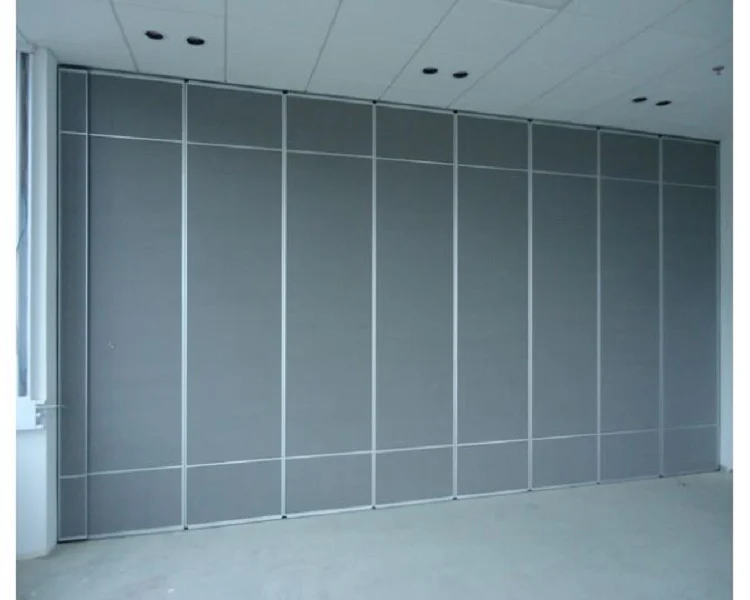
A movable partition package is configured around routes, stacking positions, finish selections and pass-door requirements. When an answer arrives after the published window, one bidder may have priced a different interpretation from the others.
The reviewer’s job is not to judge whether a late answer sounds helpful. It is to record the date, the question, the answer, and whether that answer is binding. If it is binding, the tender may need a formal addendum so every bidder prices the same scope. If it is not binding, it should be excluded from evaluation.
A Four-Step Audit Process for Each Bidder Answer
Coordination scope: tender query response timeframe compliance.
- Fix the reference clock. Record the published clarification deadline, the time zone stated in the tender, and the official channel through which questions and answers must pass.
- Log every question and answer pair. Capture the bidder identity, submission timestamp, issuing authority response timestamp, and the document version each answer refers to.
- Classify the answer. Mark it as within window, outside window, or unclear because the timestamp or channel is undocumented.
- Escalate before award. Any outside-window answer that touches scope, quantities, routes, finishes or pass-doors should be resolved through the tender’s own amendment procedure, not through private correspondence.
Building the Evidence Log Reviewers Can Defend
Checklist focus: tender query response timeframe compliance.
An audit trail is only as strong as its weakest timestamp. Reviewers should be able to show, for each answer, where it came from and when it was issued. A shared inbox screenshot is weaker than a portal record with a system timestamp. A verbal answer given during a site walk is weaker still unless it was later confirmed in writing through the official channel.
Where the tender documents do not state a time zone, treat that as a documentation gap and raise it. Where answers were issued through more than one channel, list each channel separately rather than merging them into one date.
Compact Comparison: Answer Status and Reviewer Action
| Answer status | Evidence condition | Reviewer action |
|---|---|---|
| Within window | Timestamped in the official channel before the deadline | Include in evaluation; confirm it matches the current document version |
| Outside window, scope-neutral | Late but does not change quantities, routes, finishes or pass-doors | Record and note; no amendment normally required |
| Outside window, scope-relevant | Late and changes interpretation of the priced scope | Escalate for formal addendum or exclude from evaluation |
| Unclear | Missing timestamp, wrong channel, or conflicting versions | Request clarification of the record itself before relying on the answer |
Where Movable Partition Scope Questions Usually Appear
Routes, turning points and stacking positions
Bidders often ask how panels travel from the closed position to the parking location. Because panels are individually movable, suspended from a top track, cross the opening without a floor track and park at a planned stacking position, the answer depends on the reviewed layout. A late answer that changes a turning point or stacking position can change what each bidder priced.
Finish selections and approved surfaces
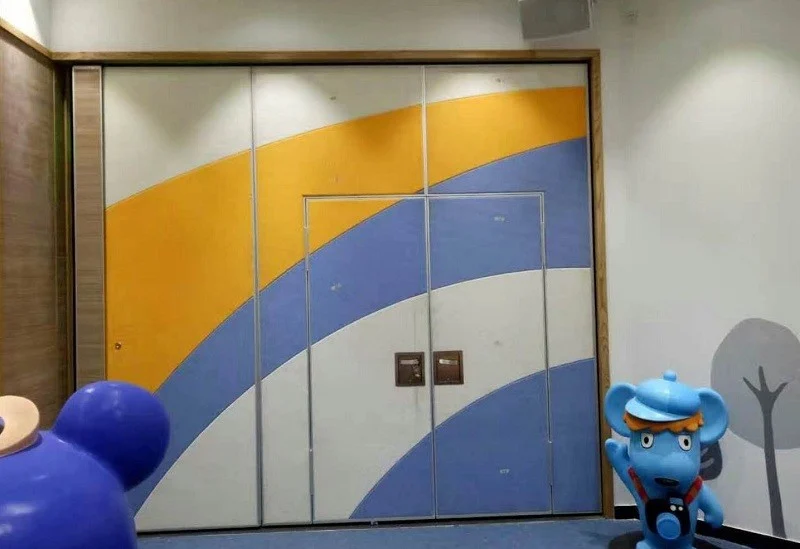
Confirmed finish options include laminate, melamine, fabric, leather, glass and other approved surfaces. If a late answer introduces a finish not listed in the tender, reviewers should treat it as a scope change rather than a clarification.
Pass-door requirements
Pass-door requirements and project documentation can be discussed with the supplier, but the tender record must show whether the requirement was part of the original scope. A late answer that adds or removes a pass-door changes the package.
Evidence Note: What This Audit Cannot Prove
This framework audits the timing and traceability of tender answers. It does not confirm acoustic performance, structural support, dimensional fit, finish durability or commercial outcomes. Those items require project-specific documentation, drawing review and confirmation from the responsible parties. Acoustic ratings such as STC or Rw are single-number descriptors used in specifications; they are not a direct count of decibels and should not be treated as a guarantee of in-room results.
Common Failure Patterns Reviewers Should Flag
- Answers issued to one bidder only, without a corresponding addendum to all bidders.
- Clarification deadlines stated without a time zone or without naming the official channel.
- Answers that reference an older drawing revision than the one currently priced.
- Scope-relevant answers issued after the window but treated as binding during evaluation.
FAQ: Tender Query Timeframe Compliance for Movable Partition Packages
What does movable partition wall tender query response timeframe compliance actually measure?
It measures the elapsed time between each bidder clarification question and the issuing authority’s response, then compares that elapsed time against the clarification window published in the tender documents. The output is a status per answer, not a score for the bidder.
Should a late answer automatically disqualify a bidder?
No. The reviewer first determines whether the answer changed the priced scope. A scope-neutral late answer is recorded; a scope-relevant late answer is escalated for a formal amendment or excluded from evaluation so that all bidders are compared on the same basis.
How should reviewers handle answers given verbally on site?
Treat them as unverified until confirmed in writing through the official channel. If no written confirmation exists, the answer should not be relied upon during evaluation, and the documentation gap should be noted in the audit record.
What project information is needed to review a movable partition scope answer?
Reviewers should have the current layout showing straight, turning and stacking routes, the finish selections, and any pass-door requirements. The exact route, junction arrangement, continuous overhead path and parking position must be confirmed from the coordinated project drawings.
Can this audit confirm acoustic or structural performance?
No. Acoustic, support and dimensional requirements must be confirmed for the specific project with the responsible design and engineering parties.
When should the audit be completed?
Before award. Completing it after award removes the reviewer’s ability to correct the comparison through the tender’s own amendment procedure.
Conclusion and Contact
Auditing movable partition wall tender query response timeframe compliance is a discipline of dates, channels and scope relevance. Fix the reference clock, log every answer, classify it, and escalate scope-relevant late answers before award. Keep the audit factual, and confirm project-specific support, acoustic and dimensional requirements with the responsible parties rather than inferring them from a clarification reply.
For product context, review the movable wall systems page and the project resources library. To discuss pass-door requirements, finish options or project documentation for a specific tender, contact the EBUNGE team.